At ten past three on a Tuesday, two people at neighbouring desks say the same thing: “I’m so tired.”
She means her eyes keep closing, and if you gave her a quiet room and ten minutes she’d be gone. He means something else. He slept a full night, he isn’t drowsy at all, and he still feels drained, like the weekend never happened. And tonight both of them will type the same question into a search bar: why am I so tired all the time?
So that’s one sentence for two different problems, and everyday English doesn’t bother to separate them. A 2006 review by Shen, Barbera and Shapiro, which is all about telling the two apart, says sleepiness and fatigue are often “merged under the more general lay term of ‘tired'”[6]. (In fairness, “I’m experiencing fatigue as distinct from sleepiness” is a lot to say at ten past three.)
And that split turns out to be a good first clue. Being tired all the time often has no single hidden disease behind it. The common places to look are ordinary ones (sleep, caffeine, alcohol, and stress or low mood), and then there’s a short list of treatable conditions a doctor can check, such as low iron, an underactive thyroid and sleep apnea. So that’s my argument for this post: “tired” is where the looking starts, and what helps most is asking better questions about it. And if you’ve felt this way for a few weeks and can’t say why, the NHS says to see a doctor[4].
I’m not your doctor, so think of this as a friend’s notes after a lot of reading. I’ve left out tiredness in children and teenagers, because that’s a different pile of studies and I haven’t read it. What I did read surprised me more than once (which is a lot to ask of a stack of papers about being tired). And the biggest surprise was that how tired you feel can be a poor guide to how much sleep loss is costing you, which I’ll get to. But first, back to the two desks.
Why am I so tired all the time? First, what do you mean by tired?
If you’ve been tired for weeks, the first thing I’d want to know is what you mean by tired. Are you falling asleep during the day, or do you feel drained even after a full night’s sleep? Because those tell us different things. Then I’d want to know about your sleep, stress, medications, and what changed around the time this started.
So what is the difference between feeling tired and fatigue? Well, researchers ask that first question too, and they split “tired” into two things most of us lump together[5, 6]. Sleepiness is feeling drowsy or having trouble staying awake[5]. Fatigue, which I’ll call feeling worn out, is generally defined as physical or mental tiredness or exhaustion that does not improve with more sleep or rest, as the US National Center for Health Statistics notes[5]. So she is sleepy, and he is worn out. And which desk are you sitting at? Do you feel sleepy, or just worn out? If the yawning is what made you wonder, why we yawn goes through what’s known about it.
Sure, sleeping five hours a night could explain it. But the NHS also lists iron deficiency anemia, an overactive thyroid and sleep apnea among the conditions that can come with tiredness[4]. And spending eight hours in bed doesn’t automatically mean you got eight hours of good sleep (the coffee and the evening drink come into that further down). So if it’s been going on for a few weeks and you’re not sure why, the NHS says to see a doctor[4].
And is it normal to feel tired all the time? The NHS answers in two sentences: “It’s normal to feel tired sometimes. But if you’re tired all the time and do not know why, it could be a sign of a problem.”[4]
You have a lot of company either way. In 2024 a US government survey asked adults how often they had felt “very tired or exhausted” in the past three months. About one in six said most days or every day, and more than seven in ten said at least some days[5].
Feeling tired is the starting point. “Tired” is where the looking starts, and it takes better questions to figure out what’s actually going on. And the place where tired people get asked those questions is the doctor’s office, so that’s where I went looking next.
What do doctors find when you’re tired all the time? How often medical causes and underlying health issues turn up
Maybe you’re half afraid a doctor will find something, or half afraid they’ll find nothing. Both fears make sense to me. So here’s what happened to people who actually went. The short version, from a Dutch study of 571 patients seeing their family doctor, is that only a minority were diagnosed with a serious health problem[1]. And here’s the longer version.
In the Netherlands, some researchers took 571 adults who had gone to their family doctor with a new episode of tiredness, and followed them through their medical records for a year to see what they ended up being diagnosed with[1]. I expected a lot of them to turn out to have a clear physical disease. Well, it was 8.2%, which is roughly 1 in 12[1]. And about half got no diagnosis that could explain their tiredness at all[1].
Now, one study could be a fluke, so I looked for others like it. A second Dutch study found an illness that a blood test could pick up in about 8% of its patients[2]. And a British one from 1993 found that abnormal test results helped with the diagnosis in 19 of 220 patients, which is about 8.6%[3]. The three studies measured slightly different things, so I’m not going to squash them into one number. But they do sit close together.
So why not just order every blood test going? Well, that second Dutch study was a trial in patients with unexplained fatigue, and it looked at exactly that. It’s called VAMPIRE, which is a bold name for a study about taking people’s blood. Family doctors were assigned at random to order blood tests right away or to hold off, and the wider set of blood tests added more false positives, meaning results that look abnormal when nothing is wrong[2]. So more tests weren’t automatically better.
There is one study that points the other way. A small American series from 1992 found a medical cause far more often, in 25 of 52 patients of a single internist[7]. But it’s one doctor’s practice and an old study. And even there, by six months, 37 of the 52 (71%) said their tiredness had improved or gone[7].
Share of patients, on one scale from 0 to 100%. The bars overlap and don’t add up to 100.
Share of patients, on one scale from 0 to 30%
So if you go and come away without a clear answer, you’re in large company.
So if you go and come away without a clear answer, you’re in large company.
These were all people who had decided to see a doctor, so they can’t tell us about everyone who feels tired. And going still matters (the signs that mean you should go are further down). But in these studies the explanation mostly wasn’t sitting in a blood sample. So that sends us back to the ordinary places, and the first one is the bed.
Fourteen nights in a lab, no naps allowed: How many hours of sleep count as enough sleep?
Sleep is the obvious place to start, and the NHS agrees: its list of common causes includes not getting enough sleep or insomnia, along with “an unhealthy lifestyle” and “stress, depression and dealing with life challenges”[4].
So how many hours of sleep is enough? A 2015 expert panel from the American Academy of Sleep Medicine and the Sleep Research Society said adults aged 18 to 60 “should sleep 7 or more hours per night on a regular basis”[9]. Other groups say 7 to 9 hours, or 6 to 9[10, 4]. All of these are expert opinion, and need varies from person to person[9]. And plenty of people land under the panel’s line. In a 2014 survey, more than a third of American adults said they usually slept less than 7 hours[11].
Now, this ought to be the easy one to rule out. If you were short on sleep, you’d feel it, right? That’s what I assumed. And then I read about a sleep study from 2003.
Van Dongen, Dinges and colleagues had 35 healthy young adults live in a lab for 14 nights. Some got 8 hours in bed a night, some got 6 and some got 4. Several times a day, everyone took attention tests and rated how sleepy they felt[12]. And naps were banned[12], which sounds to me like the hardest part of the whole deal.
The test scores did what you’d expect. On 4 and 6 hours, performance fell steadily, to deficits the authors called “equivalent to up to 2 nights of total sleep deprivation”[12].
But the ratings were what surprised me. The feeling of sleepiness went up at the start and then rose only a little, while the test scores kept getting worse. By day 14, when test scores were at their worst, the people on 4 and 6 hours “reported feeling only slightly sleepy”[12]. The authors wrote that they “were largely unaware” of how impaired they had become[12]. So they felt only slightly sleepy, and their test scores said otherwise.
There are limits to what this tells us. The volunteers were healthy young adults, mostly men, and they spent the two weeks in a lab[12]. The study shows that the feeling of sleepiness can lag behind how well the brain is working. It doesn’t tell us whether your own tiredness comes from short sleep.
The study shows that the feeling of sleepiness can lag behind how well the brain is working.
One more gap, if you work nights or rotating shifts. The panel’s advice is written as hours per night, and none of the studies I read looked at shift work, so I can’t say how their numbers carry over when your night is sometimes midday.
Other memos cover whether 8 hours is a rule (sleep-without-the-hype), whether sleeping in on your days off pays the debt back (catch-up-sleep-weekends), waking up tired after a full night (tired-after-sleeping) and broken nights (wake-up-at-3am).
Which brings us back to ten past three, and to what most of us do about it.
Why am I always tired after lunch? Afternoon tiredness, the coffee and the evening drink
Part of the afternoon slump seems to be built in. In a 2005 review, the sleep researcher Monk called the post-lunch dip real, showing up in some people even with no lunch, and “certainly exacerbated by a high-carbohydrate lunch”[13]. (So the slump can turn up even when lunch didn’t.)
So it’s the pasta? Well, a small 1998 study complicates that. Sixteen people each ate a high-fat meal and a high-carbohydrate meal and had their sleepiness measured around them. And they were sleepier 1.5 hours after eating than before, whichever meal it was[14]. So your sandwich may not deserve all the blame. If you wonder about all the choices before lunch too, is decision fatigue real looks at that. The food side (energy crashes after a meal and all that) has its own memo (crash-after-eating).
The slump is often where the coffee starts, and coffee stays longer than it feels like it does. An adult’s body takes about 3 to 7 hours to clear half of the caffeine they drink, according to a 2017 review[15]. So run that forward from a mid-afternoon cup, and a fair share of it can still be in you at bedtime.
Does that affect your sleep at night? In a tiny 2013 trial, 12 healthy sleepers took a large dose of caffeine at bedtime, 3 hours before or 6 hours before, or a dummy pill, on different nights at home[16]. Every timing disturbed sleep, and a headband monitor recorded 1.1 to 1.2 hours less sleep[16]. Now, twelve people is very few, and the trial was funded by Zeo, a company that made sleep trackers[16]. Still, a 2017 review of trials and population studies found the same general pattern, including worse sleep quality as people rated it themselves[17].
So I do wonder whether the cup that gets you through the afternoon is sometimes costing you a bit of the night. These studies can’t say that about your cup, but it’s an easy thing to watch for.
Alcohol does something different. A 2013 review went through the studies of alcohol and sleep in healthy volunteers, and found that at every dose, alcohol helps people fall asleep faster and sleep more solidly in the first half of the night, and then disturbs the second half[18]. So that’s one way to spend eight hours in bed without getting eight hours of good sleep.
Move more, drink water, stress less? Whether a sedentary day, dehydration or chronic stress can cause fatigue
Move more, drink more water, stress less. These three show up on a lot of lists of reasons people feel tired, said with plenty of confidence and not much else. So I went looking for what is actually behind each of them, and the answer is some evidence, and less than the lists make it sound.
Start with sitting still all day. In 2008, three researchers at the University of Georgia found 36 healthy young adults who were sedentary and reported persistent fatigue, and split them at random into three groups: moderate exercise, low-intensity exercise, or nothing at all (which, to be fair, is the option most of us would pick), with three lab visits a week for six weeks[34]. So did the people who worked hardest get the most energy back? Well, feelings of energy improved about equally in both exercise groups, and feelings of fatigue actually improved most with the low-intensity kind[34]. So the gentle group did at least as well, which I did not see coming. But that’s 36 people. And when two of the same researchers pooled the earlier exercise studies in 2006, exercise raised feelings of energy and lowered fatigue on average, except that the studies that tested exercise on its own against a placebo found no effect[33]. So it looks promising to me, and it isn’t settled.
Then dehydration, the one with the most confident water bottles (you know, the ones with the hours printed down the side). The NHS does list feeling tired among the symptoms of dehydration[36]. And in a 2012 experiment, some researchers mildly dehydrated 25 young women on purpose, through exercise, by a little over 1% of their body weight[35]. Their fatigue scores got worse, they got headaches, and they found it harder to concentrate. But most of their test performance held up[35]. Now, that was dehydration produced by exercise in a lab, so it can’t tell us how much an ordinary afternoon without enough water matters.
And then chronic stress. The World Health Organization describes burnout as a syndrome “resulting from chronic workplace stress that has not been successfully managed”, and the first thing in its description is “feelings of energy depletion or exhaustion”[32], which is a formal way of saying feeling drained. So in the WHO’s telling, burnout is about work specifically, and it isn’t classed as an illness or health condition[32]. I found no study that counts how much everyday tiredness comes from stress. But the British study from the doctor’s office did find a lot of emotional distress among its tired patients, and that comes up again further down[3].
That covers the sleepy colleague’s likeliest suspects. So what about the one who slept fine?
Why am I so tired all the time if my sleep is fine? Possible causes of fatigue a doctor can check
Suppose your sleep and your cup look ordinary and you’re still tired. This is the point where most articles hand you a list of a dozen conditions. I’m going to go through the possible causes that came up most in the research I read (stress, anxiety or low mood, low iron, an underactive thyroid and sleep apnea), and the evidence behind each is thinner than I expected. After those come four more that the official health pages name, where I have less research to show you: diabetes, medicines, chronic fatigue syndrome and vitamin deficiencies.
Can stress, anxiety or low mood make you tired?
This can sound like being told it’s all in your head, and I don’t mean that. Go back to the British study from the doctor’s office. The tired patients filled in a questionnaire that picks up emotional distress, and 75% of them scored high on it, against 34% of a comparison group matched for age and sex[3]. And the patients whose tiredness was still there six months later were more likely to have a history of anxiety or depression[3].
A very large English study of doctors’ records found something similar. The conditions most strongly linked with new tiredness included depression, respiratory tract infections, insomnia and sleep disturbances, and (in women only) an underactive or overactive thyroid, though links like that can’t say what caused what[19]. The National Institute of Mental Health lists “fatigue, lack of energy, or feeling slowed down” among the signs of depression[20], and irritability is on that same list of common symptoms[20].
If low mood is part of your picture, a doctor or a therapist is a kind place to start, and you don’t need to have it figured out first. If you ever feel hopeless or think about harming yourself, call or text 988, the US Suicide and Crisis Lifeline[20].
Can low iron (iron deficiency) make you tired, even without anemia?
The NHS lists iron deficiency anemia, a low level of the oxygen-carrying protein hemoglobin, among the causes of tiredness[21, 4]. And if you open its page on the condition itself, tiredness and lack of energy are among the symptoms it lists, along with shortness of breath[29]. The open question is whether low iron stores, measured by a blood marker called ferritin, matter before anemia shows up[21].
The best-known trial, from 2012, tried to find out. It took 198 women in France who still had periods, felt tired, and had low ferritin but normal hemoglobin, and gave them either iron pills or a dummy pill for 12 weeks[21]. Tiredness scores fell in both groups, and by a little more with iron[21].
But look at who ran it. The maker of the pills, Pierre Fabre Médicament, paid for the trial, designed it and managed the data[21]. A 2018 review of trials in iron-deficient adults without anemia found a small to moderate drop in self-reported tiredness with iron, but it includes that same trial[22]. And in studies of ordinary populations, low iron without anemia was not clearly linked with being more tired[23]. So this one is still an open question.
If you have periods and you’re tired, it’s fair to ask your doctor whether checking your iron makes sense. Whether to take iron is something to settle with them after a blood test. If it’s the food side you’re wondering about, is spinach high in iron looks at that.
Could it be an underactive thyroid?
An underactive thyroid (hypothyroidism) is on nearly every list. In blood tests from a US national survey in 1988 to 1994, 4.6% of people had an underactive thyroid: 0.3% the clear-cut kind and 4.3% a mild kind found only on blood tests[24].
So with an underactive thyroid, the mild kind is the common one. Does treating it make people less tired? The best trial on that, TRUST, was in people 65 and older. It gave 737 people aged 65 and older with a mildly underactive thyroid either thyroid hormone tablets or a dummy pill for a year, and found no meaningful difference in tiredness[25]. But it says nothing about younger people, a clearly underactive thyroid, or people picked for being tired[25]. Feeling cold all the time is another thing that comes up with the thyroid, and why am I always cold goes into it.
Could it be sleep apnea?
Sleep apnea is a sleep disorder in which your breathing repeatedly stops or turns shallow while you sleep[26]. It’s one of the sleep disorders, and the NHS says the most common type is called obstructive sleep apnea[30]. The NHS links it to being tired in the day along with loud snoring and gasping or choking noises at night[4]. And you’re asleep for all of that, so it may be someone else who notices.
How common is it? The Wisconsin Sleep Cohort Study recorded the sleep of 1,520 adults aged 30 to 70 and, extrapolating to the whole US, estimated that a moderate to severe form affects about 1 in 10 men aged 30 to 49 and about 1 in 6 men aged 50 to 70, with fewer women at each age[26]. Those modeled figures count breathing on recordings whether or not a person feels tired; the paper’s estimates with daytime sleepiness are lower[26].
Can diabetes make you tired?
It can. When the NHS lists the most common symptoms of diabetes, the type 2 kind, feeling very tired is the first one on the list[28]. But it also says that not everyone with type 2 diabetes gets symptoms, and that it’s diagnosed with a blood test[28]. And on the NHS page about tiredness, diabetes is one of the things the blood tests may check for[4]. What I can’t tell you is how often diabetes turned out to be behind the tiredness, because the studies of tired patients I read don’t give a figure for it.
Can medicines make you tired?
Some can, yes. The NHS counts “some medical treatments and medicines” among the common causes of tiredness[4]. Beta blockers are one example: they’re among the blood pressure medicines, and the NHS says their common side effects can include tiredness[31]. And back in that small American series from the doctor’s office, medication use was one of the things people’s tiredness got put down to[7]. The NHS’s line on side effects that bother you or do not go away is to speak to your doctor or pharmacist[31].
What is chronic fatigue syndrome (ME/CFS)?
I’ll keep this one plain. Myalgic encephalomyelitis, also called chronic fatigue syndrome or ME/CFS, is a long-term condition whose most common symptom is extreme tiredness, and its cause is unknown[27]. The NHS describes that extreme fatigue as feeling extremely tired all the time. The other main symptoms it names are sleep problems, problems with thinking, concentration and memory (brain fog), and symptoms getting worse after physical or mental activity[27]. So for people with ME/CFS, activity can worsen fatigue and the other symptoms. There’s no specific test for it. The NHS says it is diagnosed from the symptoms and by ruling out other conditions, and that because the symptoms are similar to those of some other illnesses, it’s important to see a GP to get a correct diagnosis[27].
What about vitamin deficiencies, such as vitamin D deficiency?
I found one trial that tested this directly. In 2016, some researchers in Zurich took 120 adults (average age 29) who were tired and had a vitamin D deficiency on a blood test, and gave them either one dose of vitamin D or a dummy pill[37]. Four weeks later, fatigue scores had fallen more in the vitamin D group, and 72% of them said their fatigue was better, against 50% on the dummy pill[37]. Now, that’s one trial, four weeks long, in people who were measured as low to begin with. So it doesn’t tell us whether vitamin D supplements do anything for tired people in general. And on the other vitamins, the NHS lists feeling weak or tired among the symptoms of vitamin B12 or folate deficiency anemia[38]. Whether any of this applies to you is a blood-test question for a doctor, the same as with iron.
When should you see a doctor about being tired all the time?
The NHS says to see a doctor if you have been feeling tired “for a few weeks” and are not sure why, if tiredness is affecting your daily life, if it comes with other symptoms “such as weight loss or mood changes”, or if you have been told you make “gasping, snorting or choking noises” in your sleep[4]. If any of that fits, ask your own doctor what to check. You don’t need a theory first, and not finding a cause is common[1].
What might they check? The NHS says you may need tests, “such as blood tests to check for anaemia, diabetes or hyperthyroidism”[4].
The NHS also counts hormonal changes, such as pregnancy or menopause, among the common causes of tiredness, along with some illnesses such as COVID-19 and some medicines[4]. Those sit outside what I read for this post, so I can’t take you further on them. But if one of them might be part of your picture, any medications you take included, name it to your doctor.
The world’s shortest diary: One small thing to try today
Remember the two desks, and the one word they shared. The smallest useful thing I can suggest is to find out which word is yours.
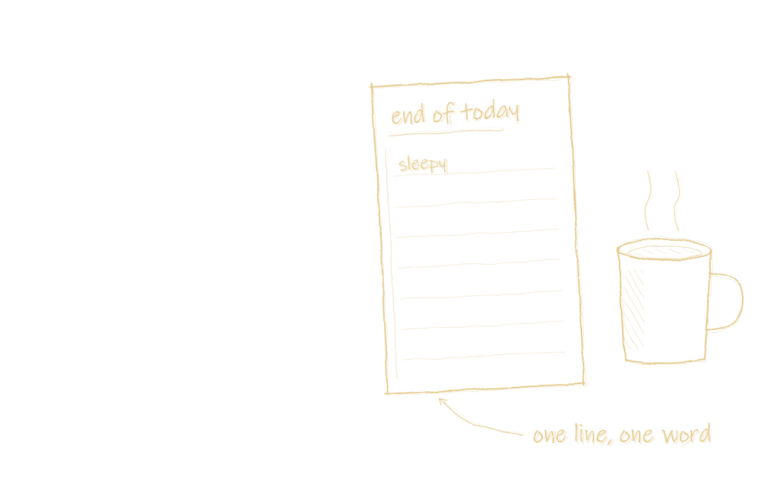
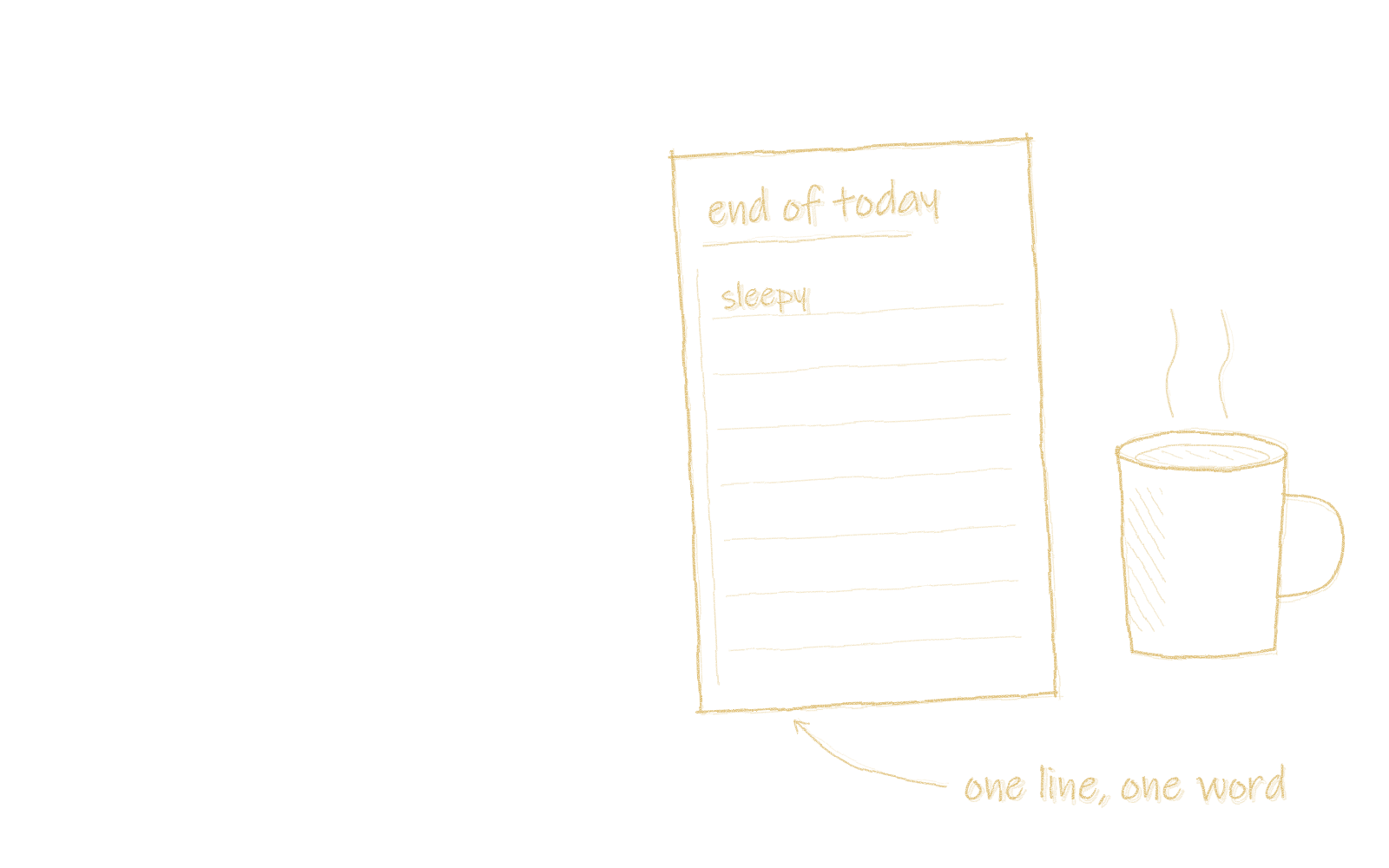
At the end of today, whenever your day ends, write one line: roughly when and how long you last slept, when you had your last coffee or tea, whether you drank alcohol, and one word for how the day felt, “sleepy” or “worn out”. No study tested this, but it takes a minute and gives a doctor more to go on than “I’m tired”. If even that’s too much, write just the word.
The fuller version is the same line for a week, which can show a pattern a single day hides. Your own sense of it can miss things, as the lab volunteers’ did, so treat it as a starting point.
If the word keeps coming up “sleepy”, start with sleep. Either way, if the tiredness goes on for a few weeks and you can’t say why, that line is the note to take to your doctor[4].
And if you skip a day, nothing is lost. Write the next one.
If you’d like to read more on this:
Kept short on purpose: Quick answers about fatigue and feeling tired all the time
Why do I feel tired even if I sleep a lot?
Because hours in bed and good sleep aren’t always the same thing, and one kind of tired doesn’t lift with sleep at all. Fatigue is generally defined as tiredness or exhaustion that does not improve with more sleep or rest[5]. And in the studies above, a large dose of caffeine cut sleep[16], and alcohol disturbed the second half of the night[18]. If it has gone on for a few weeks and you’re not sure why, the NHS says to see a doctor[4].
What are the common causes of feeling tired all the time?
The NHS’s list of the common causes of fatigue and tiredness is mostly ordinary (sorry, no dramatic reveal): not getting enough sleep or insomnia, “an unhealthy lifestyle”, and “stress, depression and dealing with life challenges”[4]. It also counts hormonal changes, some illnesses and some medicines[4]. So the common reasons include poor sleep and lifestyle factors as well as illness. And in a Dutch study of 571 tired patients, about half got no diagnosis that explained it[1].
What medical conditions can cause ongoing fatigue?
Sometimes ongoing tiredness is a sign of underlying health issues, and a doctor is the one to check. The NHS lists iron deficiency anemia, an overactive thyroid and sleep apnea among the conditions that can come with tiredness, and says you may need tests, such as blood tests to check for anaemia, diabetes or hyperthyroidism[4]. Low iron, thyroid problems, sleep apnea, diabetes, medicines and ME/CFS each have their own part above, with how strong the evidence is. But a health condition is only one of the possible causes, and often no single underlying issue turns up. In three studies of tired patients above, a clear physical illness, or a blood test that helped with the diagnosis, turned up in only about 8% to 9% of people[1, 2, 3].
What is the difference between sleepiness and constant fatigue?
Sleepiness is feeling drowsy or having trouble staying awake, and fatigue is physical or mental tiredness or exhaustion that does not improve with more sleep or rest[5]. So a useful question to ask yourself is whether it gets better after enough rest, because fatigue is the kind that doesn’t improve with rest. Someone with low energy and someone fighting to stay awake will both just say “tired”, which is why the first thing I’d want to know is which one you mean.
What counts as chronic fatigue?
In a 2023 review of population studies, chronic fatigue meant fatigue lasting more than 6 months[8]. Researchers also write “persistent fatigue” for tiredness that is still there months later, as in the British study that checked on its patients again at six months[3]. But you don’t need to wait anywhere near that long. For fatigue that lasts a few weeks when you’re not sure why, the NHS says to see a doctor[4].
How can I manage fatigue and improve my energy levels?
Honestly, it depends on what’s behind it, which is why this post is about where to look and not about fixes. The closest thing I found was one small trial in sedentary young adults with persistent fatigue, where six weeks of regular physical activity at low or moderate intensity improved feelings of energy[34]. None of the other studies I read tested lifestyle changes for tiredness. On sleep, the NHS suggests trying to stick to the same sleep times (a steady sleep schedule) and aiming for 6 to 9 hours[4]. And the one-line note above is a small place to start.
The numbers, if you want them
- The 2024 survey: 31,917 US adults; 16.6% most days or every day, 71.5% at least some days; women 20.0%, men 13.0%. The survey asked how often people felt that way, not whether rest helped[5].
- The doctor studies: of 571 Dutch patients, 46.9% got a diagnosis that “could be associated” with tiredness, 19.4% muscle and joint problems, 16.5% psychological or social problems, and 8.2% a clear physical disease[1]. VAMPIRE (Koch 2009): 325 patients, 8% with an illness a blood test could find[2]. Ridsdale 1993: abnormal tests helped in 19 of 220 British patients, about 8.6%[3]. Elnicki 1992: 18 of the 52 had no definite diagnosis[7].
- Everyone else: a 2023 review of 13 population data sets found unexplained tiredness about 2.7 times as common as explained, but the data are too uncertain to rule out chance, and each study decided for itself what counted as explained[8].
- Caffeine diaries: significantly less sleep after the bedtime and 3-hour doses; 41 minutes less after the 6-hour dose, close to significance (p = 0.08) without reaching it[16].
- Iron: the women were 18 to 53. On a 40-point scale, scores fell 12.2 points with iron and 8.7 with the dummy pill, a difference of about 3.5 (plausible range about 0.3 to 6.7). Among women who stuck to the plan, the gap was 2.1, with a range that included zero[21]. The 2018 review’s figure came from 4 trials with 714 people[22]; a 2017 review found a similar benefit[23].
- Thyroid: the survey tested the blood of 17,353 people aged 12 and over[24]. TRUST found a 0.4-point difference on a 100-point scale, against the 9 points the researchers counted as meaningful[25].
- Exercise: the 2006 pooled analysis found an average effect of 0.37 for exercise against control groups[33]. The 2008 trial had 18 lab visits over the six weeks, and the changes in energy and fatigue were unrelated to changes in fitness[34].
- Dehydration: the women averaged 23 years old and lost 1.36% of body mass on average; on one of the dehydration days they also took a water pill (that’s commitment)[35].
- Vitamin D: on the fatigue scale, scores fell 3.3 points with vitamin D and 0.8 with the dummy pill. The paper has a published correction that I have not read[37].
- Sleep apnea (moderate to severe), Wisconsin estimates[26]:
| Age | Men | Women |
|---|---|---|
| 30 to 49 | 10% | 3% |
| 50 to 70 | 17% | 9% |
Sources
- Nijrolder, I., van der Windt, D., de Vries, H., & van der Horst, H. (2009). Diagnoses during follow-up of patients presenting with fatigue in primary care. CMAJ, 181(10), 683–687. https://doi.org/10.1503/cmaj.090647
- Koch, H., van Bokhoven, M. A., ter Riet, G., van Alphen-Jager, J. T., van der Weijden, T., Dinant, G. J., & Bindels, P. J. (2009). Ordering blood tests for patients with unexplained fatigue in general practice: what does it yield? Results of the VAMPIRE trial. British Journal of General Practice, 59(561), e93–e100. https://doi.org/10.3399/bjgp09x420310
- Ridsdale, L., Evans, A., Jerrett, W., Mandalia, S., Osler, K., & Vora, H. (1993). Patients with fatigue in general practice: a prospective study. BMJ, 307(6896), 103–106. https://doi.org/10.1136/bmj.307.6896.103
- NHS. Tiredness and fatigue (page last reviewed 2 June 2023, with its next review due June 2026; read 30 October 2026). https://www.nhs.uk/live-well/sleep-and-tiredness/why-am-i-tired-all-the-time/
- Young, N. A. E., Weeks, J. D., & Elgaddal, N. (2026, 3 September). Fatigue among adults age 18 and older: United States, 2024. National Health Statistics Reports, No. 221. https://www.cdc.gov/nchs/data/nhsr/nhsr221.pdf
- Shen, J., Barbera, J., & Shapiro, C. M. (2006). Distinguishing sleepiness and fatigue: focus on definition and measurement. Sleep Medicine Reviews, 10(1), 63–76. https://doi.org/10.1016/j.smrv.2005.05.004
- Elnicki, D. M., Shockcor, W. T., Brick, J. E., & Beynon, D. (1992). Evaluating the complaint of fatigue in primary care: diagnoses and outcomes. The American Journal of Medicine, 93(3), 303–306. https://doi.org/10.1016/0002-9343(92)90237-6
- Yoon, J.-H., Park, N.-H., Kang, Y.-E., Ahn, Y.-C., Lee, E.-J., & Son, C.-G. (2023). The demographic features of fatigue in the general population worldwide: a systematic review and meta-analysis. Frontiers in Public Health, 11, 1192121. https://doi.org/10.3389/fpubh.2023.1192121
- Watson, N. F., Badr, M. S., Belenky, G., Bliwise, D. L., Buxton, O. M., Buysse, D., Dinges, D. F., Gangwisch, J., Grandner, M. A., Kushida, C., Malhotra, R. K., Martin, J. L., Patel, S. R., Quan, S. F., & Tasali, E. (2015). Recommended amount of sleep for a healthy adult: a joint consensus statement of the American Academy of Sleep Medicine and Sleep Research Society. Journal of Clinical Sleep Medicine, 11(6), 591–592. https://doi.org/10.5664/jcsm.4758
- Hirshkowitz, M., et al. (2015). National Sleep Foundation’s sleep time duration recommendations: methodology and results summary. Sleep Health, 1(1), 40–43. https://doi.org/10.1016/j.sleh.2014.12.010
- Liu, Y., Wheaton, A. G., Chapman, D. P., Cunningham, T. J., Lu, H., & Croft, J. B. (2016). Prevalence of healthy sleep duration among adults, United States, 2014. MMWR, 65(6), 137–141. https://doi.org/10.15585/mmwr.mm6506a1
- Van Dongen, H. P. A., Maislin, G., Mullington, J. M., & Dinges, D. F. (2003). The cumulative cost of additional wakefulness: dose-response effects on neurobehavioral functions and sleep physiology from chronic sleep restriction and total sleep deprivation. Sleep, 26(2), 117–126. https://doi.org/10.1093/sleep/26.2.117 (An erratum exists, Sleep 2004;27(4):600. The figures used here appear in both the abstract and the full text.)
- Monk, T. H. (2005). The post-lunch dip in performance. Clinics in Sports Medicine, 24(2), e15–e23. https://doi.org/10.1016/j.csm.2004.12.002
- Wells, A. S., Read, N. W., Idzikowski, C., & Jones, J. (1998). Effects of meals on objective and subjective measures of daytime sleepiness. Journal of Applied Physiology, 84(2), 507–515. https://doi.org/10.1152/jappl.1998.84.2.507
- Temple, J. L., Bernard, C., Lipshultz, S. E., Czachor, J. D., Westphal, J. A., & Mestre, M. A. (2017). The safety of ingested caffeine: a comprehensive review. Frontiers in Psychiatry, 8, 80. https://doi.org/10.3389/fpsyt.2017.00080
- Drake, C., Roehrs, T., Shambroom, J., & Roth, T. (2013). Caffeine effects on sleep taken 0, 3, or 6 hours before going to bed. Journal of Clinical Sleep Medicine, 9(11), 1195–1200. https://doi.org/10.5664/jcsm.3170
- Clark, I., & Landolt, H. P. (2017). Coffee, caffeine, and sleep: a systematic review of epidemiological studies and randomized controlled trials. Sleep Medicine Reviews, 31, 70–78. https://doi.org/10.1016/j.smrv.2016.01.006
- Ebrahim, I. O., Shapiro, C. M., Williams, A. J., & Fenwick, P. B. (2013). Alcohol and sleep I: effects on normal sleep. Alcoholism: Clinical and Experimental Research, 37(4), 539–549. https://doi.org/10.1111/acer.12006
- White, B., Zakkak, N., Renzi, C., Rafiq, M., Gonzalez-Izquierdo, A., Denaxas, S., Nicholson, B. D., Lyratzopoulos, G., & Barclay, M. E. (2025). Underlying disease risk among patients with fatigue: a population-based cohort study in primary care. British Journal of General Practice, 75(750), e57–e67. https://doi.org/10.3399/bjgp.2024.0093
- National Institute of Mental Health. Depression (read 30 October 2026). https://www.nimh.nih.gov/health/publications/depression
- Vaucher, P., Druais, P.-L., Waldvogel, S., & Favrat, B. (2012). Effect of iron supplementation on fatigue in nonanemic menstruating women with low ferritin: a randomized controlled trial. CMAJ, 184(11), 1247–1254. https://doi.org/10.1503/cmaj.110950 (Funded by Pierre Fabre Médicament, which made the iron product tested.)
- Houston, B. L., Hurrie, D., Graham, J., Perija, B., Rimmer, E., Rabbani, R., Bernstein, C. N., Turgeon, A. F., Fergusson, D. A., Houston, D. S., Abou-Setta, A. M., & Zarychanski, R. (2018). Efficacy of iron supplementation on fatigue and physical capacity in non-anaemic iron-deficient adults: a systematic review of randomised controlled trials. BMJ Open, 8(4), e019240. https://doi.org/10.1136/bmjopen-2017-019240
- Yokoi, K., & Konomi, A. (2017). Iron deficiency without anaemia is a potential cause of fatigue: meta-analyses of randomised controlled trials and cross-sectional studies. British Journal of Nutrition, 117(10), 1422–1431. https://doi.org/10.1017/s0007114517001349
- Hollowell, J. G., Staehling, N. W., Flanders, W. D., Hannon, W. H., Gunter, E. W., Spencer, C. A., & Braverman, L. E. (2002). Serum TSH, T4, and thyroid antibodies in the United States population (1988 to 1994): NHANES III. Journal of Clinical Endocrinology & Metabolism, 87(2), 489–499. https://doi.org/10.1210/jcem.87.2.8182
- Stott, D. J., Rodondi, N., Kearney, P. M., Ford, I., Westendorp, R. G. J., Mooijaart, S. P., et al. (2017). Thyroid hormone therapy for older adults with subclinical hypothyroidism. New England Journal of Medicine, 376(26), 2534–2544. https://doi.org/10.1056/NEJMoa1603825
- Peppard, P. E., Young, T., Barnet, J. H., Palta, M., Hagen, E. W., & Hla, K. M. (2013). Increased prevalence of sleep-disordered breathing in adults. American Journal of Epidemiology, 177(9), 1006–1014. https://doi.org/10.1093/aje/kws342
- NHS. Myalgic encephalomyelitis or chronic fatigue syndrome (ME/CFS): overview (read 10 November 2026). https://www.nhs.uk/conditions/chronic-fatigue-syndrome-cfs/
- NHS. Symptoms of type 2 diabetes and how it’s diagnosed (read 10 November 2026). https://www.nhs.uk/conditions/type-2-diabetes/symptoms/
- NHS. Iron deficiency anaemia (read 10 November 2026). https://www.nhs.uk/conditions/iron-deficiency-anaemia/
- NHS. Sleep apnoea (read 10 November 2026). https://www.nhs.uk/conditions/sleep-apnoea/
- NHS. Beta blockers (read 10 November 2026). https://www.nhs.uk/conditions/beta-blockers/
- World Health Organization (2019, 28 May). Burn-out an “occupational phenomenon”: International Classification of Diseases. https://www.who.int/news/item/28-05-2019-burn-out-an-occupational-phenomenon-international-classification-of-diseases
- Puetz, T. W., O’Connor, P. J., & Dishman, R. K. (2006). Effects of chronic exercise on feelings of energy and fatigue: a quantitative synthesis. Psychological Bulletin, 132(6), 866–876. https://doi.org/10.1037/0033-2909.132.6.866
- Puetz, T. W., Flowers, S. S., & O’Connor, P. J. (2008). A randomized controlled trial of the effect of aerobic exercise training on feelings of energy and fatigue in sedentary young adults with persistent fatigue. Psychotherapy and Psychosomatics, 77(3), 167–174. https://doi.org/10.1159/000116610
- Armstrong, L. E., Ganio, M. S., Casa, D. J., Lee, E. C., McDermott, B. P., Klau, J. F., Jimenez, L., Le Bellego, L., Chevillotte, E., & Lieberman, H. R. (2012). Mild dehydration affects mood in healthy young women. The Journal of Nutrition, 142(2), 382–388. https://doi.org/10.3945/jn.111.142000
- NHS. Dehydration (read 10 November 2026). https://www.nhs.uk/conditions/dehydration/
- Nowak, A., Boesch, L., Andres, E., Battegay, E., Hornemann, T., Schmid, C., Bischoff-Ferrari, H. A., Suter, P. M., & Krayenbuehl, P. A. (2016). Effect of vitamin D3 on self-perceived fatigue: a double-blind randomized placebo-controlled trial. Medicine, 95(52), e5353. https://doi.org/10.1097/MD.0000000000005353 (A correction exists, Medicine 2017;96(3):e6038.)
- NHS. Vitamin B12 or folate deficiency anaemia: symptoms (read 10 November 2026). https://www.nhs.uk/conditions/vitamin-b12-or-folate-deficiency-anaemia/symptoms/