Someone yawns in a meeting, the big kind that they try to hide behind a hand. A few seconds later the person next to them yawns too, and now you can feel one of your own coming and you’re pressing your lips together and hoping nobody notices. Nobody in that room chose to do any of that. So why do we yawn?
Well, nobody knows for sure[1]. And I think that’s the interesting part, because the explanation most of us were told as kids (we yawn to get more oxygen) went around for a long time without anybody testing it, until three researchers finally did in 1987[2]. I’ll get to how that went in a minute. The ideas that came after it are a lot more fun, but none of them really settled the debate. The one its own researchers call the best supported is that a yawn helps cool the brain, and most of that work comes from a single research group[3, 4, 5, 6, 7, 8]. So that’s my argument for this post: we’re still fighting over the answers we were given, and we can’t seem to agree on better answers.
And whatever a yawn is for, you were doing it waaay before you were born. Ultrasound has caught fetuses yawning in the first half of pregnancy[15, 9], which is a long time before your first quarterly employee evaluation meeting (ugh, this could’ve been an email).
I’ll go through the explanations one at a time. (If what you’re really worried about is being tired all day, that has its own post: why am I so tired all the time.) And we’ll start with the one from childhood, the one that got said to you with total confidence by an adult who had not checked.
Looks like it was Oxygen all along!… Or is it?
The explanation I’d always heard was that we yawn because we need more oxygen. And that makes sense, right? You take a big breath, you get more oxygen. It sounds like a fact you’d find printed under a bottle cap. But for a long time nobody had actually checked. When Robert Provine and two colleagues finally did in 1987, they called it a “commonly cited but previously untested hypothesis”[2] (which is a very polite way of saying that everybody kept repeating it and nobody had done the homework).
The idea they were testing was that a yawn gets set off by too much carbon dioxide or too little oxygen in the blood[2]. And if that’s true, then changing the air people breathe should change how much they yawn. So they had college students breathe pure oxygen (literally 100%) to see if they’d yawn less… Aaand it made no measurable difference.
OK, so maybe it’s the other half of the idea, and the problem is too much carbon dioxide? Well, they tried that too, with air that had extra carbon dioxide in it. Same story. And then, because apparently they weren’t done, they had another group exercise until their breathing rate doubled, which is a lot to ask of someone who signed up for a study about yawning. The students breathed faster, but none of it changed their yawning significantly[2].
So Provine’s team concluded that yawning “does not serve a primary respiratory function”[2]. And in 2021, a paper by supporters of the brain-cooling idea called the breathing idea “falsified over 30 years ago”[8], which is about as close as a research paper gets to saying “we’ve been over this”.
Now, the test had limits. The groups were small and young, and it didn’t ask whether a yawn does anything for your breathing afterwards. So we still haven’t explained why we yawn, but the whole “you need more oxygen” explanation is looking a lot less convincing in my opinion.
So if it’s not about running low on air, what is it about? Well, a good place to start is when yawns actually show up.
It’s not you, it’s me: Why do we yawn when we’re bored or tired?
Ask most people when they yawn and you’ll get the same two answers: when I’m tired, and when I’m bored. Nobody has a settled answer for why, but somebody did at least check the when. Parents of infants and preschoolers kept a log for a week of when their kids yawned (because parents of infants famously have loads of spare time), and the yawns came most after waking up and again before bedtime[12]. If the tired part is the one you keep coming back to, what doctors check when someone is tired all the time is the longer, calmer look.
So the obvious guess is that a yawn is the body trying to wake itself up. That sounds reasonable to me. But a 2010 review by Guggisberg and colleagues said that idea lacks evidence[13].
But why?… what? Who? HOW? WHOMST???
OK, fair. Who: Guggisberg, Mathis, Schnider and Hess, four researchers who are among the main critics of the cooling idea you’re about to meet, and whose paper is honestly just called “Why do we yawn?”[13] (same title as this post, so we’re basically colleagues). What: it’s a review, which means they didn’t run a new experiment. How: they went through the experiments other people had already run on each explanation and asked how well each one held up, so nobody had to yawn in a lab for this one. And their verdict was that the explanations giving a yawn a physical job (they name the breathing one, the wake-you-up one and the temperature one) all “lack evidence”[13]. Whomst: still those four, as far as I can tell.
And why? Well, the same four authors wrote a follow-up in 2011 that spells it out[21]. The only thing anyone had managed to show a yawn specifically does, they said, is spread to others (in humans, some other primates, and possibly dogs). And every study that went looking for something a yawn does to the yawner’s own body had come up empty[21]. So as they saw it, “a yawn wakes you up” was a nice guess that nobody had caught in the act. That was their count in 2011, and the cooling researchers don’t agree with it, as you’re about to see.
So what did the review like better? A social job, where a yawn passes on “drowsiness, boredom, or mild psychological stress” to the people nearby[13]. If you look at it that way, a yawn is basically a status update that your face posts without asking you first (tired, bored, or a little stressed), and everyone in view gets the notification. And that would cover the yawns that show up when you aren’t sleepy at all, like the one in that meeting, where the message is pretty clear to everyone except the person presenting.
But there’s another idea that doesn’t need an audience at all. It’s about temperature.
Mom says we have AC at home: The idea that yawning cools the brain
The next idea is that yawning may cool the brain. The researchers behind it call it the best-supported explanation[8], though the direct evidence so far comes from animals[15]. (Body temperature is a bigger subject than yawning, and why am I always cold is about the other end of it.)
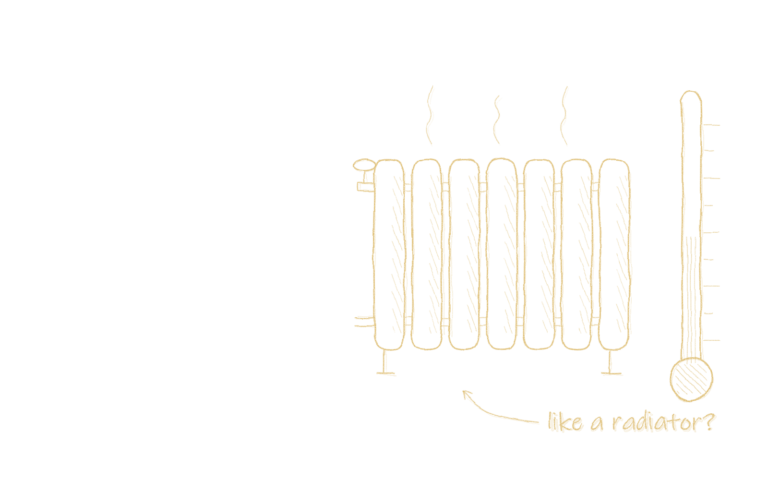
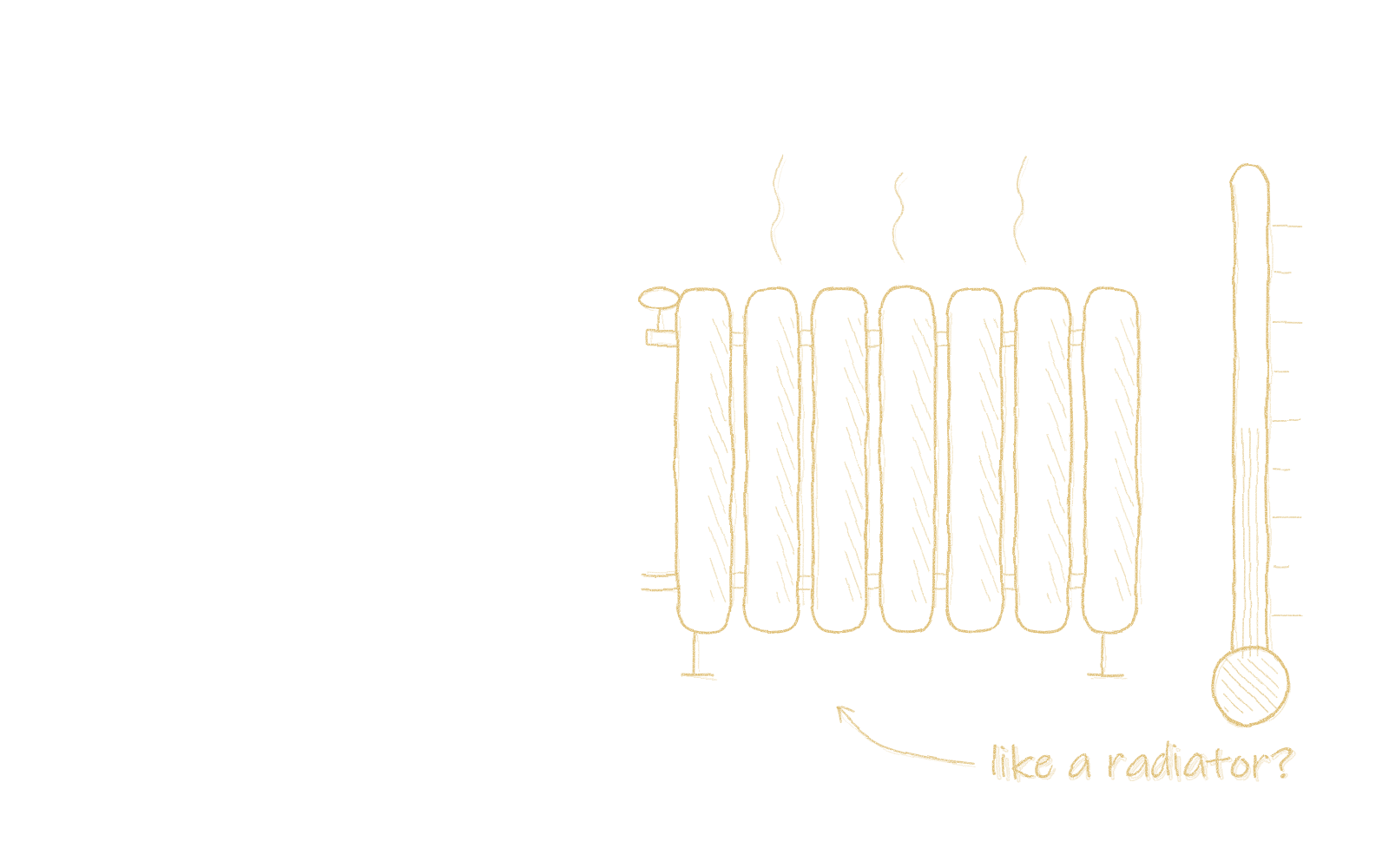
And yes, I know how that sounds. Air conditioning, for your head, powered by your jaw? But somebody did sit down and work it out. In a 2007 paper called “Yawning as a brain cooling mechanism” (nobody can accuse them of a clickbait title), Andrew Gallup and Gordon Gallup proposed that a yawn keeps the brain at a steady temperature[3]. As the theory goes, stretching the jaw pushes more blood through the head and neck, and the deep breath brings in cooler air. So a yawn works a bit like the radiator in a car[14], with the brain as the engine (which on a Monday morning feels generous).
OK, but how do you even test that? Well, their experiment was pretty low-tech. They had students watch videos of people yawning while holding a pack against their forehead, and the pack was either warm, room temperature or cold. So less of a lab, more of a very strange movie night.
With a warm or room-temperature pack, 41% of the students caught a yawn. With a cold pack it was 9% (which was one student out of eleven, and that one yawn was self-reported and unverified, so the whole 9% is one person going “yeah, I think I yawned”). They also tried telling people how to breathe. About half of the students who were told to use their mouths, or weren’t told anything, caught a yawn. And of the ones told to breathe through their nose, nobody did[3]. Not ONE nose-breather. The Gallups’ reading of all this was that a brain that’s already being cooled some other way has less reason to yawn[3].
Students who caught a yawn from videos of people yawning
But wait, look at what they were counting. This test, like the other human tests behind the cooling idea, counted only yawns that people caught from videos or pictures[3, 5, 6, 7]. So the ordinary yawn, the one you do alone at your desk at 3pm with no audience, isn’t the one that got counted.
So has anyone actually watched a brain’s temperature around a yawn? Yes, in rats. In 2010 a team put temperature probes in rats’ brains and recorded their yawns (you can’t ask a rat to yawn on cue, so I assume this involved a lot of waiting). The yawns came while brain temperature was rising, and afterwards the temperature went back to where it started[4]. That fits the radiator picture nicely. But the authors themselves noted that the rise might be part of the yawn and not the thing that triggers it[4]. So even the most direct evidence we have is a rat’s brain warming up and settling down around a yawn, with nobody sure which is causing which.
By this point I was pretty much sold. And then I noticed that the same name kept turning up on the papers.
Group project, but one guy did everything: Most of the cooling evidence comes from one lab
Andrew Gallup is an author on nearly every cooling paper I’ve mentioned, from the forehead packs to the rats[3, 4, 5, 6, 7, 8]. So most of this comes from one lab, and from one very busy guy.
That doesn’t make it wrong. But think about how a result usually earns our trust: a different team runs the same test and gets the same answer. So did anyone do that? Well, I couldn’t find anyone outside his circle repeating the forehead-pack test or the nose-breathing one. His 2013 review with Eldakar does say that numerous reports have replicated their predictions[14], but most of those come from the same group (which is a little like leaving your own five-star review). And a 2026 paper that Gallup himself edited says that evidence of yawns changing brain temperature is so far available only for rats, mice and budgerigars[15]. So, no humans yet. We’re currently losing to a budgie.
So, no humans yet. We’re currently losing to a budgie.
Other researchers have pushed back too. According to the cooling side’s own write-up of its critics, some argued that the packs might just change how sleepy people feel, and others that a yawn can’t cool you down much without sweating[14]. The cooling camp has replies to both, but that’s an argument between researchers, it isn’t over, and I’m not getting in the middle of it.
The nearest thing to an independent test came at the question sideways. A different team gave volunteers a bacterial toxin that causes a short fever, which is a brave thing to volunteer for (I hope the snacks were good). And their yawning did go up while they were sick. So… a point for cooling? Well, kind of. The yawning didn’t track their body temperature[16]. So that’s not the clean win the cooling idea could have used, and the authors themselves ask for more studies[16].
And even if cooling turns out to be right, it doesn’t clearly explain why the one across the table set yours off.
You started it: Contagious yawning and whether it’s really empathy
If you’ve yawned while reading this, nobody’s taking it personally.
Nobody knows for sure why yawns are contagious, either. The answer you usually hear is empathy, as in, you catch a yawn because you feel what the other person is feeling. And it’s a flattering answer, because it turns every yawn you’ve ever caught into proof that you’re a caring person. A University of Miami news story from May 2025 says “There are no definitive studies on why humans yawn”, and the neurologist it interviews, Dr. Christian Agudelo, says he believes contagious yawning is “an empathic behavior”[17].
Well, we can check that. If it’s empathy, then the people who catch yawns should be the ones who score higher on empathy. So in a Duke study, Alex Bartholomew and Elizabeth Cirulli had volunteers watch a short video of yawning faces, and about two in three of them yawned at least once[9]. When some of them were tested a second time, most people landed in the same group (yawner or non-yawner) both times, though people counted their own yawns by pressing a counter button (so, the honor system) and knew the study’s topic[9].
But what predicts who catches one? The only thing they found was age, and age explained only a small slice of the differences between people. Empathy scores added nothing once age was counted, though empathy was measured in only some of the volunteers[9]. That looks bad for empathy, at least until you read the next few papers.
In two lab studies, students who caught a yawn scored modestly higher on empathy than those who didn’t[10]. A year of watching people in everyday life (so somebody’s job for a year was noticing who yawned at whom, and I’m a little jealous) found that yawns spread most to family and least to strangers[18]. And a 2017 review calls the evidence for the empathy link “inconsistent and inconclusive”[11], though one of its two authors is Gallup (yes, him again), whose cooling idea competes with the social one.
So… is it empathy? Well, the studies point in different directions, and the review that calls it a draw was co-written by the guy with a competing idea. So no, the research doesn’t settle it. And the oddest evidence of all comes from people who haven’t been born yet.
Not even born yet and already bored: Yawning in the womb
Babies do yawn in the womb, like I said at the top. A 2026 count of fetuses between weeks 23 and 31 found fewer than five yawns an hour on average[15] (to be fair, there isn’t a lot on the schedule in there). Its authors list this among the cooling theory’s “blind spots,” since a fetus’s temperature depends largely on its mother[15]. And it is hard to argue you’re yawning to cool your own brain when someone else is running the thermostat.
But the strangest study in this whole post was published in May 2026. A team at the University of Parma had pregnant women in their third trimester watch three six-minute videos, one of people yawning and two for comparison, while an ultrasound filmed the fetus’s face. So the mom is watching the videos. The fetus is not watching anything, because it’s in a womb.
And the fetuses yawned more than twice as often during the yawning video as during either of the other two[19]. Weird empath fetuses. The fetus can’t see the video, remember?
Now, it’s one small study, and I haven’t found anyone that repeated it (email me if you repeated fetuses yawning to videos). And the authors are careful about it. They say the results are not evidence that the fetus copies something it perceives, and that their design “does not identify the physiological pathway”[19]. So the yawns lined up, and how that happens is still an open question.
So… why do we yawn? What we still don’t know
A 2022 review of yawning says there is “no consensus on its main function”[1], which is the peer-reviewed version of a shrug.
So is it bad to suppress a yawn in that meeting? I couldn’t find a study that tested for harm, either way. What I did find was a 2017 experiment where people were told to resist yawning. That made the urge to yawn stronger and changed how the yawns looked, but it didn’t change how likely people were to catch one from a video[20]. So trying to be polite makes you want to yawn MORE, which seems a little unfair.
So trying to be polite makes you want to yawn MORE, which seems a little unfair.
If you notice excessive yawning that is new and constant, be sure to mention it to your own doctor, or your partner, or your dog, or that new coworker you find cute. It’ll either be a great conversation starter, or a really weird one.
So for an ordinary week, here’s where I’d leave it. You can set the oxygen story aside. Cooling is the idea its own researchers call the best supported, with most of the work coming from one group, and the studies on why yawns spread disagree with each other. We’ve put probes in rats’ brains, held cold packs to students’ foreheads and played yawning videos to pregnant women, and the yawn still won’t tell us what it’s for. Honestly, I kind of respect it. If sleep is your real question, try naps-good-for-you or first-second-sleep. And if tiredness is what keeps bringing you here, why am I so tired all the time takes that on properly. Another small mystery in the same spirit is why we say bless you.
If you’d like to read more nearby:
- Why am I so tired all the time?
- Why am I always cold?
- Why do we say bless you?
- More from the Body page
Yes, you may yawn during the Q&A: Quick answers about why people yawn
Do we yawn to take in more oxygen?
Probably not, because the idea that we yawn to take in more oxygen failed a direct test in 1987[2]. The version that goes around is that your breathing has slowed, you don’t breathe as deeply, and so you open your mouth for one big deep inhalation. Which, honestly, sounds right. But breathing pure oxygen or extra carbon dioxide had no significant effect on how much students yawned, and exercise that doubled their breathing rate didn’t increase yawning either[2].
Does yawning cool the brain?
Maybe, but so far the direct evidence comes from animals, not people[15]. The theory is that yawning keeps the brain from starting to overheat: stretching the jaw pushes more blood through the head and neck, and the deep breath brings in cooler air[14]. In one experiment, students told to inhale and exhale through the nose caught no yawns at all from a video[3]. One critic (Elo), as the cooling side describes him, says a yawn can’t cause much of a decrease in temperature without sweating[14].
Why do we yawn when we are tired or bored?
Nobody has a settled answer for why sleepiness and boredom bring on yawns, because nobody agrees on what a yawn is for in the first place[1]. The usual guess is that a yawn helps a drowsy person feel more awake, or stay awake a little longer, but a 2010 review said that idea lacks evidence[13]. That same review found more support for a social job, where a yawn passes on “drowsiness, boredom, or mild psychological stress”[13]. And none of the studies here tested sleep deprivation (sorry, night shift).
Why are yawns contagious?
Nobody knows for sure why yawning seems contagious, and the studies on the usual answer, empathy, disagree with each other[9, 10, 11]. In two lab studies, people who yawn in response to a video scored modestly higher on empathy[10]. But in a Duke study only age predicted who caught one, though empathy was measured in only some of the volunteers[9]. An assistant professor of clinical neurology quoted in a 2025 news story says he believes it’s “an empathic behavior”[17]. Sorting out yawning and empathy requires studies that agree, and so far they’re still arguing.
Can even thinking about yawning make you yawn?
None of the studies in this post tested whether thinking about yawning, or even reading about yawning, makes you yawn. The yawn stimuli in these studies were videos and pictures of people yawning[3, 5, 6, 7, 9]. In the Duke study, about two in three volunteers yawned at least once during a short video of yawning faces[9]. So you may yawn while reading this page, but you’d be a data point nobody has collected yet.
Is it good to suppress a yawn?
I couldn’t find a study showing that suppressing a yawn is either good or bad for you. In a 2017 experiment, adults who were told to resist yawning felt a stronger urge to yawn, and it changed how their yawns looked, but they were just as likely to catch one from a video[20]. So if you yawn in class or in a meeting, holding it in is a question of manners (and of your closed-mouth yawn technique), and I couldn’t find a test of the health side.
Why did humans develop yawning?
Nobody knows why humans developed yawning, and a 2022 review found “no consensus on its main function”[1]. There are many theories (waking you up, cooling the brain, sending a signal to the people around you), and a 2010 review said the physical ones all lack evidence[13]. What we can say is that it’s built in early. Everybody yawns, it happens involuntarily (people often call it an involuntary reflex, which is a fancy way of saying you don’t get a vote), and yawning occurs before birth[15].
Do animals yawn?
Yes, lots of animals yawn. One 2021 study timed yawns in 101 species of mammals and birds, and found that yawns last longer in animals with bigger brains and more neurons[8] (that’s across species, so please don’t start timing your coworkers). Yawns also spread between individuals in some non-human primates, and possibly dogs[21]. And the only direct evidence of a yawn changing brain temperature comes from rats, mice and budgerigars[15].
Can excessive yawning be a sign of a health problem?
I can’t answer that one here, because everything this post looks at is about why healthy people yawn, not about yawning as a symptom. If excessive yawning is worrying you, mention it to your own doctor. And if what you’re really worried about is being tired all day, that has its own memo: Why am I so tired all the time? Common causes of fatigue, and what helps.
The numbers, if you want them
- Oxygen test, 1987: 18 college-age students breathed pure oxygen or extra carbon dioxide, and 19 exercised[2].
- Forehead packs, 2007: 41% caught a yawn with a warm or room-temperature pack (9 of 22) and 9% with a cold pack (1 of 11, and that one yawn was self-reported and unverified). About 48% of those given no instruction or told to use their mouths caught one, against none of the nose breathers[3].
- The 2010 review: I read its summary, not the full paper, so the authors’ reasons come from their 2011 follow-up[13, 21].
- Rats and fever: 21 yawns from four rats[4] (how cute, we can measure rats yawning!); 22 volunteers in the fever study[16].
- The critics of cooling: their two objections are given the way the cooling side’s 2013 review describes them, not from the critics’ own papers[14].
- Fetuses and the cooling idea: Walusinski raised fetal yawning against the cooling idea, and its defenders reply that it “neither supports nor opposes” it[14].
- Duke study, 2014: 222 of 328 volunteers yawned during a 3-minute video. Age explained about 8% of the differences between people. Empathy was measured in only 202 of the 328. Of 129 people tested twice, 78.3% stayed in the same group, though people counted their own yawns and knew the study’s topic[9].
- Empathy studies, 2018: 171 and 333 students; those who caught a yawn scored about half a standard deviation higher on empathy, which is half the usual spread in scores[10].
- Fetal count, 2026: 32 fetuses[15].
- Parma study, 2026: 38 women, 28 to 32 weeks along. Of the 36 fetuses with usable scans, 52.8% yawned during the yawning video, averaging 0.81 yawns each, against 0.33 and 0.28 for the two comparison videos[19].
- Stifling, 2017: 36 adults[20].
Homework, but it’s one yawn: One thing to notice today
The next time you catch a yawn, notice who you caught it from. In that year of people-watching, yawns spread most to family and least to strangers[18]. So you can check that one at your house: do you catch more from your kid, your partner or your oldest friend than from the stranger across the train? That’s the whole assignment. And if you forget to look, don’t worry, there’ll be another one along shortly.
Sources
- Doelman, C. J., & Rijken, J. A. (2022). Yawning and airway physiology: a scoping review and novel hypothesis. Sleep and Breathing, 26(4), 1561-1572. https://doi.org/10.1007/s11325-022-02565-7
- Provine, R. R., Tate, B. C., & Geldmacher, L. L. (1987). Yawning: no effect of 3-5% CO2, 100% O2, and exercise. Behavioral and Neural Biology, 48(3), 382-393. https://doi.org/10.1016/s0163-1047(87)90944-7
- Gallup, A. C., & Gallup, G. G., Jr. (2007). Yawning as a brain cooling mechanism: Nasal breathing and forehead cooling diminish the incidence of contagious yawning. Evolutionary Psychology, 5(1), 92-101. https://doi.org/10.1177/147470490700500109
- Shoup-Knox, M. L., Gallup, A. C., Gallup, G. G., & McNay, E. C. (2010). Yawning and stretching predict brain temperature changes in rats: Support for the thermoregulatory hypothesis. Frontiers in Evolutionary Neuroscience, 2, 108. https://doi.org/10.3389/fnevo.2010.00108
- Gallup, A. C., & Eldakar, O. T. (2011). Contagious yawning and seasonal climate variation. Frontiers in Evolutionary Neuroscience, 3, 3. https://doi.org/10.3389/fnevo.2011.00003
- Massen, J. J. M., Dusch, K., Eldakar, O. T., & Gallup, A. C. (2014). A thermal window for yawning in humans: yawning as a brain cooling mechanism. Physiology & Behavior, 130, 145-148. https://doi.org/10.1016/j.physbeh.2014.03.032
- Ramirez, V., Ryan, C. P., Eldakar, O. T., & Gallup, A. C. (2019). Manipulating neck temperature alters contagious yawning in humans. Physiology & Behavior, 207, 86-89. https://doi.org/10.1016/j.physbeh.2019.04.016
- Massen, J. J. M., Hartlieb, M., Martin, J. S., Leitgeb, E. B., Hockl, J., Kocourek, M., Olkowicz, S., Zhang, Y., Osadnik, C., Verkleij, J. W., Bugnyar, T., Nemec, P., & Gallup, A. C. (2021). Brain size and neuron numbers drive differences in yawn duration across mammals and birds. Communications Biology, 4, 503. https://doi.org/10.1038/s42003-021-02019-y
- Bartholomew, A. J., & Cirulli, E. T. (2014). Individual variation in contagious yawning susceptibility is highly stable and largely unexplained by empathy or other known factors. PLOS ONE, 9(3), e91773. https://doi.org/10.1371/journal.pone.0091773
- Franzen, A., Mader, S., & Winter, F. (2018). Contagious yawning, empathy, and their relation to prosocial behavior. Journal of Experimental Psychology: General, 147(12), 1950-1958. https://doi.org/10.1037/xge0000422
- Massen, J. J. M., & Gallup, A. C. (2017). Why contagious yawning does not (yet) equate to empathy. Neuroscience & Biobehavioral Reviews, 80, 573-585. https://doi.org/10.1016/j.neubiorev.2017.07.006
- Millen, A., & Anderson, J. R. (2011). Neither infants nor toddlers catch yawns from their mothers. Biology Letters, 7(3), 440-442. https://doi.org/10.1098/rsbl.2010.0966
- Guggisberg, A. G., Mathis, J., Schnider, A., & Hess, C. W. (2010). Why do we yawn? Neuroscience & Biobehavioral Reviews, 34(8), 1267-1276. https://doi.org/10.1016/j.neubiorev.2010.03.008
- Gallup, A. C., & Eldakar, O. T. (2013). The thermoregulatory theory of yawning: What we know from over 5 years of research. Frontiers in Neuroscience, 6, 188. https://doi.org/10.3389/fnins.2012.00188
- Menin, D., Veronese, P., Gervasi, M. T., Oster, H., & Dondi, M. (2026). Fetal yawning and mouth openings: Frequency, developmental trends, and association with birth weight. PLOS ONE, 21, e0341339. https://doi.org/10.1371/journal.pone.0341339
- Marraffa, A., Lekander, M., Solsjo, P., Olsson, M. J., Lasselin, J., & Axelsson, J. (2017). Yawning, a thermoregulatory mechanism during fever? A study of yawning frequency and its predictors during experimentally induced sickness. Physiology & Behavior, 182, 27-33. https://doi.org/10.1016/j.physbeh.2017.09.018
- University of Miami Miller School of Medicine (2025, May 27). Why do we yawn? Question-and-answer piece with Dr. Christian Agudelo. Newswise. https://www.newswise.com/articles/why-do-we-yawn
- Norscia, I., & Palagi, E. (2011). Yawn contagion and empathy in Homo sapiens. PLOS ONE, 6(12), e28472. https://doi.org/10.1371/journal.pone.0028472
- D’Adamo, G., Dall’Asta, A., Ardizzi, M., Sorrentino, S., Mora, V., Arenare, G., D’Amario, P., Capurso, M., Ferroni, F., Ollari Ischimji, D., Ferrari, C., Ghi, T., & Gallese, V. (2026). Prenatal behavioral contagion through maternal yawning and fetal resonance. Current Biology, 36(10), 2696-2702. https://doi.org/10.1016/j.cub.2026.04.025
- Brown, B. J., Kim, S., Saunders, H., Bachmann, C., Thompson, J., Ropar, D., Jackson, S. R., & Jackson, G. M. (2017). A neural basis for contagious yawning. Current Biology, 27(17), 2713-2717. https://doi.org/10.1016/j.cub.2017.07.062
- Guggisberg, A. G., Mathis, J., Schnider, A., & Hess, C. W. (2011). Why do we yawn? The importance of evidence for specific yawn-induced effects. Neuroscience & Biobehavioral Reviews, 35(5), 1302-1304. https://doi.org/10.1016/j.neubiorev.2010.12.004