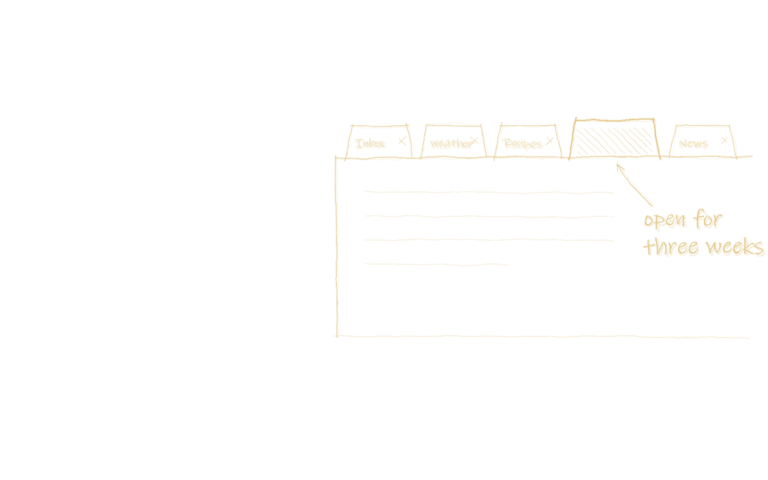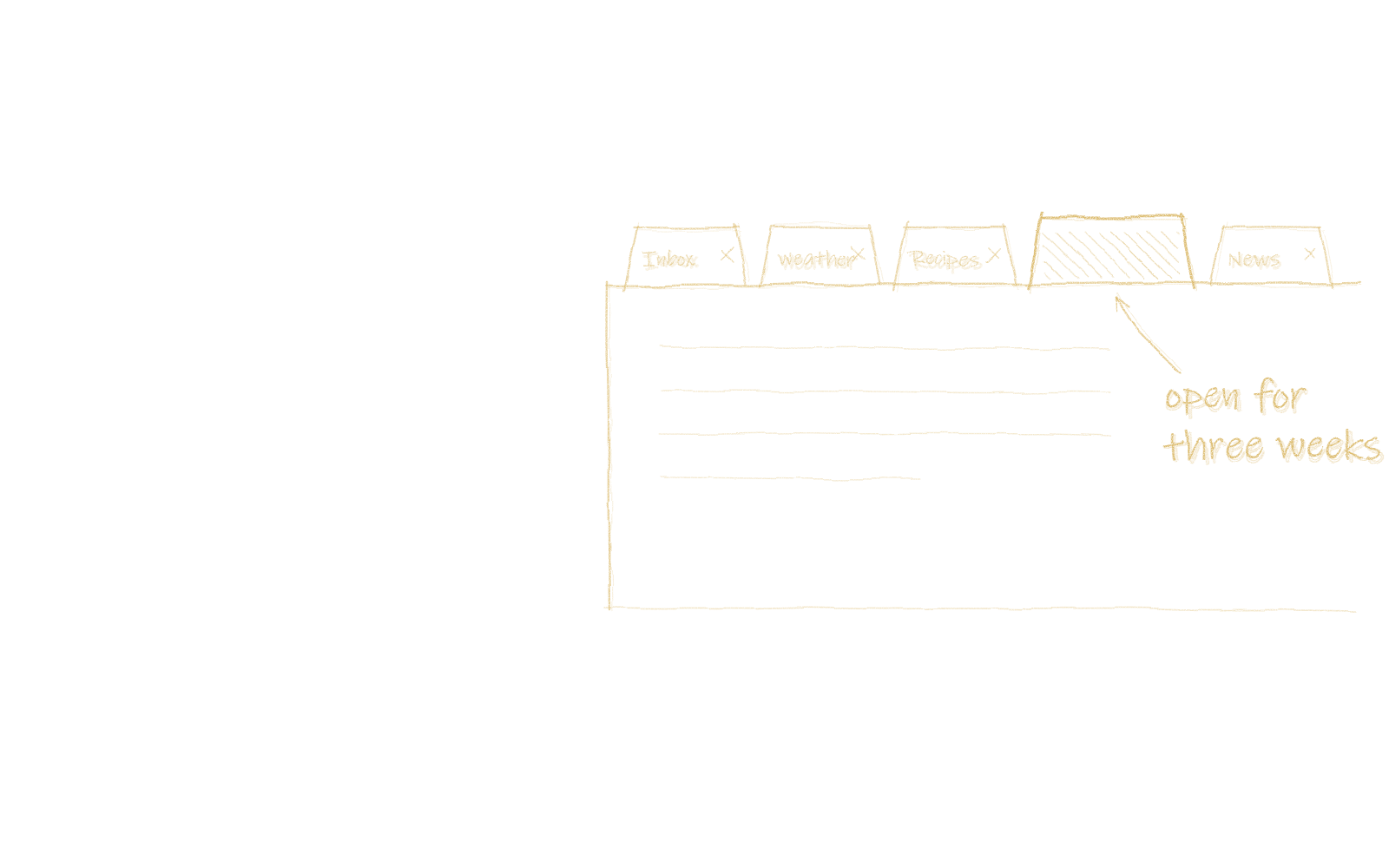
There’s a tab in your browser that has been open for three weeks. Maybe it’s a job application. Maybe it’s a course you paid for, or a half-written message to someone you miss. And every time your eyes pass over it your stomach drops a little, so you tell yourself you’ll do it tonight, properly. Then tonight comes, and the tab is still there.
At some point in those three weeks you may have opened a fresh tab and typed “how to stop procrastinating” into it. Plenty of us have. (It’s a great way to spend twenty minutes not clicking the first one.)
And if you want to stop procrastinating, the lists that come back aren’t wrong, exactly. What tends to help is smaller than it sounds: name the feeling the tab stirs up, shrink the first step until your hands can do it, and give it ten minutes. But none of the lists I read explained the strange part. You closed a dozen other tabs this morning without a second thought. This one has survived every clear-out for three weeks, and it’s the one you’d most like to get right.
So that’s the question I went chasing. Why do we keep not starting the things that matter to us, and how do you start one of them this week? And here’s my argument for the whole essay, so you know where it’s going: the tab isn’t waiting on your character, and it isn’t waiting on you to dig up a root cause either. It’s most likely stuck behind a small bad feeling that you keep getting away from (very successfully, by the way), and my bet is that the way through is a first step so small that the feeling doesn’t get a vote.
Now, this is a long one, about half an hour of reading (yes, I know, an essay about procrastination that takes half an hour, I can hear it too). It comes in four parts because the question kept splitting on me. First, what putting things off actually is, since “lazy” is usually the first word that turns up and I think it’s the wrong one. Second, why we also put off things we like, and even things we love. Third, the two big explanations people reach for, trauma and ADHD, and the question hiding under both: do you have to find the root cause before you can change? Fourth, starting, which ends with a ten-minute start you could do tonight. After the four parts there is one short extra, on sleep, and then some quick answers. Some of what I read is solid and some of it is thin, and I’ll tell you which is which as we go, so you know what to lean on.
1. “I’m just lazy” and other explanations worth checking: why we procrastinate (and what procrastination even is)
The first thing most of us do with the tab is pass sentence on ourselves. I’m lazy. I’ve always been like this. And honestly, that sounds right to me at first. The tab needs one click, it’s had three weeks, and the click hasn’t happened. What else would you call it?
Well, the best-supported answer I found to why we procrastinate is that we’re getting away from a bad feeling about the task, and “lazy” doesn’t describe that very well. But let’s start with one of the oldest procrastinators on record, because the man who wrote him down had a very different suspect in mind.
The demon made me do it: a monk, a window and a fifty-hour afternoon
Sometime before the year 400, a monk is sitting in his cell in the desert, and he has work to do. He isn’t doing it. What he’s doing, according to Evagrius of Pontus (the man who wrote him down), is going to the window. Again and again he gets up to look at the sun and see how far it still is from the ninth hour, which is the middle of the afternoon[1]. And the sun seems to slow down or stop, Evagrius says, until the day feels “fifty hours long”[1]. If you’ve ever looked at a clock at 2:40 and then again, much later, at 2:43, you know this afternoon.
So what did Evagrius make of it? He blamed a demon. His name for the trouble was acedia[1], and as explanations go it has one big advantage over “lazy”, which is that it’s somebody else’s fault.
Now, this was a man who had given up a great deal to be in that cell, so I don’t think a shortage of caring is what was going on at the window. (That’s me reading him sixteen centuries later. Evagrius, as I said, went with the demon.) But look at what the portrait actually shows. One of the oldest detailed descriptions of putting things off that we have doesn’t show anyone lying on a couch. It shows someone restless, checking, and miserable about the hours. And if you’ve ever checked your phone four times in ten minutes with a document open behind it, the two of you would have understood each other. He had a window, and we have a lock screen.
Meant to, didn’t, saw it coming: what procrastination actually is (and how it differs from laziness)
Here’s the short version before the long one: procrastination means voluntarily delaying something you meant to do while expecting to be worse off for the delay[2], and laziness is a verdict on a whole person that I couldn’t find an agreed way to measure. A demon is a fun answer, but did anyone check with, you know, data? Sixteen centuries later a psychologist named Piers Steel did. In 2007 he published a huge review that combined 691 correlations[2]. A correlation is a number for how closely two things rise and fall together, and there are a few of them coming, so that’s worth holding on to. (Also, somebody sat down with 691 of them and finished the job, which I find quietly impressive.)
Steel’s review defines procrastination as voluntarily delaying something you meant to do while expecting to be worse off for the delay[2]. And both halves of that matter. You meant to. And you can see the negative consequences coming, which is exactly what makes it so maddening.
Now, here’s what I expected the review to show next: that people who put things off are people who never much intended to do the work in the first place. That’s more or less what “lazy” means, right? Well, Steel looked, and how much people intended to do their work had almost no link to how much they put it off[2]. Almost none! What did go with procrastination was the gap between meaning to and doing[2]. So people who tend to procrastinate mean to do things about as much as anyone else. They just don’t get from meaning to doing as reliably.
One thing to carry with you from here on: most of the studies in that review asked university students to rate themselves[2], so most of what follows was learned from students.
And “lazy” turns out to be a different kind of word altogether. It doesn’t describe one delay. It’s a verdict on a whole person, and I couldn’t find an agreed way to measure it. One paper I found defines it as a negative term for people who don’t seem to put in an effort that matches their abilities[3]. So in place of the verdict, here are two questions you can ask about any one delay:
- Did I mean to do this, around now?
- Do I expect to be worse off for waiting?
Two yeses, and it’s procrastination. If you never meant to, you haven’t decided yet, and the real question is whether to prioritize it at all. If waiting costs you nothing, it may simply be rest. And notice that “lazy” isn’t one of the possible results. (The two questions are just my way of turning Steel’s definition into something you can use on a Tuesday night. They aren’t a tested questionnaire[2].) There’s a fuller version of this in the piece on procrastination and laziness. And if the freeze happens right at the first step, there’s a piece on task paralysis.
Buy now, pay later: putting things off to feel better
So if it isn’t laziness, what is it? The best-supported answer I found is that putting things off is a way of feeling better right now, with the cost passed on to later. The person who has spent the most time on that question is probably Timothy Pychyl, a psychologist who spent his career researching procrastination at Carleton University and has since retired[4] (imagine the jokes he’s had to sit through at parties). When his university’s newsroom asked him, he called procrastination “an emotion-regulation problem” and said it is “not a time management problem”[5].
Which sounds like something you’d find printed on a mug. So how is it supposed to work? In 2013 Pychyl and the psychologist Fuschia Sirois set the idea out in a review[6]. Procrastination, they wrote, “has a great deal to do with short-term mood repair”[6]. And it goes like this. A task stirs up a bad feeling, and the tasks they have in mind are ones that feel “boring, frustrating, lacking meaning and/or structure”[6]. So you step away from the task at hand, and you feel better right now. And the relief is real! It just isn’t free. The bill goes to a later version of you, or in their words, the consequences “are typically borne by the future self”[6].
So why do we keep accepting the deal? Because, they suggest, “we believe that we will be different tomorrow”[6]. Tomorrow-you is going to be rested, organised and weirdly enthusiastic about forms, and will get it done in an afternoon. Tomorrow-you sounds great. Tomorrow-you is also, annoyingly, always one day away.
Pychyl has an even shorter version, and it’s the one that has lodged in my head: “Avoid the task, avoid the bad mood”[7].
It’s a neat idea. But did someone run an experiment, or is it only a neat idea? Well, there’s one I like, from 2001. Dianne Tice, Ella Bratslavsky and Roy Baumeister reasoned like this: if we give in to temptation in order to feel better, then people who are convinced their bad mood can’t be changed should have no reason left to give in[8]. So across three experiments they looked at people who believed exactly that, that their bad mood was frozen. (How do you convince someone their mood is frozen? I would love to know.) And it went the way they predicted. People who believed their bad mood was frozen no longer showed the usual pull toward fattening snacks (experiment 1), quick rewards (experiment 2) and trivial putting-off (experiment 3)[8]. So if the mood isn’t going anywhere, putting the thing off doesn’t get you anything, and apparently the pull went away.
Now, before leaning too hard on that: only the third experiment was about procrastination, and I didn’t find a direct repeat of it[8]. So I’d call it a strong clue and stop short of calling it settled.
There’s a small, human footnote to all this. When the psychologist Hal Hershfield asked Pychyl whether he ever procrastinates, Pychyl said “Almost never!” (with the exclamation mark, which I respect). His reason was that he knows his future self won’t want to do the thing any more than his present self does[9]. And I find that oddly touching. After a career spent studying the problem, his answer was to be kind to the person who’d otherwise get the bill.
The biggest number isn’t about mood: what else goes with procrastination
So that seemed to settle it. It’s a feeling, we’re done, everybody go home. And then I went back to Steel’s review, and the mood story turned out to have company: low self-control goes with procrastination more strongly than disliking the task does, and distractibility and impulsiveness about as strongly[2]. The mood story is still the best-supported single account I found of why people procrastinate, but it clearly isn’t the only thing that lines up with putting things off, and Steel’s review is the best place to see the whole crowd[2]. The numbers in the chart below are correlations again. They run from 0 (the two things don’t move together at all) to 1 (they move in lockstep), and a minus sign means one goes up as the other goes down.
How the task feels
Who you are in general
Doubts about yourself
Less than you’d expect
Start with the one the mood story would predict. Disliking the task (finding it boring, effortful or anxiety-making) went with putting it off at .40[2]. So far, so good. But that isn’t the biggest number on the chart. The biggest is general self-control, meaning how well you usually hold back an impulse, at −.58[2]. Then comes distractibility (how easily a distraction pulls you away) at .45, impulsiveness at .41, and confidence in your ability at schoolwork or work at −.38[2].
And then there are the two at the bottom, which are the two I’d have put money on: perfectionism, at −.03, and fear of failure, at .18[2]. Perfectionism at −.03! “I’m a bit of a perfectionist” is the explanation that sounds best in a job interview, and the chart says… next to nothing? Hold on to those two. The labels turn out to be misleading, and part two is where that comes out.
So the biggest number isn’t about mood at all. Does that knock the mood account down? I don’t think so. The way I’d fit them together is that a bad feeling is the push, and self-control and distractibility decide how easily the push wins. But the fitting-together is mine. Steel’s own reading of his data was a different theory, about delay and how much a task seems worth[2]. And whichever reading you prefer, these are correlations, mostly from students rating themselves, so none of them shows what causes what.
“Sounds like an excuse to me”: why beating yourself up may not get the thing done
Now, you might be thinking this lets everyone off the hook. If it’s a feeling, it isn’t my fault, and if it isn’t my fault, why would I ever change? Surely a bit of guilt is what keeps a person honest. (Short answer: it doesn’t seem to, and it may make the next delay more likely[6].)
And that sounds reasonable to me too, because guilt feels like taking responsibility. But it doesn’t seem to work like it. Sirois and Pychyl cite research suggesting that the bad feeling that follows putting something off “may actually promote rather than prevent future procrastination”[6]. Wait, so feeling bad about procrastinating might lead to MORE procrastination? Well, think about how the whole deal runs (this bit is my reading). Beating yourself up is one more bad feeling to get away from, and the quickest way out is the one you used last time.
So naming the feeling doesn’t excuse anything. It tells you what you’re up against, and that’s often something specific, like boredom, frustration or a job with no clear shape, which is more manageable than a flaw in who you are.
Meanwhile, in your browser: three weeks of tiny escapes
So look at the tab again. The small drop in your stomach when your eyes land on it is the thing being managed. Switch to another tab, almost unconsciously, and the feeling is gone in about a second. Next time you pass, it’s back, and you fix it again. Seen that way, three weeks of not clicking isn’t three weeks of laziness. It’s a long run of tiny, successful escapes from a feeling, each one sensible in the moment and costly in total.
But something doesn’t fit. If this were only about boring or frustrating tasks, the tab would be a chore, and often it isn’t. Often it’s an important task, or a plainly enjoyable one: the course you were excited to pay for, the friend, the novel stuck at chapter one, the guitar in the corner. Why on earth would we run from a feeling that comes from something we want? Well, that one turned out to have more than one answer, and the first comes from marketing research, of all places.
2. Bills get paid, the guitar gets dusty: why we also put off things we like
Sirois and Pychyl mostly describe tasks that feel boring, frustrating or lacking meaning[6], and the guitar is none of those. (Nobody has ever looked at a guitar and thought “lacking meaning and/or structure”.) So the mood story needs some help here, and the help comes from people who study shoppers. Their answer, in short: things we like get put off too, partly because nothing makes them due, and partly because a long gap raises the bar for going back[10, 11].
The gift card at the back of the drawer: enjoyable things with no deadline
If you’ve ever found a forgotten gift card at the back of a drawer, you’ve met this one already: enjoyable things with no deadline get put off too[10]. In 2010 Suzanne Shu and Ayelet Gneezy published a paper whose title sounds like a joke: “Procrastination of enjoyable experiences”[10]. So, procrastinating on FUN. Who does that? Well, people who had unlimited time to visit landmarks they wanted to see kept putting the visit off. And gift cards with long deadlines got used less than ones with short deadlines[10]. More time to enjoy the thing, and less enjoying of the thing. And people didn’t see it coming[10].
But why? Think about what separates the two kinds of task. A bill arrives with a deadline attached. The guitar doesn’t, and nobody sends you a final notice about the guitar. Shu and Gneezy’s explanation, in the words of a later paper that sums it up, is that people “discount future feasibility costs”[10, 11], which is a stiff way of saying that fitting it in looks easier next month than this week. I suspect most of us keep a mental list called “when things calm down”, and I suspect it never gets shorter (things, famously, do not calm down).
That would explain why a new wanted thing slides. But it doesn’t explain the worse part, the one that really stings: why the thing you used to love gets harder to go back to the longer it waits.
“We should catch up soon!”: the text you haven’t sent
Picture two friends. One you texted last week. The other you could text just as easily (there’s been no falling-out), but you haven’t in a long while. Now you’re given a plain choice: send a friendly hello, or do a longer, more boring task by yourself.
That’s very nearly the experiment that Linda Hagen, at the University of Illinois Chicago, and Ed O’Brien, at Chicago Booth, published in 2025[11]. They recruited 1,000 American adults, had each one bring both kinds of friend to mind, and then gave each person the choice for one of the two friends, picked at random[11]. So that’s the whole menu: a nice text to someone you like, or a boring chore. I’d have said nearly everybody picks the text, because it’s the easy option AND the pleasant one.
With the recent friend, 63% did. With the friend they hadn’t texted in a while, 46% did[11]. So more than half of that second group would rather sit through a dull task, alone, than send a short, warm message to someone they liked. They picked the chore, over a friend, on purpose.
So more than half of that second group would rather sit through a dull task, alone, than send a short, warm message to someone they liked.
Would wait for a better option later (599 adults)
My first guess was nerves, a fear of an awkward reply. But the researchers checked, and social anxiety and sensitivity to rejection didn’t explain it[11]. Their explanation is stranger and, I think, kinder. After a long gap, people “demand their return be ‘extra special’ to offset the wait”[11]. A quick “hey, how are you” doesn’t feel big enough to make up for all that silence, so it waits for a better moment. And while it waits, the gap grows, and the bar goes up again. They call this “vicious cycles of deferment”[11] (which, to be fair, would also be a decent band name). What I notice is that dread isn’t in that story at all. People may sometimes be holding out for a better payoff, which is a different thing from hiding from a bad one[11].
So what got people moving? In a final experiment, 599 adults who were waiting to get back to something they enjoyed were asked whether they’d go back at the next good-enough chance. With no nudge, 64% said they would wait for a better option later[11]. Then the researchers tried two little pep talks on two other groups. Some people were asked first to reflect that the gap could feel “not that long ago”. And that sounds like it should work, right? It hasn’t been THAT long. Well, 66% of them would still wait[11]. Others were asked to reflect that any event like this “can feel extra special, all things considered”, and of those, 51% would wait[11]. So making the wait feel shorter didn’t help. Letting an ordinary chance count as special did.
One limit matters here. The authors suggest the same thing happens with hobbies, but no experiment tested hobbies[11], so carrying it over to the guitar or the novel, or to a browser tab, is my doing. I still think it fits. On the first day, opening the tab would have been nothing. By week three it has become a whole Thing, and clicking it feels as though it should come with a distraction-free evening, a clear head and a good result.
Filed under the wrong heading: perfectionism, fear of failure and procrastination
There may be a second weight on the things we care about. Because they matter, the first attempt can start to feel like a verdict on us. (Nobody’s self-esteem is riding on the electricity bill.)
A 2012 survey of university students by Haghbin, McCaffrey and Pychyl found that how capable students felt changed how fear of failure related to procrastination[12]. So the link wasn’t the same for everyone. And Steel’s chart points the same way from a different side: people who doubted they could do the task put it off more, at −.38[2].
And this is where the two odd numbers from part one start to make sense. Remember perfectionism at −.03? Well, it turns out to be a filing problem. Steel counted only perfectionism about your own standards and other people’s, and found almost no link with procrastination. The worried kind, the kind about being judged, he filed under fear of failure, which is why that row includes it[2, 13]. So in 2017 Sirois (the same Sirois as the mood review), Molnar and Hirsch separated the two, and they pointed in opposite directions: worry about mistakes and about being judged went with more procrastination (.23), and having very high personal standards went with a little less (−.22)[13]. So “perfectionism doesn’t matter” was partly a matter of which pile things got sorted into.
The writer Joseph Everett has argued that much of what we call perfectionism is really fear of looking bad[14]. And to my eye those two numbers suit his argument better than the usual story, in which high standards themselves are the problem.
“If I really wanted it, I’d have done it by now”: what a long delay can and can’t tell you
That’s the small voice that pipes up every time you pass the guitar, and it sounds very sure of itself, but a long delay says very little about how much you want something. So let’s argue with it, because by now there are three answers. People put off enjoyable things without seeing it coming[10]. The longer something waits, the more people hold out for a special return[11]. And for things that matter, the first go can feel like a test: the worried-about-being-judged kind of perfectionism goes with more putting off[13]. So the delay isn’t a measure of the wanting. You may have outgrown the guitar, and that’s allowed. The delay just can’t tell you either way.
And on average, wanting is on your side. In a 1995 survey of French-Canadian junior college students, those who did their schoolwork for its own sake procrastinated less than those doing it for outside reasons[15]. That’s schoolwork and not guitars, I know, but I’ll take it as a hopeful sign. There’s more in the piece on why we put off the things we want.
So those are some reasons the things we like get put off too. What they don’t explain is why yours might be heavier than your friend’s, or so constant that it starts to look like a sign of something.
3. Trauma, ADHD, and whether you need to know why
By now you might have a sharper version of the question. “Fine, it’s a feeling. But mine goes back to childhood.” Or: “Maybe I have ADHD, and that’s all this is.”
Both are fair things to wonder, and neither is an excuse. Both are also all over the internet, usually stated with a good deal more confidence than the research allows. So I’ll take them one at a time, and then get to the bigger question sitting underneath both: do you need to know where your feeling comes from before you can do anything about it?
Can procrastination be a trauma response?
For some people it may be. But nothing I read shows that most people who procrastinate are responding to trauma. Search the question, though, and many of the top answers give a flat yes. The story goes that a nervous system that learned to freeze in a childhood that wasn’t safe now shuts down whenever a task feels like a threat[16]. I want to be fair to those pages, because they get a lot right. They say the delay isn’t a character flaw, that it’s about a feeling more than the clock, and that blaming yourself makes it worse[16]. All three fit part one. Where they go too far is in saying it’s wired in.
So what has actually been measured? I found at least six main studies that measured a hard childhood and procrastination in the same people. The six I read were one-time surveys of students, five of them in China, and most found a modest link[17, 18, 19, 20, 21, 22]. (There are a few smaller ones I couldn’t open.) The biggest, from Tingyong Feng’s group, surveyed 1,189 students and found that childhood trauma “was a significant predictor” of procrastination, a link that ran, statistically, through higher anxiety and lower self-control[17]. “Predictor” sounds like a forecast. Here it means one questionnaire score predicting another, filled in on the same occasion. One team wrote it as plainly as anyone could: “First, causal inferences cannot be made from the current data”[19].
The next thing I’d want to know is what “trauma” meant in those surveys. Mostly it was broader than the kind behind PTSD: psychological maltreatment, emotional neglect by parents, checklists of adverse childhood experiences, and in one study an “unpredictable” childhood that counted parental divorce and moving house[18, 19, 20, 21, 22]. None of the six measured a trauma response, such as PTSD symptoms. They measured what happened, as students remembered it.
And hard childhoods are common. In CDC survey data from 2011 to 2020, 63.9% of US adults reported at least one adverse childhood experience[23]. So if you procrastinate and had a rough childhood, you’re in very large company, and the overlap alone can’t tell you whether one explains the other.
The fairest bridge between the two comes from Sirois again. In a 2023 review, she argued that stressful circumstances raise the risk of procrastination because they wear down your ways of coping and “lower the threshold for tolerating negative emotions”[24]. She applied that mainly to stress during the pandemic and mentioned illness. She didn’t apply it to childhood, so stretching it to a hard past is a step I’m taking and she didn’t[24]. But look how it fits part one. If a hard past makes bad feelings heavier, the escape from them becomes more tempting. And Sirois ends on a kind sentence: “culpability for procrastination does not solely or always rest within the individual”[24].
So where does that leave a hard past? In the plainest words I can find: true for some, unproven for most. It may well be part of your story. Nothing I read says it has to be, and the habit alone can’t tell you whether it is. I go through the studies one by one in the piece asking whether procrastination is a trauma response.
Is procrastination a sign of ADHD?
Not on its own. Procrastination alone can’t tell you whether you have ADHD, though ADHD can bring procrastination with it. This one deserves care, because if you’ve wondered about it, you deserve a straight answer and not a quiz.
The longer version comes in two halves that seem to pull against each other. Procrastination isn’t one of the official criteria for ADHD; two researchers noted in 2014 that it “is officially not acknowledged as an ADHD-related symptom”[25]. At the same time, the US National Institute of Mental Health lists “disorganization and procrastination” among the problems ADHD symptoms can lead to in adults[26]. Both things are true. It isn’t how ADHD is defined, and it’s something ADHD can bring with it.
The newest review, by Suriano in 2026, gathered 11 studies and found ADHD symptoms “consistently” linked with procrastination, with inattention the strongest link, though mostly from one-time snapshots that can’t say what causes what[27].
The finding that matters most for you, though, comes from one online survey of adults in Japan. It’s the one place I found ADHD symptoms, anxiety and low mood all compared against procrastination in the same people[28]. ADHD symptoms and anxiety went with procrastination about equally strongly, and low mood somewhat less[28]. And one of the six screening questions is itself about putting off a start[28]. So procrastination on its own can’t tell you which of these, if any, is yours. A 2025 review of 88 studies found the same general picture: procrastination travels with present-day anxiety, low mood and stress, but can’t say which way the arrow points[29].
I couldn’t find a study that tests procrastination as a sign that tells one person whether they have ADHD, or a review that pools the size of the link. If you’ve wondered about ADHD, a doctor or psychologist can do a proper assessment; diagnosing it takes a health care provider’s evaluation[30]. A browser tab can’t do that, and neither can this essay.
You don’t have to find the root cause first
Trauma and ADHD are really two versions of a bigger question. Do I have to understand why I do this before I can stop?
The writer Joseph Everett has a story about this that I love, partly because it costs him something to tell. In a September 2025 essay, “Stop trying to know yourself so hard“, he catches himself, on the page, assembling a tidy explanation for his own procrastination, one that runs back to his father and a harsh inner taskmaster[31]. And it’s convincing. Then he points out that he came up with it on the spot, at 4:30 in the morning, jet-lagged after a trip to Europe[31].
So he hadn’t uncovered the story. He’d made it up, and he was the one who told us.
What he did next is the useful part. He stopped digging into why and asked what the delay was doing for him. And the answer was practical: he hadn’t settled what mattered most, so everything felt equally vague, and that gave him something he could test[31]. His conclusion is that many of us get stuck looking inward because we think it will fix our behavior, when changing our behavior patterns first is often the faster way to change how our minds work[31]. That’s his argument, and this part of the essay builds on it.
But is that only one writer’s hunch at 4:30 in the morning, or has anyone looked into it? Everett is drawing on the psychologist Timothy Wilson, whose 2002 book Strangers to Ourselves is about how much of our mind works outside our awareness[32]. A psychologist who reviewed the book summed up Wilson’s view as: we “learn more about ourselves from observing our behavior than by introspecting”[33]. And Wilson’s own papers say something close to it in his words, with more caution. In 1977, he and Richard Nisbett reviewed earlier experiments and added a few small studies of their own, and concluded that people are sometimes “unaware that the stimulus has affected the response”[34]. In a 2004 review with Elizabeth Dunn, Wilson went further: looking inward is “less a matter of unearthing hidden feelings and motives” and more “a constructive process of inferring” what those feelings and motives might be[35]. So when we ask ourselves why, we’re often building an answer, not finding one. Which is just what Everett caught himself doing at 4:30 a.m.
Now the other side, because that same review doesn’t say looking inward is useless. It describes many studies in which writing about emotional or traumatic experiences, for 15 to 30 minutes over three to five days, had good effects on health, academic performance and work[35]. It says looking inward can help when it makes a coherent story out of hard events, and it calls watching your own behavior one route to knowing yourself, “although major obstacles exist”[35]. John Kihlstrom, the reviewer I quoted a moment ago, thought the book’s studies were “often either irrelevant or subject to alternative interpretations”[33]. Everett grants the limit himself: some looking inward, he writes, is good[31]. And I couldn’t find a single study that compared “act first” with “find the cause first” for procrastination.
So the claim I’ll actually stand behind is smaller than Everett’s. You don’t have to know why before you take a first step. The why can wait. Nothing I read says it’s worthless, and if your why involves a hard past, a therapist is a far better guide to it than a 4:30 a.m. theory, yours or mine.
There’s a cousin of this idea in therapy for depression, and Everett’s July 2025 essay, “There is only one way to stop procrastinating“, points to it[36]. It’s called behavioral activation, a therapy that gets people back into rewarding activities and cuts down avoidance, working mostly on what they do rather than on their thoughts[37]. It isn’t “never ask why”: it includes looking at what sets off the low mood[37]. In a 2016 trial with 440 adults with depression in England, behavioral activation delivered by junior mental health workers did as well as cognitive behavioral therapy delivered by psychological therapists[37]. That trial was about depression, not procrastination, so it says nothing direct about your tab. What it does show is that “start with the action” is a serious idea and more than a slogan.
Which brings us back to the tab. It doesn’t tell you where its dread came from. You could spend an evening reading up on its history, or you could click it. You’re allowed to do both. You’re just not required to do the first before the second.
If it’s heavier than one tab
If what you’re carrying is a hard past, or if putting things off sits inside a low mood that won’t lift or a lack of motivation that has spread across most of your life for weeks, the right next step is a person: a doctor, a therapist or a counselor who can look at the whole of it. Nothing here, and nothing in these surveys, can tell you which story is yours. And if things have been feeling heavy, please don’t carry that alone. In the US you can call or text 988 to reach a crisis counselor any time, day or night[38]. Outside the US, your local emergency number or crisis line can help in the same way.
If you don’t have to solve the why first, the obvious question is what you actually do tonight.
4. How to stop procrastinating: simplify the next step, then start smaller than that. No, smaller.
“Sorry to interrupt” (she wasn’t): the pull of an unfinished task
The most useful thing I found for tonight comes from a young researcher in Berlin a century ago, and it’s that once people have started a task, they tend to go back to it, even after being interrupted[42, 40]. Maria Ovsiankina was born in 1898 in Chita, in Siberia, and after the Russian Revolution she ended up in Kurt Lewin’s courses at the University of Berlin[39]. Lewin thought that deciding to do something sets up a tension that stays switched on until the job is done[40, 41]. And how do you test a thing like that? Well, between 1924 and 1926 Ovsiankina did it in about the most direct way there is, which was to interrupt people on purpose[42]. She gave her participants (mostly students, plus 16 children) small jobs such as puzzle rings, a mosaic or a block tower. Partway through, she stopped them. And then she watched what they did with their first free moment[42].
So what would you do? You’ve been given a mosaic you never asked for, it’s been taken away again, and now nobody is making you do anything. I’d have guessed most people shrug and ask if they can go.
Mostly, they went back. In one set of experiments, 28 people were interrupted 141 times and returned to the task in 115 of them[42]. And they didn’t even need to like it! “I’m doing it with real reluctance, but I can’t leave it lying there,” one participant said[42]. (That was said about a small lab job in 1920s Berlin, and it might still be the most relatable sentence in this essay.)
She also watched the pull fail, and I’m glad she wrote that down too. It failed when people hit especially great difficulties, or when failing would be especially unpleasant[42]. One participant’s block tower kept collapsing. They rebuilt it each time, until they said “Well, we’ll do without that pleasure!” and packed the blocks away[42]. I suspect most of us have said a version of that sentence to a tax form.
- 1898Maria Ovsiankina is born in Chita
- 1924 to 1926She interrupts people mid-task and watches what they do
- 2025Ghibellini and Meier pool 59 publications: people went back about two times in three, against 50% by chance
That was the 1920s, though, with puzzle rings. Does the pull still show up? In 2025, Romain Ghibellini and Beat Meier pooled 59 publications on the old interruption experiments. The memory effect most people have heard of didn’t come through. The going-back effect did: across 21 publications, her own included, people returned to interrupted tasks about two times in three, against the 50% the authors used as chance[40]. So a hundred years on, the better-known half of the story didn’t hold up, and the half Ovsiankina watched with her own eyes did.
So if a task pulls you back once you’ve begun, why is beginning the part so many of us can’t do? Well, diary studies caught students right at the moment they’d planned to start. When a task felt more unpleasant then than it had the day before, the odds of putting it off went up[43]. They also went up when the task felt more unclear than usual[44]. And a vague line on a to-do list like “sort out the taxes” is exactly that kind of task. Which bit do you tackle first? Starting where? With what? (People call the freeze task paralysis. It’s a popular phrase for a real experience, not a diagnosis, and there’s more in the piece on task paralysis.)
My reading of those pieces goes like this. Once you’ve started, a task tends to pull you back. The start itself is the pinch point, the moment the task gets judged all over again, and if the first step looks too unclear or too risky right then, you never get far enough in for the pull to take hold. Those are separate studies and the join between them is mine. It isn’t a tested law.
Motivation has left the chat: simplifying the first step is a cheaper bet than waiting to feel like it
So do you have to wait until you feel like it? I’d always pictured the people who get their work done as winning some heroic inner battle every evening, the kind with a soundtrack. Well, in a study published in 2017, Milyavskaya and Inzlicht texted first-year students five times a day for a week (five times a day! I’d have blocked the number by Wednesday). And the students who generally felt tempting pulls less strongly made more progress on their goals, while how hard they said they tried to resist made no difference[45].
Now, it’s one study, and the progress was self-rated. But it hints that the disciplined friend may not be winning a nightly fight you keep losing. They may simply have less of a fight. (Which is either comforting or deeply annoying, depending on the friend.)
And the idea that willpower runs down like a fuel tank? It comes from a famous 1998 experiment, and it hasn’t held up in large repeats across many labs, which found the effect close to zero or small[46, 47, 48] (motivation vs discipline). So you don’t need a full tank to take action either. What I’d suggest is a first step small enough that the feeling doesn’t get a vote.
Dozens of tips and no clue which one works: practical tips on how to stop procrastinating, sorted by whether anyone tested them
Many pages that promise to help you stop procrastinating hand you a list of between nine and twenty-six tips, with no order and no sense of how much each one helps[49]. Twenty-six! Anyone who can get through twenty-six tips to overcome procrastination probably didn’t need the list. So I wanted the opposite: fewer moves, each with a real test behind it, starting with the ones closest to your actual situation.
The best-tested move is an if-then plan, which is one sentence that says when and where you’ll take the next step. And my favorite test of it, published in 1997, ran a week before Christmas at the University of Munich, when Peter Gollwitzer and Veronika Brandstätter asked students to write a report on how they’d spent Christmas Eve and mail it in[50]. So that’s homework, about Christmas, to be done over Christmas. (As things to put off go, it’s hard to beat, and I think they knew it.) Half the students, picked at random, also chose a time and a place to write it. And of the planners, 71% wrote their report within two days, against 32% of the others[50] (so a bit more than twice as many, for the price of one sentence).
Now the small print. The study was tiny, and the plan changed when people wrote, not whether they sent one[50]. A larger test with university students, published in 2008, found that the half who made an if-then plan for getting to a session had nearly 8 times the odds of turning up, though heavy procrastinators still showed up less often overall[51].
That sounds impressive, so how much does planning like that help in general? A little. A 2025 review of 642 tests of planning found that plans help, but the effect is small on average after the stricter of two corrections for studies that never got published[52]. And the word “procrastination” doesn’t appear in that paper[52]. So a review of 642 tests of this kind of plan never once uses the word, which I did not see coming.
The closest test of “just start for five minutes” is newer, from 2026. Daiya Seki and Sachiko Kiyokawa gave adults recruited online a reference list to format within 10 days, and one group, picked at random, first got five minutes to start on it[53]. And that group handed the job in more often than a group that started cold. So… five minutes works? Well, they didn’t rate themselves as procrastinating any less, and in a second, looser experiment the hand-in rates no longer clearly differed[53]. More people in the starter groups also dropped out right after the five minutes[53]. So it’s one study that won once in two tries, and I’d file it under “promising” for now. (Formatting a reference list! If you wanted a job people would put off, I think you’d pick that one.)
A few smaller tests point the same way, and their details are in the numbers section at the end[54, 55, 56, 57, 58]. And if putting things off is a long-running pattern for you rather than one tab (chronic procrastination, to use the common phrase), the reviews of treatments point to cognitive behavioral therapy: a 2018 review of 24 studies concluded that it “reduced procrastination more strongly than the other types of interventions”[59]. In another review, that conclusion rested on only three studies, and its authors called it “tentative at best”[60].
Two staples of self-help and productivity advice didn’t make the list. The first is the two-minute rule, which is really two rules sharing a name: David Allen’s says that if the next step of a job takes less than two minutes, do it now, and James Clear’s says a new habit should take less than two minutes to do[61, 62] (the 2 minute rule). The second is “set yourself deadlines”, which turns up on some of those lists and is missing here on purpose. The best-known study behind self-set deadlines, by Ariely and Wertenbroch in 2002, was retracted in September 2026[63, 64]. Retraction Watch and the data sleuths at Data Colada tell that story well[65, 66]. A retraction doesn’t test deadlines either way, and the check that set it off found that changing deadlines had a negligible effect in that experiment[66]. So I’m neither recommending them nor ruling them out. If one helps you, keep it.
Ten minutes, then you’re free to go: the ten-minute start (my best guess at how to overcome procrastination)
So here’s what I’d do with all that. It’s built from those small, separate pieces, and nobody has tested them together, so think of it as a reasonable bet and not a proven method. Ten minutes is my pick. The one test of a short start used five[53].
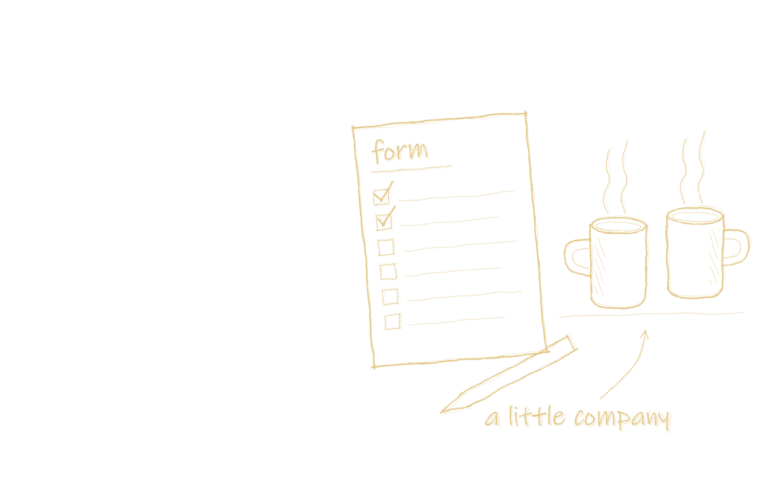
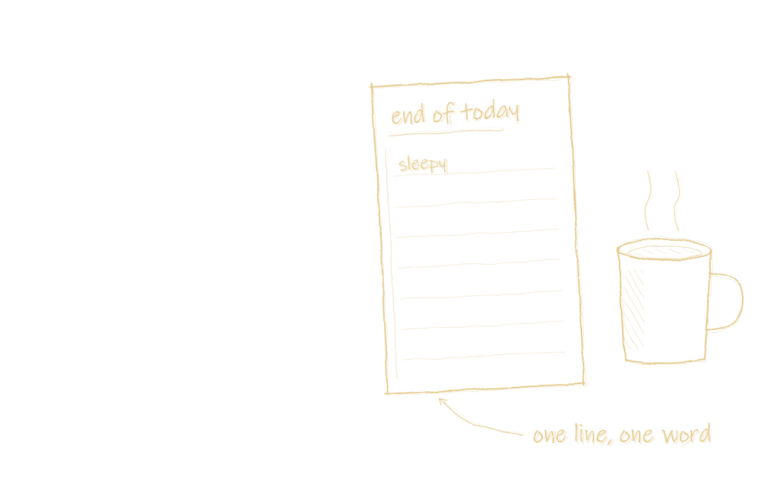
- Minutes 1 and 2: name it. Write the task in one line. Under it, write one word for the feeling you notice when you look at it: dread, boredom, fear of doing it badly, overwhelm. If it helps, add a second line: “I put this off. I forgive myself for that. I still want it done.” That line is mine. The forgiving part leans on a correlation in one class and a neighboring experiment[55, 58], and the “still want it done” part is there because Pychyl worried that for some people forgiving would just mean forgetting[4].
- Minute 3: find the first physical step. Write the very first thing your hands will do, starting with a verb. Open the application and find the first box. Type your friend’s name into the chat. Take the guitar out of its case. Thinking about how got questionnaires back sooner[54], and unclear tasks got put off more[44].
- Minute 4: one if-then sentence, in case you stop. “If it’s ___ and I’m at ___, then I’ll ___.” If your days don’t run on a clock, because of night shifts, small children or a week with no shape to it, tie it to a cue that always happens: “When I get home and put my keys down, I’ll open the tab.” The event version is my adaptation; the Christmas study used a time and a place[50]. (The same sentence would fit a daily or weekly job as well as a one-off like the tab, though the Christmas study only tested a one-off.)
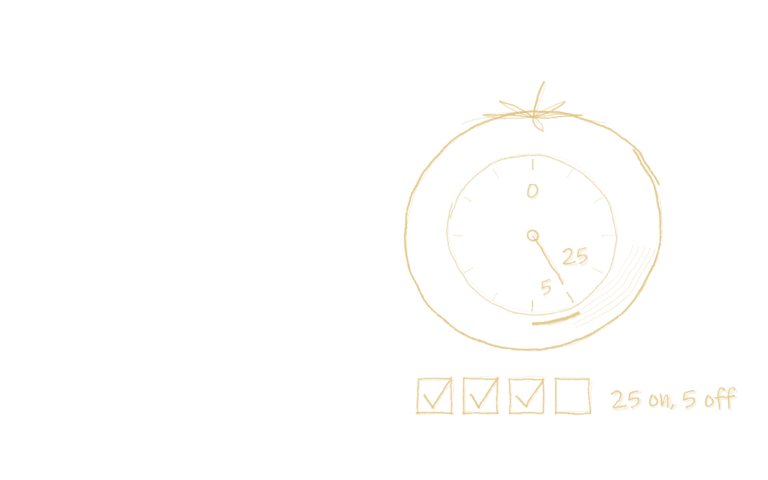
- Minutes 5 to 10: touch it. Do the first step, and keep going if it pulls you. Set a timer if it helps you stay on task (if timers are your thing, the Pomodoro technique has its own piece), turn off your phone if it’s your version of the monk’s window, and stop at ten if you want to. Before you stop, write one line saying where you stopped and what comes next, so tomorrow’s start is already small and you’re back on track in a minute.
If ten minutes is too much tonight, do only the first three: the line, the word, the first step. That still counts.
“Ten minutes of work can’t fix something I’ve avoided for weeks.” You’re right, and it isn’t meant to take the whole thing on head-on. Nobody is going to overcome procrastination in ten minutes. It’s meant to turn “I haven’t started” into “I’ve started”. And of everything in this essay, that change has the longest history behind it. Once people had started a task, Ovsiankina watched most of them come back to finish it[42], and a 2025 pooling found the pull still showing up[40]. So ten minutes is how you get far enough in for the pull to have something to hold.
If you like paper, there’s a printable sheet with the start as rows 4 and 5. And if you’d rather not start alone, body doubling, which is just working with someone nearby, has its own post.
Slept badly, got nothing done, blamed my personality: sleep, energy levels and procrastination
There’s one explanation the four parts skipped, and it’s the one I’d reach for first on a bad day: I’m just tired. And that sounds right, doesn’t it? You can’t open the tab on four hours of sleep. But is it a real effect, or is “lack of energy” just a politer way of saying “I didn’t feel like it”?
Well, somebody checked, at least for sleep. In 2018 two researchers, van Eerde and Venus, had 71 full-time employees fill in two short questionnaires every workday for 10 workdays, one in the morning and one in the afternoon, about how well they’d slept and how much they’d put things off at work that day[68]. (One of the statements people rated at the end of the day was “Today, I was an incurable time waster”, which is a rough thing to be asked on your way out of the office.) And on days after a worse night’s sleep, people reported more procrastination at work[68].
So… tired people procrastinate? Well, only some of them. The link was there for people who scored low on general self-control. People who scored high on it, the authors write, “tend to be immune to low sleep quality”[68].
Now the limits. Everything was self-reported, which the authors point out themselves, and what they measured was how well people said they slept, not their energy levels during the day[68]. So I can’t tell you that low energy causes procrastination, and I found no study that measured energy directly. But look how it fits the chart in part one, where self-control was the biggest number. A bad night might be one of the things that makes the push from a bad feeling harder to resist (that join is mine). So if the tab looks heavier than usual after a rough night, that may be the night talking, and the same small first step still applies. And if being tired is the bigger question for you, it has its own piece: why am I so tired all the time.
So, about that tab: where all this leaves you
So here’s the tab again, three weeks old, and the small drop in your stomach when you see it.
That drop is a feeling. It was never a verdict on you. My guess is that it’s heavier for this tab than for the others because this one matters to you, because nothing makes it due, and because after three weeks, opening it feels as if it ought to be an occasion. And you don’t need to know where the feeling first came from. Tonight, or whenever your day next has a gap, you could write the task first, then one word for the feeling, then the first thing your hands will do, and do it for ten minutes.
I’ve said along the way where the reading runs thin, so I won’t go through it all again. The gap that bothers me most is that almost everything here comes from students and online volunteers answering questionnaires, so none of it tells us exactly how the feeling behaves when you’re feeling tired after a night shift, or in a week with no shape. Your own ten minutes will tell you more about that than I can.
If putting things off runs through almost everything in your life, and has for years, that’s worth bringing to a doctor, who can look at the whole picture; this essay can’t.
If you’d like to make the ten minutes a habit, how long it takes to form a habit is a good place to read next.
And if the wanting is what keeps running out, motivation vs discipline is about that. There’s also a habit tracker that forgives a missed day.
If you’d like company for the next one, there’s the Sunday email: one short letter a week, and somewhere to come back to when the next thing stalls.
You’re the one who knows what’s behind the tab and how that small drop feels, so you’re a better judge of all this than I am. And if tonight’s ten minutes turns out to be three, that still counts. The tab has been open for three weeks. It isn’t going to mind if the first few minutes are a bit rubbish.
If one part of this caught your eye, here’s where I’d go next:
- Task paralysis: when you cannot start something you mean to do
- Body doubling: does having someone nearby help?
- How long does it take to form a habit?
- Why am I so tired all the time?
Nine questions, zero demons: quick answers, plus a few practical tips to overcome procrastination
Why do people procrastinate?
The best-supported account I found is that people procrastinate to get away from a bad feeling about a task, and the cost lands on their future self[6] (sorry, future self). If you came looking for the common reasons for procrastination, the honest version is a list of things found alongside it: low self-control, distractibility, impulsiveness and doubting you can do the task[2]. Those are correlations, mostly from students rating themselves, so none of them shows what causes what.
Is procrastination the same as laziness?
No. Procrastination is one delay: you meant to do the thing, and you expect to be worse off for waiting[2]. “Lazy” is a verdict on a whole person, and I couldn’t find an agreed way to measure it[3]. In Steel’s review, how much people intended to do their work had almost no link to how much they put it off[2]. So the meaning-to is there, and the getting-to is the part that slips.
What is academic procrastination?
Academic procrastination is putting off schoolwork you meant to do, such as studying or writing a paper, while expecting to be worse off for the delay. That’s me applying Steel’s general definition to school[2]. Students are also the people we know most about, because most of the studies in his review were of university students rating themselves[2] (researchers do love a student with a spare half hour).
What is the connection between anxiety and procrastination?
Anxiety and procrastination tend to show up together, but the research can’t say which one comes first. A 2025 review of 88 studies found that procrastination travels with present-day anxiety, low mood and stress, and can’t say which way the arrow points[29]. So we don’t know whether anxiety and low mood lead to procrastination or follow from it. If things have been feeling heavy, that’s worth bringing to a doctor, a therapist or a counselor.
What is the root cause of chronic procrastination?
I couldn’t find a single root cause of chronic procrastination in the research. The mood account is the best-supported one I found[6], and self-control, distractibility and confidence all go with it too[2]. And you don’t have to find your own root cause before you take a first step. If your why involves a hard past, a therapist is a far better guide to it than an essay.
How can I treat chronic procrastination?
The reviews of treatments point to cognitive behavioral therapy, though the evidence is thin. A 2018 review of 24 studies concluded that it “reduced procrastination more strongly than the other types of interventions”[59]. In another review, that conclusion rested on only three studies, and its authors called it “tentative at best”[60]. If putting things off runs through almost everything in your life, and has for years, that’s worth bringing to a doctor, who can look at the whole picture; this essay can’t.
How can I break tasks into smaller steps to overcome procrastination?
Write down the very first thing your hands will do, starting with a verb, and make it one small task you could finish in a few minutes (“open the laptop” counts, “sort out my life” doesn’t). Tasks that feel boring, frustrating or lacking meaning or structure tend to get put off more[6], so the cheap thing to try is to simplify the next step until it’s embarrassingly obvious. In one experiment, people who split a task into chunks rated themselves as more engaged during a 15-minute work period[56].
How can I manage distractions and stay focused?
Honestly, I can’t tell you what works here, because none of the studies behind this essay tested ways to manage distractions or stay focused. What they do show is that people who are more easily distracted also tend to put things off more[2], which is a correlation and not a cure. Turning your phone off for ten minutes costs nothing (the group chat will survive), but that’s my suggestion and nobody tested it here.
What is the two-minute rule for procrastination?
The two-minute rule is really two rules sharing a name. David Allen’s says that if the next step of a job takes less than two minutes, do it now, and James Clear’s says a new habit should take less than two minutes to do[61, 62]. I couldn’t find a test of either one, so I can’t say whether they help (they’re very popular, which isn’t the same thing). There’s more in the piece on the two-minute rule (2 minute rule: two productivity rules with one name, and which one fits you).
The numbers, if you want them
- Steel (2007): the “almost no link” between intending to work and putting it off comes from 8 studies and 1,017 people, and the gap between meaning to and doing from 6 studies and 533 people[2]. Most studies were of students rating themselves, and none tests his definition directly[2]. Squaring a correlation gives a rough sense of overlap: .40 means two scores share about 16% of their variation. His “perfectionism” row (24 studies) included only self-oriented and other-oriented perfectionism; his “fear of failure” row (57 studies) included fear of failure, evaluation anxiety, social perfectionism and self-consciousness[2, 13].
- The frozen-mood experiments (2001): I could read only the paper’s summary[8].
- Fear of failure and feeling capable (2012): I couldn’t read the full paper, so the essay takes it no further than its summary[12].
- The 1995 schoolwork survey: 498 students[15].
- Ovsiankina (1924 to 1926): 124 people in all, mostly students plus 16 children[42] (so yes, she interrupted children too, for science).
- The Christmas Eve report (1997): 12 of 17 planners wrote within two days, against 6 of 19 of the others. Only 36 reports could be matched to a group[50].
- The 2008 if-then test: 152 university students. Heavy procrastinators still showed up less often overall: 30.1% against 49.4%[51].
- If-then plans (2025): 642 tests, experiments only, dated January 1994 to September 2019, covering if-then plans and schedule-type plans. As published, d = .36; one correction for unpublished studies barely moved it (.35); the stricter one cut it to .15, with a 95% interval of .08 to .22, which the authors call “small according to conventional guidelines”[52]. Here d says how far apart two groups end up, compared with how much people vary.
- The smaller tests: students asked to write how they’d go about everyday activities returned a questionnaire before the due date more often than students who wrote what each activity implies, 16 of 17 against 11 of 17, on a task designed to be “relatively easy and only moderately important”[54]. After a failure, people nudged toward self-compassion spent more time studying for a difficult test, which is study time, not procrastination[55]. People who split a task they’d been putting off into pieces rated themselves as working more actively halfway through a 15-minute session, though completion in that window didn’t differ[56]. In a 2026 trial with 81 Chinese undergraduates, picturing the obstacle and writing an if-then plan made the task feel less unpleasant and students more willing to act, which is willingness, not doing[57]. Students who forgave themselves more for putting off studying for one exam reported less procrastination before the next, but only among heavy procrastinators; I know that study through Pychyl’s blog post, not the paper[58].
- The Japan survey: the ADHD measure was a six-question screener, not a diagnosis, and everything was self-reported. The correlations were .42 for ADHD symptoms, .39 for trait anxiety and .28 for depression. Half the people were recruited because they scored high on the screener, which can make a link look larger than in an ordinary sample[28]. The 88-study review covered 63,323 people and found a correlation of about 0.34 with depression, anxiety and stress[29]. The Suriano review covered 2,788 people[27].
- The motivation study: 159 first-year students got the texts, and only 107 of them finished the end-of-term goal questions[45]. A study of teenagers at meditation retreats also found that better self-control beforehand went with stronger meditation habits afterward[67].
- Sleep diaries (2018): 71 full-time employees, 10 workdays, 465 matched pairs of morning and afternoon questionnaires. All self-reported[68].
- Things I couldn’t find (searched PubMed, Europe PMC and Google Scholar, November 2026): a test of either two-minute rule; a test of the 5-second rule for procrastination; a peer-reviewed paper that defines “task paralysis”; and a study that sets motivation against discipline as two rival routes to sticking with a personal goal. A 2025 scale for laziness exists, but its authors still call for a standardized tool. For introspection, PubMed found no study pairing it with procrastination; Google Scholar found one small 2019 Indonesian interview study of seven students. The same November 2026 searches are behind three lines in the essay: the count of at least six main studies of hard childhoods and procrastination, finding no study that tests procrastination as a sign of ADHD in one person (and no review pooling the size of that link), and finding no study that compares “act first” with “find the cause first” for procrastination.
- What I read: full texts or long extracts for Steel, Sirois and Pychyl, Hagen and O’Brien, Wilson and Dunn, Ovsiankina, Ghibellini and Meier, and Sheeran and colleagues. Summaries only for Tice and colleagues, Suriano, the 2026 obstacle-and-plan trial, the depression trial, Shu and Gneezy, Sirois, Molnar and Hirsch, Haghbin and colleagues, Owens and colleagues, Breines and Chen, Senécal and colleagues, and Madsen[3, 8, 10, 12, 13, 15, 27, 37, 51, 55, 57]. I couldn’t read Wilson’s book[32].
Sources
- Evagrius of Pontus. Praktikos, chapter 12. Trans. Luke Dysinger, O.S.B. http://www.ldysinger.com/Evagrius/01_Prak/01_Praktikos.htm
- Steel, P. (2007). The nature of procrastination: A meta-analytic and theoretical review of quintessential self-regulatory failure. Psychological Bulletin, 133(1), 65–94. https://doi.org/10.1037/0033-2909.133.1.65
- Madsen, T. (2018). The conception of laziness and the characterisation of others as lazy. Human Arenas, 1, 288–304. https://doi.org/10.1007/s42087-018-0018-6
- Pychyl, T. A. (2009, 14 March). Self-forgiveness reduces procrastination. Psychology Today (Don’t Delay), with the author’s biography box. https://www.psychologytoday.com/us/blog/dont-delay/200903/self-forgiveness-reduces-procrastination
- Coppella, L. (undated). Procrastination problem? Tim Pychyl knows why. Carleton University Newsroom. https://carleton.ca/news/story/procrastination-problem-tim-pychyl/
- Sirois, F. M., & Pychyl, T. A. (2013). Procrastination and the priority of short-term mood regulation: Consequences for future self. Social and Personality Psychology Compass, 7(2), 115–127. https://doi.org/10.1111/spc3.12011 (accepted manuscript: https://eprints.whiterose.ac.uk/id/eprint/91793/)
- Pychyl, T. A. (2008, 25 April). Giving in to feel good: Why self-regulation fails. Psychology Today (Don’t Delay). https://www.psychologytoday.com/us/blog/dont-delay/200804/giving-in-feel-good-why-self-regulation-fails
- Tice, D. M., Bratslavsky, E., & Baumeister, R. F. (2001). Emotional distress regulation takes precedence over impulse control: If you feel bad, do it! Journal of Personality and Social Psychology, 80(1), 53–67. https://doi.org/10.1037/0022-3514.80.1.53
- Hershfield, H. (2023, 12 June). The time traveling mistake we make when we procrastinate. Behavioral Scientist (excerpt from Your Future Self, Little, Brown Spark, 2023). https://behavioralscientist.org/the-time-traveling-mistake-we-make-when-we-procrastinate/
- Shu, S. B., & Gneezy, A. (2010). Procrastination of enjoyable experiences. Journal of Marketing Research, 47(5), 933–944. https://doi.org/10.1509/jmkr.47.5.933
- Hagen, L., & O’Brien, E. (2025). Lost time undermines return behavior. PNAS Nexus, 4(6), pgaf156. https://doi.org/10.1093/pnasnexus/pgaf156 (full text: https://pmc.ncbi.nlm.nih.gov/articles/PMC12199251/)
- Haghbin, M., McCaffrey, A., & Pychyl, T. A. (2012). The complexity of the relation between fear of failure and procrastination. Journal of Rational-Emotive & Cognitive-Behavior Therapy, 30(4), 249–263. https://doi.org/10.1007/s10942-012-0153-9
- Sirois, F. M., Molnar, D. S., & Hirsch, J. K. (2017). A meta-analytic and conceptual update on the associations between procrastination and multidimensional perfectionism. European Journal of Personality, 31(2), 137–159. https://doi.org/10.1002/per.2098
- Everett, J. (2026). Perfectionism: How smart people justify being scared of judgement. Joseph Everett’s WIL Newsletter (Substack). https://josepheverettwil.substack.com/p/perfectionism-how-smart-people-justify
- Senécal, C., Koestner, R., & Vallerand, R. J. (1995). Self-regulation and academic procrastination. The Journal of Social Psychology, 135(5), 607–619. https://doi.org/10.1080/00224545.1995.9712234
- Page-one results for “is procrastination a trauma response”, checked 26 Oct 2026 (a complex-trauma education site’s blog, a trauma therapist’s Substack and a clinic’s article), as recorded in the procrastination-trauma-response research file. Described, not linked.
- Xu, L., Yin, Y., Wang, X., Xu, T., Zhang, X., & Feng, T. (2025). Early wounds, delayed consequences: Brain-behavior modeling reveals neural pathways linking childhood trauma to procrastination. NeuroImage, 321, 121529. https://doi.org/10.1016/j.neuroimage.2025.121529
- Ma, H., & Chen, L. (2022). Time management disposition mediates the influence of childhood psychological maltreatment on undergraduates’ procrastination. Psychology Research and Behavior Management, 15, 1489–1494. https://doi.org/10.2147/PRBM.S367446
- Ma, C., & Song, J. (2023). Parental emotional neglect and academic procrastination: The mediating role of future self-continuity and ego depletion. PeerJ, 11, e16274. https://doi.org/10.7717/peerj.16274
- Song, J., & Xu, J. (2026). Psychological maltreatment, adverse childhood experiences on college students’ academic procrastination: Exploring the role of adult attachment and resilience. BMC Psychology, 14(1), 736. https://doi.org/10.1186/s40359-026-04541-2
- Tahani, A. V. M., Kurniawati, K., Amaranggani, A. P., & Rahmandani, A. (2023). Adverse childhood experiences and academic procrastination in emerging adult students: The mediating effect of self-regulation. International Journal of Islamic Educational Psychology, 4(2). https://doi.org/10.18196/ijiep.v4i2.19206
- Shao, L., Jin, J., & Yu, G. (2024). Childhood environmental risk and youth bedtime procrastination: A path model with life history strategy and sense of control as mediators. Child Abuse & Neglect, 150, 106137. https://doi.org/10.1016/j.chiabu.2023.106137
- Swedo, E. A., Aslam, M. V., Dahlberg, L. L., et al. (2023). Prevalence of adverse childhood experiences among U.S. adults: Behavioral Risk Factor Surveillance System, 2011–2020. MMWR, 72(26), 707–715. https://doi.org/10.15585/mmwr.mm7226a2
- Sirois, F. M. (2023). Procrastination and stress: A conceptual review of why context matters. International Journal of Environmental Research and Public Health, 20(6), 5031. https://doi.org/10.3390/ijerph20065031
- Niermann, H. C. M., & Scheres, A. (2014). The relation between procrastination and symptoms of attention-deficit hyperactivity disorder (ADHD) in undergraduate students. International Journal of Methods in Psychiatric Research, 23(4), 411–421. https://doi.org/10.1002/mpr.1440
- National Institute of Mental Health (2024). ADHD in Adults: 4 Things to Know (NIH Publication No. 24-MH-3573). https://www.nimh.nih.gov/health/publications/adhd-what-you-need-to-know
- Suriano, R. (2026). A systematic review on the association between ADHD and procrastination. Research in Developmental Disabilities, 175, 105342. https://doi.org/10.1016/j.ridd.2026.105342
- Oguchi, M., Takahashi, T., Nitta, Y., & Kumano, H. (2021). The moderating effect of attention-deficit hyperactivity disorder symptoms on the relationship between procrastination and internalizing symptoms in the general adult population. Frontiers in Psychology, 12, 708579. https://doi.org/10.3389/fpsyg.2021.708579
- Nie, Y., Wang, W., Zhou, F., et al. (2025). The association between procrastination and negative emotions in healthy individuals: A systematic review and meta-analysis. Frontiers in Psychiatry, 16, 1624094. https://doi.org/10.3389/fpsyt.2025.1624094
- National Institute of Mental Health (2024). Attention-Deficit/Hyperactivity Disorder: What You Need to Know (NIH Publication No. 24-MH-8300). https://www.nimh.nih.gov/health/publications/attention-deficit-hyperactivity-disorder-what-you-need-to-know
- Everett, J. (2025, 1 September). Stop trying to know yourself so hard. Joseph Everett’s WIL Newsletter (Substack). https://josepheverettwil.substack.com/p/the-freeing-realization-that-you
- Wilson, T. D. (2002). Strangers to Ourselves: Discovering the Adaptive Unconscious. Cambridge, MA: Belknap Press of Harvard University Press. (Not read; credited through the sources around it.)
- Kihlstrom, J. F. (2004). Review of Strangers to Ourselves: Discovering the Adaptive Unconscious by Timothy D. Wilson. PsycCRITIQUES, 49(Supplement 14). Author’s copy: https://ocf.berkeley.edu/~jfkihlstrom/WilsonReview04.htm
- Nisbett, R. E., & Wilson, T. D. (1977). Telling more than we can know: Verbal reports on mental processes. Psychological Review, 84(3), 231–259. https://doi.org/10.1037/0033-295X.84.3.231
- Wilson, T. D., & Dunn, E. W. (2004). Self-knowledge: Its limits, value, and potential for improvement. Annual Review of Psychology, 55, 493–518. https://doi.org/10.1146/annurev.psych.55.090902.141954
- Everett, J. (2025, 17 July). There is only one way to stop procrastinating. Joseph Everett’s WIL Newsletter (Substack). https://josepheverettwil.substack.com/p/there-is-only-one-way-to-stop-procrastinating
- Richards, D. A., Ekers, D., McMillan, D., et al. (2016). Cost and outcome of behavioural activation versus cognitive behavioural therapy for depression (COBRA): A randomised, controlled, non-inferiority trial. The Lancet, 388(10047), 871–880. https://doi.org/10.1016/S0140-6736(16)31140-0
- 988 Suicide & Crisis Lifeline (US). https://988lifeline.org/
- George, M. (2012). Maria Rickers-Ovsiankina. Psychology’s Feminist Voices. https://feministvoices.com/profiles/maria-rickers-ovsiankina
- Ghibellini, R., & Meier, B. (2025). Interruption, recall and resumption: A meta-analysis of the Zeigarnik and Ovsiankina effects. Humanities and Social Sciences Communications, 12, 962. https://doi.org/10.1057/s41599-025-05000-w
- MacLeod, C. M. (2020). Zeigarnik and von Restorff: The memory effects and the stories behind them. Memory & Cognition, 48(6), 1073–1088. https://doi.org/10.3758/s13421-020-01033-5
- Ovsiankina, M. (1928). Untersuchungen zur Handlungs- und Affektpsychologie (ed. K. Lewin). VI. Die Wiederaufnahme unterbrochener Handlungen. Psychologische Forschung, 11, 302–379. https://doi.org/10.1007/BF00410261 (full-text scan: https://interruptions.net/literature/Ovsiankina-PF28.pdf). Quotes are translations from the German, as in the task-paralysis memo.
- Wieland, L. M., Ebner-Priemer, U., Limberger, M. F., & Nett, U. E. (2021). Predicting delay in goal-directed action: An experience sampling approach uncovering within-person determinants involved in the onset of academic procrastination behavior. Frontiers in Psychology, 12, 695927. https://doi.org/10.3389/fpsyg.2021.695927
- Wieland, L. M., Hoppe, J. D., Wolgast, A., & Ebner-Priemer, U. (2022). Task ambiguity and academic procrastination: An experience sampling approach. Learning and Instruction, 81, 101595. https://doi.org/10.1016/j.learninstruc.2022.101595
- Milyavskaya, M., & Inzlicht, M. (2017). What’s so great about self-control? Examining the importance of effortful self-control and temptation in predicting real-life depletion and goal attainment. Social Psychological and Personality Science, 8(6), 603–611. https://doi.org/10.1177/1948550616679237
- Baumeister, R. F., Bratslavsky, E., Muraven, M., & Tice, D. M. (1998). Ego depletion: Is the active self a limited resource? Journal of Personality and Social Psychology, 74(5), 1252–1265. https://doi.org/10.1037/0022-3514.74.5.1252
- Hagger, M. S., Chatzisarantis, N. L. D., Alberts, H., et al. (2016). A multilab preregistered replication of the ego-depletion effect. Perspectives on Psychological Science, 11(4), 546–573. https://doi.org/10.1177/1745691616652873
- Vohs, K. D., Schmeichel, B. J., Lohmann, S., et al. (2021). A multisite preregistered paradigmatic test of the ego-depletion effect. Psychological Science, 32(10), 1566–1581. https://doi.org/10.1177/0956797621989733
- Page-one pages for “how to stop procrastinating” (Cleveland Clinic, Calm, Coursera, Solving Procrastination and others), checked 26 Oct and 5 Nov 2026, as listed in this essay’s research file (Part G). Described, not linked.
- Gollwitzer, P. M., & Brandstätter, V. (1997). Implementation intentions and effective goal pursuit. Journal of Personality and Social Psychology, 73(1), 186–199. https://doi.org/10.1037/0022-3514.73.1.186
- Owens, S. G., Bowman, C. G., & Dill, C. A. (2008). Overcoming procrastination: The effect of implementation intentions. Journal of Applied Social Psychology, 38(2), 366–384. https://doi.org/10.1111/j.1559-1816.2007.00309.x
- Sheeran, P., Listrom, O., & Gollwitzer, P. M. (2025). The when and how of planning: Meta-analysis of the scope and components of implementation intentions in 642 tests. European Review of Social Psychology, 36(1), 162–194 (online March 2024). https://doi.org/10.1080/10463283.2024.2334563
- Seki, D., & Kiyokawa, S. (2026). Effects of prompting initial engagement with a task to reduce procrastination [in Japanese, English abstract]. Cognitive Studies, 33(3), 436–448. https://doi.org/10.11225/cs.2026.026
- McCrea, S. M., Liberman, N., Trope, Y., & Sherman, S. J. (2008). Construal level and procrastination. Psychological Science, 19(12), 1308–1314. https://doi.org/10.1111/j.1467-9280.2008.02240.x
- Breines, J. G., & Chen, S. (2012). Self-compassion increases self-improvement motivation. Personality and Social Psychology Bulletin, 38(9), 1133–1143. https://doi.org/10.1177/0146167212445599
- Garg, A., & Schooler, J. W. (2026). Breaking procrastination down: Differential effects of subtasking and reinforcement on engagement and persistence. Behavioral Sciences, 16(10), 1832. https://doi.org/10.3390/bs16101832
- Zhou, X., Wider, W., Wu, H., Xu, Y., Qin, M., & Borromeo, A. S. (2026). Beyond positive thinking: A randomized trial of mental contrasting with implementation intentions to curb academic procrastination. Acta Psychologica, 262, 106168. https://doi.org/10.1016/j.actpsy.2025.106168
- Wohl, M. J. A., Pychyl, T. A., & Bennett, S. H. (2010). I forgive myself, now I can study: How self-forgiveness for procrastinating can reduce future procrastination. Personality and Individual Differences, 48(7), 803–808. https://doi.org/10.1016/j.paid.2010.01.029
- van Eerde, W., & Klingsieck, K. B. (2018). Overcoming procrastination? A meta-analysis of intervention studies. Educational Research Review, 25, 73–85. https://doi.org/10.1016/j.edurev.2018.09.002
- Rozental, A., Bennett, S., Forsström, D., Ebert, D. D., Shafran, R., Andersson, G., & Carlbring, P. (2018). Targeting procrastination using psychological treatments: A systematic review and meta-analysis. Frontiers in Psychology, 9, 1588. https://doi.org/10.3389/fpsyg.2018.01588
- Allen, D. (2020, 29 May; updated 15 July). Episode #79: The two-minute rule. Two-minute Tips for Turbulent Times, GTD podcast, David Allen Company. https://gettingthingsdone.com/2020/05/the-two-minute-rule-2/
- Clear, J. (2013, 27 May). How to stop procrastinating by using the “2-minute rule”. jamesclear.com. Internet Archive capture: http://web.archive.org/web/20131127122810/http://jamesclear.com/how-to-stop-procrastinating
- Ariely, D., & Wertenbroch, K. (2002). Procrastination, deadlines, and performance: Self-control by precommitment. Psychological Science, 13(3), 219–224. https://doi.org/10.1111/1467-9280.00441 Retracted (2026).
- Retraction: Procrastination, deadlines, and performance: Self-control by precommitment (2026). Psychological Science, 37(9), 665 (online 2 September 2026). https://doi.org/10.1177/09567976261488042
- Travis, K. (2026, 3 September). Procrastination study by Duke’s Dan Ariely retracted after sleuths find signs of data tampering. Retraction Watch. https://retractionwatch.com/2026/09/03/procrastination-study-duke-dan-ariely-psychological-science-data-colada-tampering-retraction/
- Simonsohn, U., Simmons, J., & Nelson, L. (2026, 31 August and 2 September). Artificial deadlines, Parts 1 and 2. Data Colada. https://datacolada.org/138 and https://datacolada.org/139
- Galla, B. M., & Duckworth, A. L. (2015). More than resisting temptation: Beneficial habits mediate the relationship between self-control and positive life outcomes. Journal of Personality and Social Psychology, 109(3), 508–525. https://doi.org/10.1037/pspp0000026
- van Eerde, W., & Venus, M. (2018). A daily diary study on sleep quality and procrastination at work: The moderating role of trait self-control. Frontiers in Psychology, 9, 2029. https://doi.org/10.3389/fpsyg.2018.02029 (full text: https://pmc.ncbi.nlm.nih.gov/articles/PMC6225608/)