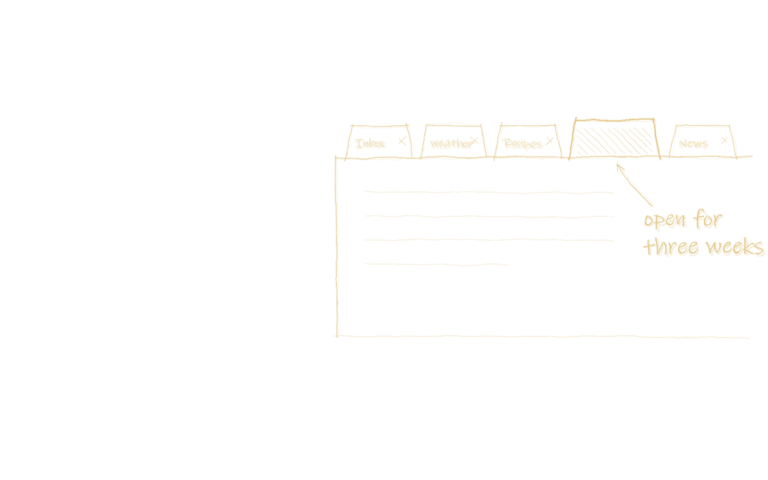
Nobody wonders why the tax form is still on the table. It’s a tax form. But what about the stuff nobody is making you do? The guitar in the corner, the trip you keep meaning to book, the friend you haven’t texted in a year. You picked those yourself, they’re supposed to be the good part, and somehow they’ve ended up in the same pile as the taxes. So why do I procrastinate on things I actually want to do (and why, I’d bet, do you)? It turns out to be one corner of why we put things off at all, which I wrote up at length.
Well, there’s a little voice that has an answer ready every time you walk past the guitar: if you really wanted to, you’d have done it by now. It sounds very sure of itself, and honestly I half expected the research to back it up. It doesn’t. And if you type “why do I procrastinate” into a search bar, the causes of procrastination you usually get back are poor time management, lack of motivation and not enough self-control, which all sound like they were written about the tax form. What the research has is three much more boring culprits. Things you want rarely come with a deadline[1]. The longer they wait, the more special the first go back seems to need to be[2]. And because they matter to you, the fear of doing them badly can hold you back, mostly when you don’t feel capable yet[3]. So that’s my argument for this post: not doing the thing doesn’t prove you’ve stopped wanting it, and the little voice has been getting away with it for years because nobody asked how it knows.
(Wondering whether it’s just laziness? That’s its own question: procrastination vs laziness.)
I’ll take the three culprits in order. And the first one involves gift cards, so we’re starting with the glamorous stuff.
Offer valid until whenever: Why do I procrastinate on things I want to do?
Often, it’s because nothing makes them due. A thing you want can usually be done any time, and “any time” has a way of never showing up.
In 2010, two researchers named Suzanne Shu and Ayelet Gneezy published a paper called “Procrastination of enjoyable experiences”[1], which sounds like a joke title. Who procrastinates on something enjoyable? Well, according to the paper, plenty of people procrastinate on exactly that.
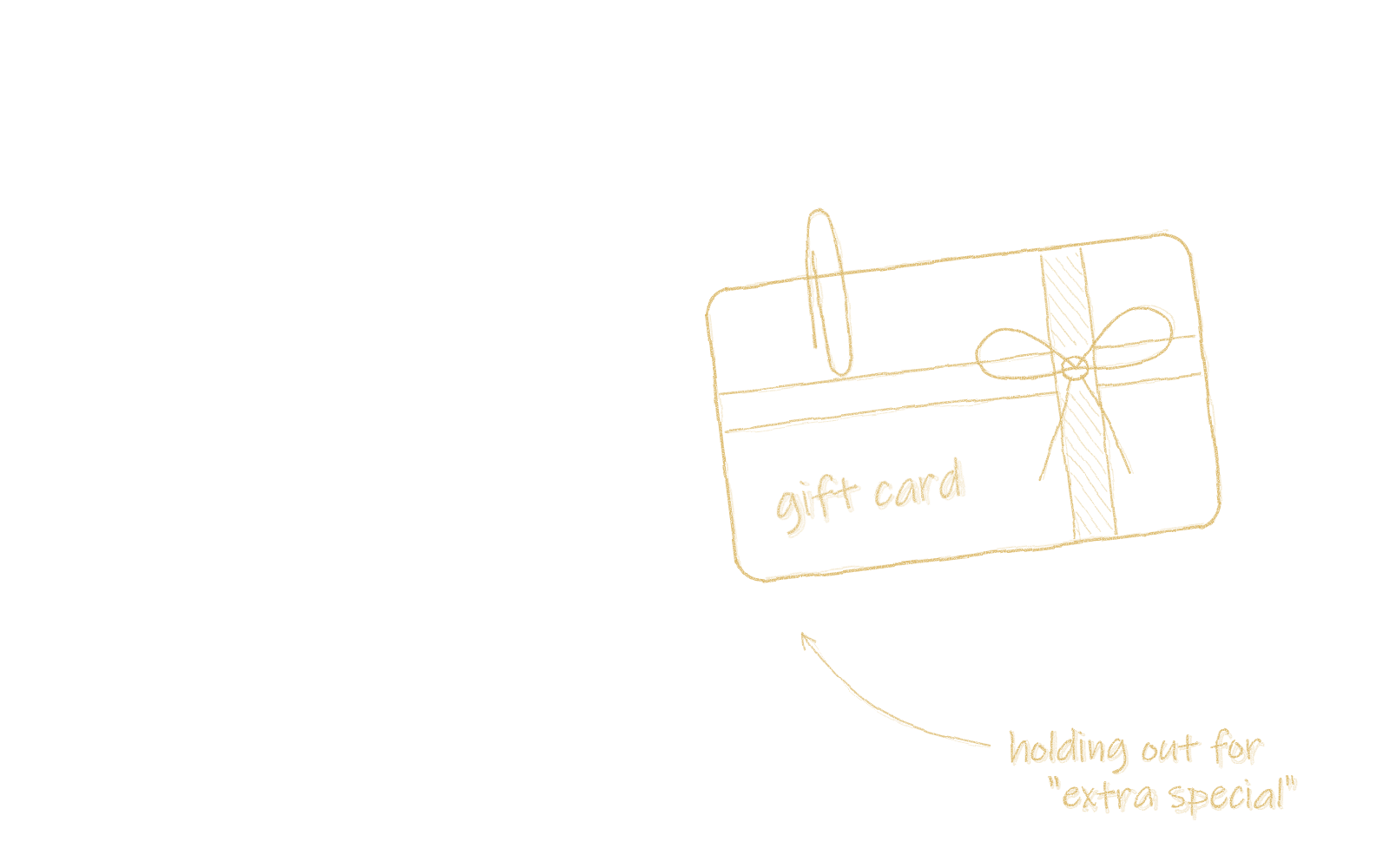
So what did they do? They used real-world data and experiments[1], and one part compared gift cards and gift certificates that had a long deadline with ones that had a short deadline. Now, if you had to bet, which card gets used? I’d have said the long one, because there’s so much more time to get round to it. But the cards with long deadlines got used LESS than the ones with short deadlines[1]. They also ran a study across several cities on landmarks that people wanted to see. And the people with unlimited time to visit put it off, while a limited window meant less putting off[1] (the landmark isn’t going anywhere, and apparently neither are we).
And here’s the part I like best. People didn’t see it coming[1]. The results ran against what the people in the studies had predicted. So everyone looked at the long deadline and thought “great, plenty of time”, and then plenty of time is exactly what happened.
But why would more time make it worse? Well, later researchers summed it up this way: people “discount future feasibility costs”[2]. In normal words, fitting it in looks easier next month than this week. Next month’s calendar is always empty, right up until it becomes this week and turns out to have a dentist appointment in it. I suspect most of us keep a “when things calm down” list, and I have yet to hear of things calming down.
So that’s the first of the reasons why people put off even the fun stuff, and it explains a new wanted thing sliding. But it doesn’t explain something stranger. The guitar you used to play doesn’t just sit there staying equally easy to pick up. It gets HARDER the longer it sits (a paper would say that a long gap seems to exacerbate procrastination; I’d say the guitar gets heavier). And a missing deadline can’t do that by itself, so something else is going on with the things we’re going back to.
Sorry for the late reply (it’s been a year): The longer you wait, the more special it has to be
The longer it has been since you last did something you enjoy, the more you might procrastinate on going back to it, partly because the return starts to feel like it has to be special[2]. Two researchers in Chicago went after exactly this in 2025: Linda Hagen, at the University of Illinois Chicago, and Ed O’Brien, at Chicago Booth[2]. They started with a survey about going back to activities after the pandemic break. And the longer people’s break from an activity felt, the more their answers described putting off going back[2]. Which is backwards, if you think about it. I’d have guessed the people who missed something the longest would be first through the door.
But a survey can’t show what’s causing what, so they ran experiments. And my favorite is the texting one. They had people bring to mind two friends: one they’d texted recently, and one they could still text but hadn’t in a while, for no bad reason[2] (no fight, no drama, just… time). Then each person was assigned one of the two friends and given a choice. Text that friend a fun hello, or do a longer, more boring task alone[2].
Now look at that choice for a second, because it shouldn’t be a hard one. A cheerful message to a friend, or a chore that is duller AND takes longer. With the recent friend, most people picked the text. With the long-gap friend, most people picked the boring task[2]. They looked at “say hi to someone you like” and “tedious thing by yourself” and went with tedious. And before you say they were just shy, social anxiety didn’t explain it[2].
They looked at “say hi to someone you like” and “tedious thing by yourself” and went with tedious.
So what was going on? The authors’ explanation is that after a long gap, people “demand their return be ‘extra special’ to offset the wait”[2]. A quick “hey!” doesn’t feel big enough for all that silence. The way I picture it, a year of silence feels like it needs a proper message, with an apology and a life update and maybe a photo of the dog. So the text waits for a day when you have the energy for all that, which makes the gap longer, which raises the bar again. Hagen and O’Brien call these “vicious cycles of deferment”[2], which is a fancier name for a cycle of procrastination. They suggest the same thing happens with hobbies, though no experiment looked at hobbies specifically[2].
And notice what’s NOT in this explanation: pain. Their people seemed to be holding out “in the hope of attaining a more pleasurable payoff”[2]. So the waiting can come from wanting the return to be good, not from dreading it. The way I read it, these people weren’t dodging their friend. They were saving their friend for a better day, which is sweet, and is also a very good way to not text someone for another year.
OK, so what got people moving again? In a final experiment, adults who were excitedly waiting to get back to something they enjoyed (travel, concerts, movies, restaurants) chose between going back at the first good-enough chance and holding out until it felt extra special[2]. With no nudge, 64% preferred to hold out. Another group was first asked to reflect that the gap could feel “not that long ago”. And I’d have thought that one would work, because if the wait feels shorter, the bar should come down. Of that group, 66% preferred to hold out. So, basically no change. A third group was asked to reflect instead that “any event like this can feel extra special, all things considered”. There, 51% did[2]. Making the wait feel shorter didn’t help. Letting an ordinary chance count as special did. Which is good news, honestly, because it means nobody has to plan a comeback tour. A regular Thursday qualifies.
Share who preferred to hold out until it felt extra special
That covers the things you’re going back to. But plenty of wanted things have no gap at all, because you’ve never started them. The novel stuck at chapter one has no “last time” to live up to, and neither do the personal growth projects that sounded so good in January. So something else has to be holding up the first page, and the people who write about this have a favorite suspect.
First page, no pressure: Is caring too much linked to procrastination?
A few people who write about this think caring too much can lead to procrastination, and one survey adds a condition I didn’t expect.
Think of the first page of a story you really want to write. In your head it’s already great (it might even have a cover). The writer Itamar Shatz says the usual problem is “paralyzing perfectionism from caring too much”[14]. Joseph Everett calls it “perfection delusion”: the perfect version in your head makes the real start feel not worth it[15], and much perfectionism, he argues, is fear of looking bad[16]. Looking bad to whom, I’m not sure. It’s page one. Nobody has read it, including the author.
So the usual story is that a perfectionist will put off starting because they’re afraid of something, and that feelings like fear of failure are what’s behind the delay. That sounded right to me, and then a survey complicated it. In 2012, three researchers (Haghbin, McCaffrey and Timothy Pychyl, who turns up again in the next section) published a survey of university students about fear of failure and procrastination. And in it, fear of failure was directly linked to more procrastination only in students who felt less competent. In students who felt more competent, the direct link ran the other way[3].
But why would it flip? Well, the summary of the survey doesn’t explain itself much. What it does say is that the confident students didn’t get off free. In them, fear of failure went with feeling less in charge of their own choices, and that in turn went with more problem delay[3]. So the fear was still doing something, it was just taking the long way round.
So in that survey, the direct link from fear to more delay showed up only in the students who felt less competent. Put that next to the “extra special” bar, and my best guess at why wanted things are so easy to delay is this: they’re where you have the most riding on the first go, and a new one is where you feel least capable. So the thing you care about most can also be the thing you’re currently worst at, which is a pretty rude arrangement.
A guess like that still has a hole in it, though. Feeling tested is only a feeling. For it to become three more months of not writing page one, something has to turn the feeling into “later”, and there’s a well-known idea about exactly that.
Sounds like a problem for future me: Temporal discounting, and how procrastination affects your future self
The short version, on Sirois and Pychyl’s account, is that a bad feeling turns into “later” because putting the thing off makes you feel better right now, and the cost lands on your future self[4]. In 2013, those two psychologists, Fuschia Sirois and Timothy Pychyl, wrote a review (so no new experiment, they pulled together what was already known and made a case) arguing that procrastination “has a great deal to do with short-term mood repair and emotion regulation”[4]. Mood repair is a grand name for a move we all know. A task stirs up a bad feeling, like anxiety, boredom or frustration, so you step away (to scroll through social media, say) and feel better right now, and the cost goes to your future self[4, 8]. Or, as Pychyl once put it: “Avoid the task, avoid the bad mood”[8]. As a life motto it’s not great, but you can’t say it isn’t short. So on their account, procrastination has a great deal to do with managing a bad feeling, and not only with scheduling. It’s avoidance: you step away from a challenging task to avoid discomfort, and the relief comes straight away[4, 8]. Hershfield, who turns up below, describes the same move as putting first “our present self’s desire to avoid negative emotions”[9].
There’s a catch for our guitar, though. They say this happens most with tasks that feel “boring, frustrating, lacking meaning and/or structure”[4]. That’s the laundry pile. It’s not obviously the guitar.
So here’s what I think is going on, and this part is me stretching their idea to cover wanted things; they didn’t claim it. A first go that feels like a test is a small bad feeling too, and stepping away fixes it just as neatly as it fixes the laundry. And there is at least a sign that feelings do some of the driving. In a 2001 experiment, people who believed their bad mood couldn’t be changed stopped putting things off, which hints that we delay partly to feel better[10] (the post on whether procrastination is a trauma response).
And why do we keep taking that deal? Because, Sirois and Pychyl write, “we believe that we will be different tomorrow”, and in doing so “we prioritize our current mood over the consequences of our inaction for our future self”[4]. Tomorrow’s version of us is amazing: well rested, brave, loves scales, answers texts within the hour. I’d like to meet this person someday.
Tomorrow’s version of us is amazing: well rested, brave, loves scales, answers texts within the hour.
The psychologist Hal Hershfield puts it more starkly: “In the brain, the future self looks like another person”[5]. OK, but in whose brain, and how would you even check? Well, he and two colleagues analysed the brain scans of 18 young adults, who had been asked in the scanner whether words described themselves now, themselves in ten years, or a celebrity (Matt Damon for the men, Natalie Portman for the women)[6]. I love that somebody had to sit down and pick the celebrities. And the people whose brain activity differed more between “me now” and “me in ten years” tended to be, when they were tested a week or more later, more impatient with money[6]. The money task measured what researchers call temporal discounting, which is the pull toward immediate, smaller rewards over bigger ones later[6].
His brain-scan study was about saving money, though, and procrastination wasn’t what it measured[6]. The link to putting things off shows up only as correlations: surveys of students tie feeling disconnected from your future self to putting off schoolwork[11, 12].
Still, it points at a tempting fix. If future you feels like a stranger, go and get to know them. And somebody tested that too.
“Just picture your future self,” they said: Testing one of the popular strategies to overcome procrastination
For getting started, a direct test found it did no better than a meditation recording[12, 23].
The case for trying it runs like this. Joseph Everett predicts that imagining future events vividly should “significantly reduce procrastination”[20], and picturing your future does seem to make people more willing to pass up immediate rewards and wait for a bigger one[21, 22]. But being willing to wait for a reward is one thing, and getting off the sofa is another (I’d argue the sofa is harder). And somebody checked the sofa one.
Eve-Marie Blouin-Hudon, working in Pychyl’s lab, gave undergraduates an audio recording to listen to twice a week for four weeks. Some got future-self imagery and the others got a present-focused meditation, the kind of recording you’d probably file under mindfulness[12]. On connection, the imagery did its job: that group felt more connected to their future selves than the meditation group did[23], though the meditation group’s sense of connection had risen too[12]. And the procrastination? It dipped slightly in both groups, by about the same amount, and with no do-nothing group nobody can say what caused the dip[12]. It could have been the imagery, the meditation, or neither.
So as a way to get yourself started, I wouldn’t bet much on it. One test isn’t the last word, but it’s the only direct one in this post, and it came back as a tie with a meditation tape.
Pychyl himself does something simpler. When Hershfield asked him whether he ever procrastinates, he said “Almost never!” and gave his reason: “I have empathy for my future self”[9]. (To be fair, asking a procrastination researcher whether he’s a procrastinator is a bit like asking a dentist if they floss.)
Graded on a curve: Strategies to overcome procrastination that somebody actually tested
So picturing future you came back as a tie. What about everything else? If you go looking for strategies to overcome procrastination, the internet has more of them than anyone could count, and I couldn’t tell you how many have ever been near a trial. But some have, and somebody counted.
In 2018, Rozental and six colleagues went looking for every randomized trial in which a psychological treatment for procrastination was compared with an inactive comparison group[25]. They sifted 1,639 records and ended up with 12 studies and 718 people. For a problem this common, that is not a lot of homework handed in. Overall, the authors say, psychological treatments “seem to have small benefits on procrastination”[25]. The trials built on cognitive behavioral therapy (CBT) did better, with what they call “a moderate benefit”, but that came from only three studies[25], so I’d hold it loosely.
The other idea I keep running into is self-compassion, which here just means going easier on yourself. Fuschia Sirois, from the mood repair review, looked at four groups of people (three of undergraduates and one of adults from the community), and in all four, lower self-compassion and higher stress were associated with procrastination[27]. She suggests that programs promoting self-compassion “could therefore be beneficial”, meaning they might reduce the stress procrastinators feel[27]. Which sounds lovely, but it’s a suggestion. What she had were links between measurements, and the summary doesn’t describe a test of any program.
So here’s the scoreboard as I read it. Therapy-style help: small to moderate, from a handful of trials. Going easier on yourself: a reasonable idea that’s still waiting for its test, at least in what I’ve read. And Pomodoro gets a post of its own.
Lazy is a strong word: Laziness, procrastinators and the usual suspects behind procrastination
Everything so far has been about things you want. But if you search this question you mostly land on lists about procrastinators in general, and the lists are very confident. Perfectionism, fear and poor time management, they say, make people more likely to procrastinate, and somewhere near the top there is usually the word lazy. So what does the research say about the causes of procrastination in general?
Well, in 2007 a researcher named Steel published a big review that pulled the studies together[24]. And the things that went with procrastination most strongly and consistently were, in his words, “task aversiveness, task delay, self-efficacy, and impulsiveness”, along with conscientiousness and the personality traits that sit under it, like self-control, distractibility, organization and achievement motivation[24]. In normal words, we put off things that are unpleasant and things we doubt we can do well, and some of us are more impulsive and less organized to begin with. (I’d like it noted that “doubt we can do well” describes page one of the novel exactly.)
Now, the review calls these predictors, which means they go with procrastination. That’s a weaker word than the “causes” the lists promise. And a 2014 pooling of 14 samples found that people who procrastinate more tend to look less toward the future[13], which fits with tomorrow’s amazing version of us.
And laziness? It isn’t in the list I just quoted. The definition researchers use is “the voluntary delay of an intended action despite knowing that one will probably be worse off for the delay”[4]. Look at the word intended. By that definition, procrastination isn’t about the things you never meant to do. A procrastinator is someone who meant to, which is not how I’d describe lazy (the longer version of that argument is in Procrastination vs laziness: what’s the difference?). So if you often struggle to start things and someone has called it laziness, the research has a longer list, and it’s a less insulting one.
The answer the internet gives first: Putting off things you enjoy and ADHD
It’s an answer you’ll meet quickly if you search this question, so it deserves a fair mention. Some top answers online link this to ADHD[18, 19]. For some people it may be part of the picture. Neither main study here was about ADHD, though: they sampled adults and students and did not look at ADHD[1, 2]. If starting the things you love is a constant, distressing struggle, please raise it with your doctor or another professional you trust.
When it’s most things, most weeks: Chronic procrastination, depression, anxiety and ADHD
Some people reading this aren’t putting off one guitar. It’s most things, most weeks, and it has started to wear on them. People call that chronic procrastination, and a few studies speak to it, so here is what they say and where they stop.
The 2018 review of treatments describes it this way: procrastination “can be stressful and frustrating, but it seldom causes any major distress. However, for some people, it can become problematic, resulting in anxiety, lowered mood, physical complaints, and decreased well-being”[25].
On mental health challenges like depression and anxiety, the largest single study I found started with 3,525 university students in Sweden, and 73% of them answered again nine months later[26]. Students who reported more procrastination had somewhat higher levels of depression, anxiety and stress symptoms nine months later, after the researchers accounted for a large set of other factors[26]. The differences were small, and the study shows an association. You will also read that depression can cause procrastination, which is the same link running in the other direction, and this study was not set up to test that.
On ADHD, the National Institute of Mental Health’s page for adults lists “disorganization and procrastination” among the things adults with ADHD may have trouble with, along with poor time management, trouble finishing projects and being less able to focus on a large task[28]. So for individuals with ADHD, procrastination can be part of the picture. That is not the same as saying that procrastinating means ADHD. The same page says symptoms must have started before age 12, and it describes diagnosis as something a health care provider does with interviews and rating scales[28]. One of the online answers explains the pattern through task initiation and dopamine[18]. It gives no sources, so I’m passing that on as its claim.
The page also lists psychotherapy, “like behavioral and cognitive behavioral therapy”, next to medication among the treatments for ADHD[28]. None of this can tell you which of these, if any, is your situation.
“You’d have done it by now”: Putting off something you want to do doesn’t prove you’ve stopped wanting it
So, back to the little voice, the one that says if you really wanted to, you’d have done it by now. Does the delay mean you don’t really want it? Not necessarily. The delay doesn’t prove that.
Look at what the voice is arguing against. People put off enjoyable things without seeing it coming[1], and the longer something waits, the more people hold out for a special return[2]. Both of those were found with experiences that people enjoyed or found appealing. So a long delay doesn’t prove you’ve stopped wanting something. Now, you may have outgrown the guitar, and that’s allowed (the guitar will be fine, it’s a guitar). The delay just isn’t proof of it.
And on average, wanting is on your side: students who did their schoolwork for its own sake procrastinated less than those doing it for outside reasons[17]. It’s a correlation, and it’s about schoolwork, so not exactly guitars. But I’ll take it.
Low bar, on purpose: One ordinary first go to try today
If the trap is waiting for a return that’s special enough, the way out I’d try is a return that’s allowed to be ordinary.
The usual strategies to help (time-management apps, realistic goals, a Pomodoro timer where a stretch of work is followed by a short break) are built for getting things done that you’d rather not do. This one is for the other pile. So pick one wanted thing and give it a first go today. Tune the guitar and play one thing badly. Send the friend a two-line text (no apology paragraph, no life update, and the dog photo is optional). Before you start, borrow the thought that helped in Hagen and O’Brien’s experiment: any chance like this can feel extra special[2].
And if today can’t hold even that, because you’re on nights, or it’s the kids, or the week has no shape to it, do the smaller version: take the guitar out of its case and leave it on the sofa, or type your friend’s name into the chat. Then put the real first go on a date, such as your next day off, whatever day that falls on. Shorter windows got used more in Shu and Gneezy’s studies[1]; how far out to set it is my pick, not a tested number.
(If starting itself is what sticks, see task paralysis. And if you procrastinate on almost everything, chores included, the fuller plan is in the long essay on how to stop procrastinating.)
Afterwards, notice whether the start was as bad as the “later” feeling predicted. And if the song came out terrible, well, that was the plan.
If you want to keep going on this one:
- How to stop procrastinating, the long essay
- Procrastination vs laziness: what is the difference?
- Is procrastination a trauma response?
- A free printable procrastination worksheet
Saved for later (no judgment): Quick answers about why people procrastinate on things they want to do
Why do I procrastinate on things I actually want to do?
Some reasons that studies point to are that nothing makes them due, that the longer a wanted thing waits the more special the return seems to need to be, and that a first go at something you care about can feel like a test[1, 2, 3]. Procrastination affects enjoyable things as well as chores[1]. In the studies that meant visiting landmarks, using gift certificates and getting back to friends[1, 2]. Hobbies, and the language course that sounded so good in January, look like the same pattern to me, though no study here tested them.
What are the main causes of procrastination?
For things you want to do, this post found two reasons for procrastination from experiments, no deadline[1] and a bar that rises the longer you wait[2], and a third from a student survey on everyday tasks: fear of doing it badly, mostly when you don’t feel capable yet[3]. For tasks in general, Sirois and Pychyl argue that procrastination may have a lot to do with repairing a bad mood in the short term[4]. On that view procrastination is a coping move, and none of these studies measured time management.
Can anxiety, perfectionism, or fear of failure cause procrastination?
They can go with it, but the evidence here is about links, so I can’t say they cause procrastination. In a 2012 survey of 300 university students, fear of failure went with more procrastination only in students who felt less competent[3]. So fear of failure doesn’t simply go with more procrastination across the board. And Pychyl, in a 2008 post, lists anxiety among the bad feelings a task can stir up before we step away from it[8].
Why do I struggle to do simple tasks?
A task can be simple and still easy to put off, because being easy isn’t what gets it done. In Hagen and O’Brien’s experiment the task was a fun hello text to a friend, and after a long gap most people picked a longer, more boring task instead[2]. This post is about starting something you want, and completing a task you’ve already begun is a different question that its sources don’t cover. If you often struggle with simple chores too, see What is task paralysis? Why starting feels impossible, with or without ADHD.
How can I stop procrastinating and get started?
For something you want to do, the one thing that helped in an experiment was letting an ordinary chance count as special. Of the people given that thought, 51% still preferred to hold out, against 64% of the people given nothing[2]. Putting a date on it is my way to make tasks like this feel due, since shorter windows got used more[1]. I can’t promise this will help you stop procrastinating everywhere. If what you want to overcome is bigger than one guitar, there’s How to stop procrastinating on the one thing you keep putting off.
Does putting something off mean I don’t really want it?
Not necessarily, because the delay doesn’t prove it. People put off experiences they found appealing without seeing it coming[1], and the people in one experiment were all still excited to go back to something and most preferred to wait anyway[2]. On average, students who did schoolwork for its own sake procrastinated less[17], but that doesn’t mean people who want something don’t procrastinate.
Does picturing your future self help with procrastination?
In the one direct test in this post, it did no better than a meditation recording[12, 23]. Undergraduates listened to future-self imagery or a present-focused meditation twice a week for four weeks, and procrastination dipped slightly in both groups by about the same amount[12]. With no do-nothing group, nobody can say what caused the dip.
Can ADHD make it harder to start tasks?
It can be part of the picture for some people. The National Institute of Mental Health lists “disorganization and procrastination” among the things adults with ADHD (attention deficit hyperactivity disorder) may have trouble with, and mentions trouble finishing projects[28]. It says nothing specific about starting or finishing tasks you enjoy. Neither main study here was about ADHD, though: they sampled adults and students and did not look at ADHD[1, 2].
When should I seek help for procrastination?
If starting the things you love is a constant, distressing struggle, please raise it with your doctor or another professional you trust. The two main studies in this post were about adults and students putting off everyday things[1, 2], so they can’t tell you where that line is for you. If you struggle with procrastination on almost everything, chores included, that is also worth mentioning to them.
The numbers, if you want them
- Shu and Gneezy (2010)[1]: I could read only the paper’s summary, which gives the direction of the results (long deadlines, less use) and no percentages. So there are no numbers here, which is a strange thing to put in a numbers section, sorry.
- Hagen and O’Brien (2025)[2]: in the March 2021 survey of 500 American adults, 22% of answers described putting off the return when the gap felt short, 70% when it felt very long. In the friend-texting experiment (1,000 American adults), 63% chose the text with the recent friend and 46% with the long-gap friend. The final experiment had 599 adults.
- Hershfield and colleagues (2009)[6]: brain scans of 18 young adults; the gap between “me now” and “me in ten years” and impatience with money correlated at 0.47, a moderate link in a small group. Emily Pronin’s experiments point the same way[7].
- The rest: the fear-of-failure survey had 300 students, and I read its summary only[3]; the 1995 survey of French-Canadian junior college students had 498[17]; a 2014 meta-analysis of 4,312 people found that people who procrastinate more tend to look less toward the future[13].
- Picturing the future: one review pooled 47 studies and found the effect strongest when the imagined future was happy (the 0.64 effect size Everett quotes)[21]; another, of 48 articles, agrees[22]. Everett’s step to procrastination leans on a 2024 study linking impatience and procrastination[20]. Blouin-Hudon’s thesis had 193 undergraduates[12].
- Treatments (2018)[25]: 12 trials, 718 people. The overall effect size was 0.34 (small). The three cognitive behavioral therapy trials, with 236 people, came to 0.55 (moderate).
- Self-compassion (2014)[27]: four samples of 145, 339 and 190 undergraduates and 94 community adults.
- Swedish students (2023)[26]: 3,525 students, 73% followed up at nine months. For each step up in procrastination (one standard deviation), depression symptoms were 0.13 higher, anxiety 0.08 and stress 0.11 (the study’s beta values, per one standard deviation of procrastination; small, and somebody did have to chase 3,525 students about whether they’d put things off).
- Steel’s review (2007)[24]: I read its summary only, so no figures from it here.
Sources
- Shu SB, Gneezy A. Procrastination of enjoyable experiences. Journal of Marketing Research 2010;47(5):933–944. https://doi.org/10.1509/jmkr.47.5.933
- Hagen L, O’Brien E. Lost time undermines return behavior. PNAS Nexus 2025;4(6):pgaf156. https://doi.org/10.1093/pnasnexus/pgaf156 (full text https://pmc.ncbi.nlm.nih.gov/articles/PMC12199251/)
- Haghbin M, McCaffrey A, Pychyl TA. The complexity of the relation between fear of failure and procrastination. Journal of Rational-Emotive & Cognitive-Behavior Therapy 2012;30(4):249–263. https://doi.org/10.1007/s10942-012-0153-9
- Sirois FM, Pychyl TA. Procrastination and the priority of short-term mood regulation: consequences for future self. Social and Personality Psychology Compass 2013;7(2):115–127. https://doi.org/10.1111/spc3.12011 (accepted manuscript https://eprints.whiterose.ac.uk/id/eprint/91793/)
- Zomorodi M (host). “How do our brains perceive our future selves? One psychologist wanted to know.” TED Radio Hour, NPR, 16 June 2023. https://www.npr.org/transcripts/1182387784
- Ersner-Hershfield H, Wimmer GE, Knutson B. Saving for the future self: neural measures of future self-continuity predict temporal discounting. Social Cognitive and Affective Neuroscience 2009;4(1):85–92. https://doi.org/10.1093/scan/nsn042 (full text https://pmc.ncbi.nlm.nih.gov/articles/PMC2656877/)
- Pronin E, Olivola CY, Kennedy KA. Doing unto future selves as you would do unto others: psychological distance and decision making. Personality and Social Psychology Bulletin 2008;34(2):224–236 (online December 2007). https://doi.org/10.1177/0146167207310023
- Pychyl TA. “Giving in to Feel Good: Why Self-regulation Fails.” Psychology Today (Don’t Delay), 25 April 2008. https://www.psychologytoday.com/us/blog/dont-delay/200804/giving-in-feel-good-why-self-regulation-fails
- Hershfield H. “The Time Traveling Mistake We Make When We Procrastinate.” Behavioral Scientist, 12 June 2023 (excerpt from Your Future Self, Little, Brown Spark, 2023). https://behavioralscientist.org/the-time-traveling-mistake-we-make-when-we-procrastinate/
- Tice DM, Bratslavsky E, Baumeister RF. Emotional distress regulation takes precedence over impulse control: if you feel bad, do it! Journal of Personality and Social Psychology 2001;80(1):53–67. https://doi.org/10.1037/0022-3514.80.1.53
- Blouin-Hudon E-MC, Pychyl TA. Experiencing the temporally extended self: initial support for the role of affective states, vivid mental imagery, and future self-continuity in the prediction of academic procrastination. Personality and Individual Differences 2015;86:50–56. https://doi.org/10.1016/j.paid.2015.06.003
- Blouin-Hudon E-MC. Nurturing the Temporally Extended Self: Mental Imagery as an Intervention to Increase Future Self-Continuity and Reduce Academic Procrastination. MA thesis, Carleton University, 2015. https://doi.org/10.22215/etd/2015-11035
- Sirois FM. Out of sight, out of time? A meta-analytic investigation of procrastination and time perspective. European Journal of Personality 2014;28(5):511–520. https://doi.org/10.1002/per.1947
- Shatz I. “Why You Keep Putting off Things You Actually Want to Do.” Next Big Idea Club, 26 Aug 2026. https://nextbigideaclub.com/magazine/keep-putting-off-things-actually-want-bookbite/61116/
- Everett J. “Why you procrastinate on everything.” Substack, 2026. https://josepheverettwil.substack.com/p/why-you-procrastinate-on-everything
- Everett J. “Perfectionism: How smart people justify being scared of judgement.” Substack, 2026. https://josepheverettwil.substack.com/p/perfectionism-how-smart-people-justify
- Senécal C, Koestner R, Vallerand RJ. Self-regulation and academic procrastination. The Journal of Social Psychology 1995;135(5):607–619. https://doi.org/10.1080/00224545.1995.9712234
- FasTreat community Q&A, “Why do I procrastinate things I actually want to do?” (Feb 2026). https://www.fastreat.com/community/posts/adhd-procrastinate-wanted-tasks
- Simply Psychology, “Why People with ADHD Procrastinate Things They Enjoy.” https://www.simplypsychology.org/adhd-procrastinate-fun-things.html
- Everett J. “What if you procrastinate because your imagination sucks?” Substack, 2025. https://josepheverettwil.substack.com/p/is-procrastination-a-skill-issue
- Ye J-Y, Ding Q-Y, Cui J-F, Liu Z, Jia L-X, Qin X-J, Xu H, Wang Y. A meta-analysis of the effects of episodic future thinking on delay discounting. Quarterly Journal of Experimental Psychology 2022;75(10):1876–1891 (online 29 December 2021). https://doi.org/10.1177/17470218211066282 (PubMed 34841982)
- Rösch SA, Stramaccia DF, Benoit RG. Promoting farsighted decisions via episodic future thinking: a meta-analysis. Journal of Experimental Psychology: General 2022;151(7):1606–1635. https://doi.org/10.1037/xge0001148
- Blouin-Hudon E-MC, Pychyl TA. A mental imagery intervention to increase future self-continuity and reduce procrastination. Applied Psychology 2017;66(2):326–352. https://doi.org/10.1111/apps.12088
- Steel P. The nature of procrastination: a meta-analytic and theoretical review of quintessential self-regulatory failure. Psychological Bulletin 2007;133(1):65–94. https://doi.org/10.1037/0033-2909.133.1.65
- Rozental A, Bennett S, Forsström D, Ebert DD, Shafran R, Andersson G, Carlbring P. Targeting procrastination using psychological treatments: a systematic review and meta-analysis. Frontiers in Psychology 2018;9:1588. https://doi.org/10.3389/fpsyg.2018.01588
- Johansson F, Rozental A, Edlund K, Côté P, Sundberg T, Onell C, Rudman A, Skillgate E. Associations between procrastination and subsequent health outcomes among university students in Sweden. JAMA Network Open 2023;6(1):e2249346. https://doi.org/10.1001/jamanetworkopen.2022.49346
- Sirois FM. Procrastination and stress: exploring the role of self-compassion. Self and Identity 2014;13(2):128–145. https://doi.org/10.1080/15298868.2013.763404
- National Institute of Mental Health. “ADHD in Adults: 4 Things to Know.” NIH Publication No. 24-MH-3573, 2024. https://www.nimh.nih.gov/health/publications/adhd-what-you-need-to-know