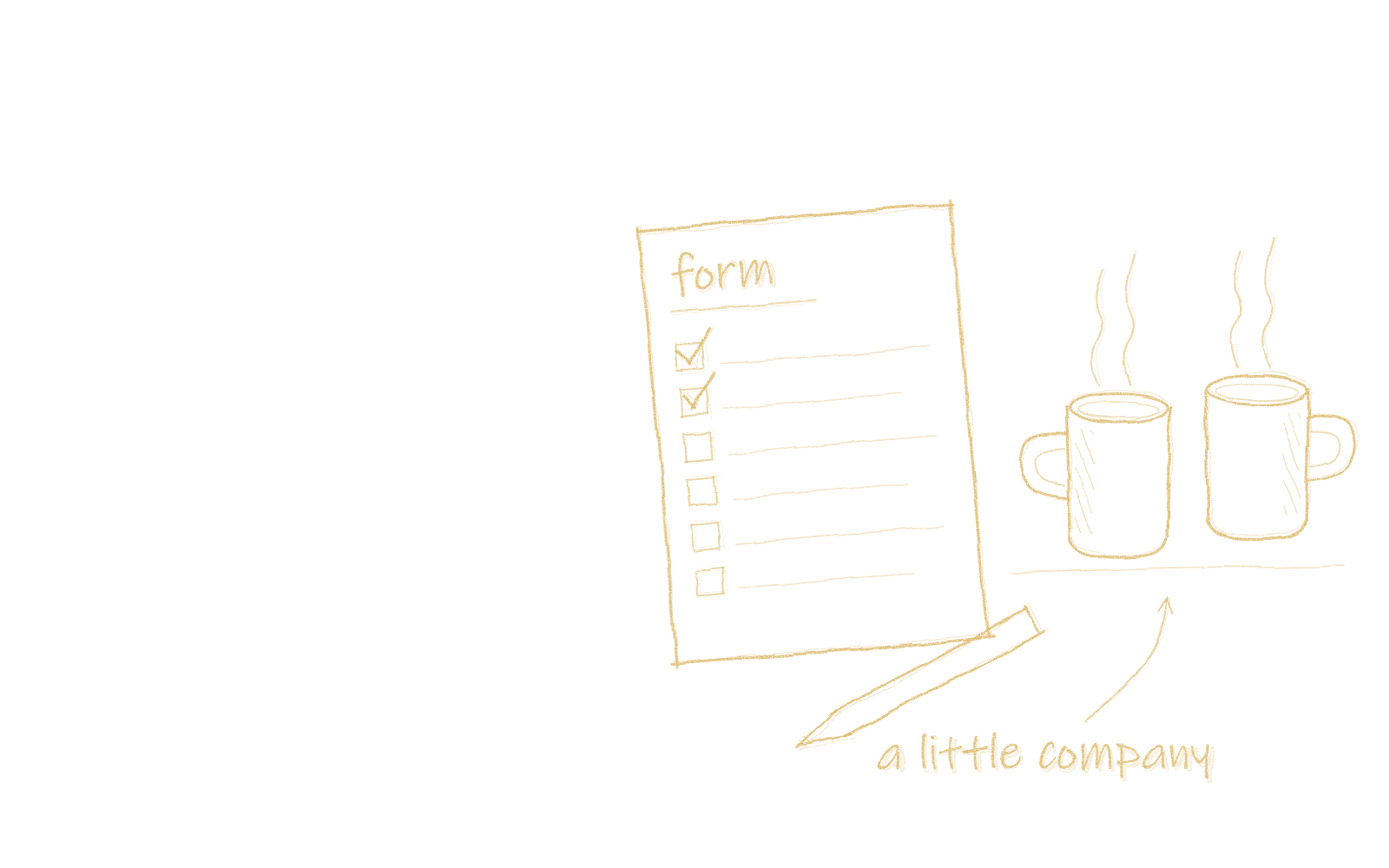
Body doubling is when you do your own work while someone else is there, either in the room or on a video call. They don’t even have to help. That thing you’ve been putting off for a week? Apparently, a lot of people say that having someone sit nearby is enough to finally get them to do it[1]. You’re still doing all the work yourself, but now there’s a witness, watching your every move. (They don’t actually have to watch. They don’t even have to know they’re doing it, but I’ll get to that.) If getting started at all is the problem, why we put things off is the bigger question, and it has a long essay of its own.
And honestly, I buy it. It feels like it should be easier to stay focused, and harder to wander off and reorganize the spice rack, when there’s a person sitting right there. But “a lot of people say so” and “it works” are two different things. So I went looking for whoever had actually tested it, and what I found was one survey, three small experiments that don’t agree with each other, and (I promise this is relevant) some cockroaches.
So here’s what I think after reading all of it. Body doubling is something loads of people swear by and almost nobody has tested. Whether it truly works is still open, because the few small tests so far don’t agree and none is big enough to settle it[3, 4, 5]. Which means the most useful test going is probably the cheap one you can run yourself, on a task you’ve been avoiding, alongside another person, for about ten minutes.
Many who swear by it describe themselves as having ADHD[1, 2]. If getting started in general is your trouble, my longer memo on it is how to stop procrastinating.
Survey says! (Well, 220 people say): What body doubling is and where the name came from
Body doubling means working on your own task in the presence of someone else, and the body double is that other person (so no, nobody is doing your stunts for you).
The name goes back, as far as researchers can tell, to a 1996 article by Linda Anderson, an ADHD coach[1, 2]. She wrote about a retired executive, newly diagnosed with ADHD, who got more done with another person in the room. She called that person the body double[2]. That’s the story as the Attention Deficit Disorder Association tells it in the reprint it put out in 2025.
And then, for the next 27 years or so, the idea mostly got written about on ADHD websites and in the news, with little to no peer-reviewed research on it[1].
Until 2023, when Tessa Eagle, Leya Breanna Baltaxe-Admony and Kathryn Ringland published what they believed was the first research paper on body doubling as a strategy[1]. And their method was the simplest one there is: they asked people. Starting in October 2022, they sent a survey out through their own and their lab’s Twitter accounts, through Reddit groups about neurodivergence and productivity, and through TikTok[1]. (So yes, the first research paper on body doubling started life as a link in a post. Everybody starts somewhere.)
Their online survey drew 220 complete replies, and 193 of those people called themselves neurodivergent, meaning their minds work differently from the typical pattern, as with ADHD or autism. No official diagnosis was required[1].
So how many of them said company helps? In all, 186 of the 220 (about 85%) said they were more likely to complete a task when working alongside someone else[1]. That’s a LOT of people agreeing about anything.
But my favorite part is that 53 of them (24%) first learned the name from the survey itself, while 52 said they had “always done it”[1]. So about a quarter of the people answering a survey about body doubling found out what it was called from the survey itself. And the authors say many people in that spot recognize it as something they’d done for years without a name[1] (and, I’m guessing, without expecting the name to be this odd). You may have been doing it for years without a word for it too.
Now, it’s tempting to read 85% as a verdict on the benefits of body doubling, and it can’t be one. The survey reached people already online in those spaces, and it records what they said they do. It can show that a habit is common, but it can’t show that the habit helps people complete tasks any better than working alone, because nobody was compared with anybody.
So what we need is a proper test, where some people work alone, some work with company, and somebody counts what got done. A few people have run one. And one of those tests even came back with good news, which is where the virtual reality headset and the pile of pretend bricks come in.
Does body doubling work? The one test that says yes involves pretend bricks
Nobody can say yet. A few people have run small tests, the results don’t agree, and none is big enough to settle it[3, 4, 5]. I’ll start with the one that found a gain.
In a 2025 preprint (a paper posted before other researchers have checked it), Zinat Ara and colleagues asked 12 young adults picked as having ADHD to lay bricks in virtual reality, either alone or with a body double who was a human or an “AI”[4]. I would love to have been in the meeting where somebody said “what about bricks?”
The human body double counted from one to eight before each brick[4]. And it seemed to help. People placed about 27% more bricks a minute with the human and about 30% more with the “AI”[4].
So… the robot won? Well, about that. The “AI” was not an AI. It was one of the authors, hiding. They stayed out of sight and followed the same pace as the human body double[4]. (Researchers call this the Wizard of Oz technique, and I’m not making that up, it’s in the paper[4].) So the one test with good news is really two people, and one of them is behind the curtain.
The “AI” was not an AI. It was one of the authors, hiding.
And look at the counting, too. If the person working alongside you is going one to eight, brick, one to eight, brick, that sets a rhythm, a bit like an exercise class where the instructor counts you through it. So some of the gain may come from the pace as well as the company. The authors don’t say this; it’s my reading.
Still, a gain is a gain. So did anyone else see one? Not clearly.
In a 2024 master’s thesis at Virginia Tech, Swetha Annavarapu had 40 university volunteers, not screened for ADHD, type a set text alone or with a body double in the room, on a video call or seen through a headset[5]. (Copying out a set text was chosen because it’s dull[5]. Mission accomplished.) People with someone in the room did type a little more. But the difference wasn’t statistically significant, so luck couldn’t be ruled out, and with about ten people in each group the study was too small to tell[5]. The thesis does say that most of them seemed to appreciate having the body double there[5]. So it was nicer, at least, even if nobody can say it was faster.
Then came a reading test. In 2025, Ryan Schuenke and Meredith Moore of Drake University, with Sidney Dickenson, had 26 people, with and without ADHD, take two college entrance reading tests, once with a body double and once alone, while a headset recorded their brain waves[3]. They found no statistically significant difference and no consistent harm in any group[3].
Two more results reach us second-hand. A 2024 master’s thesis at Lamar University, by S. Born, is described by other researchers as finding no significant effect[6, 4]. And Popular Science reported in June 2026 that the psychologist Will Canu and colleagues added questions about body doubling to a survey of about 1,600 students, and that the boost in performance “wasn’t huge”[7] (which is not a phrase anybody puts on a poster).
Four steps of evidence, from the bottom up. Body doubling sits on step 2.
So that’s one yes, from people stacking pretend bricks to a count, with either a person or a researcher in hiding keeping the pace, and then a typing test, a reading test and two second-hand reports that all landed somewhere around “eh”. If that feels inconclusive, you’re reading it right. Twelve people can produce a big-looking gain by luck, and forty split four ways can easily miss a real one.
The researchers know it. Ara’s team wrote in September 2025 that “No peer-reviewed controlled trials have examined its impact on adults with ADHD”[4]. The Drake test appeared a month later and is peer reviewed (other researchers checked it first), but it is small and used a reading test[3]. I couldn’t find a large, well-run test either.
Which is why I’d take pages that call it “evidence-backed” with a pinch of salt. FLOWN, a company that sells virtual body doubling sessions, says so, but its evidence is a report it commissioned on 117 of its OWN users, with no comparison group[8]. That’s a bit like a pizza place surveying the people already eating there and announcing that pizza is customer-approved.
So does body doubling work? In my opinion it’s a nice idea that nobody has tested properly yet, and that’s a different thing from an idea that got tested and failed.
OK, but say it does help some people. Why would a person just sitting there change anything? Well, the body doubling tests can’t tell us, so for that we have to go and visit some cockroaches.
And now, for some reason, cockroaches: Why body doubling might help, from accountability to an audience
Quick spoiler: the tests don’t say why body doubling might help, so all we’ve really got is what the people who do it say (things like accountability and companionship[1]) and some guesses. But there’s older research, none of it on body doubling, about a neighboring puzzle: how an audience changes what we do.
The textbook idea, often traced to the psychologist R. B. Zajonc in 1965, is that an audience helps with easy tasks and hurts with hard ones[9]. And that sounds about right to me. Easy thing, someone’s watching, you speed up. Hard thing, someone’s watching, you fall apart.
A famous 1969 experiment seemed to show it, in cockroaches of all things. They ran a straight track or a maze, with or without other roaches watching[9]. So at some point, somebody’s job was seating an audience of cockroaches. (I didn’t expect cockroaches in a post about paperwork either.)
Then in 2020, a team repeated it with a plan registered in advance and three times as many roaches. And this time the audience slowed the roaches on BOTH tasks, with no sign of a boost on either[9]. Now, that is about cockroaches, so it says nothing direct about you (I’m assuming). But it did make me trust the tidy textbook version a little less.
OK, what about people? A 2024 analysis by Garcia-Marques and Fernandes pooled 33 studies of a short lab task where you name the ink color of a printed word. Volunteers were less distracted on it when others were present, though not when the others were there to judge them[10]. So company helped, and an examiner didn’t, which is kind of sweet. But naming ink colors is a looong way from your tax form.
And then there’s what people say themselves. Asked why it works for them, people in the survey named companionship, accountability, guilt and the other person acting as a visual reminder to stay on task[1]. One person wrote that someone “could remind me what I was busy with in case I lose concentration”[1]. Which is honestly a great use of a friend: sit there, do your own thing, and every so often say “weren’t you doing your taxes?”
Popular pages also credit dopamine or mirror neurons, which sounds very official. But I couldn’t find a study that measured either during body doubling, so I’d treat those as guesses.
So the why is still open, and what we’ve got is cockroaches, ink colors and some reasonable guesses from the people who do it. But you do have one piece of evidence the researchers don’t: you can think back to the last time you finally got going on something you’d been putting off, and whether anyone else was around.
Is body doubling only for ADHD, and can it backfire?
You don’t need ADHD to try it. In the survey, 139 people named ADHD and 82 named autism, and 27 of the 220 didn’t call themselves neurodivergent at all[1]. The Drake test included people without ADHD, and the Virginia Tech volunteers weren’t screened for it[3, 5]. None of the tests I found looked at autism, so on autism I found only the survey.
Many pages say people with ADHD “need” a body double, and I couldn’t find a study that measured need. Popular Science reports that students with ADHD weren’t seeking body doubling out more than other students[7], and the small tests don’t show that people with ADHD gain more than anyone else[3, 4, 5]. Whether it works for you says nothing about a diagnosis. If you’re wondering about ADHD, is-procrastination-a-sign-of-adhd is a better place to start.
Whether it works for you says nothing about a diagnosis.
And it can backfire. “Some people with ADHD may actually do worse body doubling than by being by themselves and reducing distraction,” Canu told Popular Science[7]. The virtual reality team notes that relying on someone’s presence may stir up social anxiety and fear of being judged[4]. A 2026 preprint found that study-with-me videos raised reported persistence when they felt more like company, though the authors say they may also cost attention[11].
Borrow a person for ten minutes: Finding a body double and how to try body doubling today
A body double may be in the room or on a screen, live or recorded[1, 11]. In the survey, people did it with friends, family, coworkers and strangers online, and the body double didn’t need to work on the same thing, or even know they were doing the job[1]. Some people said they do it with strangers out in public[1]. So your body double could be the person at the next table in a coffee shop, who has no idea they’ve been hired.
So if you work from home, a virtual body double could be a friend on a video call with the sound off, a coworker on a quiet call, or a study-with-me video (a video of someone studying, which is apparently a whole genre). If you work shifts or have no steady schedule, it doesn’t need booking ahead: it can be whoever is already around when you have ten spare minutes. The tests all had small groups of volunteers doing set tasks for a study, so none of them tells us anything about home offices, night shifts or weeks without a fixed routine (or, to be fair, about any task that isn’t bricks, typing or a reading test).
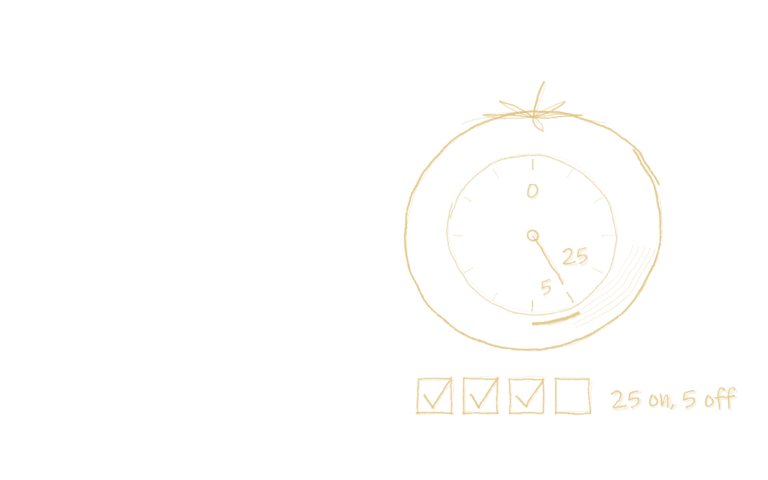
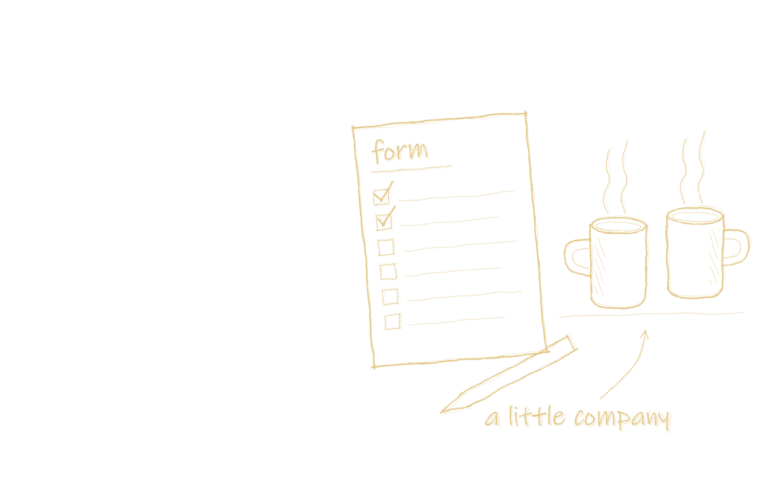
Here’s my suggestion for today, with no study behind this exact plan. Pick one task you’ve been avoiding and ask someone to be around for ten minutes. Saying “I’m going to work on this form for ten minutes, and you can do whatever you like” is enough. You’re not asking for help. You’re asking someone to exist near you for ten minutes, which is about the easiest favor there is. (And that’s it, that’s a body doubling session.) If nobody’s free, work alongside a study-with-me video for five minutes instead. Afterward, note how long it took you to begin, and whether you managed to stay on track.
One try can’t separate body doubling from the day, the task or your sleep, so treat it as a hint about you. Canu’s advice, as Popular Science reports it, is to try it a few times and then judge the results honestly[7]. And if a few tries in it’s clearly doing nothing for you, that’s a fine result too. You can stop, and you haven’t failed at sitting near a person. If you’d like to keep notes across a few tries, there’s a one-page sheet in the procrastination worksheet. The post on task paralysis covers the times when getting started at all is the hard part.
I found no study showing that body doubling treats anything. If starting tasks is a constant struggle that wears you down, your own doctor or a mental health professional can help.
So that’s where I’d leave it. Loads of people swear by it, the research on body doubling hasn’t caught up with them yet, and the test that costs you nothing is ten minutes with someone nearby. And if your first try is ten minutes of staring at the form while someone hums in the next room, that still counts, because you sat down with it. And if starting is the part that keeps beating you, the long essay on how to stop procrastinating has more on that.
More on getting started, if you want it:
- How to stop procrastinating, the long essay
- Task paralysis: when you cannot start something you mean to do
- A free printable procrastination worksheet
- The Pomodoro technique: does it work?
Frequently asked, rarely tested: Quick answers about body doubling, productivity, and whether it helps you stay focused
What is body doubling?
Body doubling is a productivity strategy where you do your own task in the presence of another person, in the room or on a video chat[1]. The other person is the body double, and they don’t have to help, or even work on the same thing[1] (they’re basically there to be there). The name is usually traced to a 1996 article by Linda Anderson, an ADHD coach[1, 2].
How does body doubling work, and is it effective?
Nobody knows yet how body doubling works, or honestly whether it does. People who use it name companionship, accountability, guilt (yes, guilt) and having a visual reminder[1]. Whether body doubling is effective is a separate question, and the few tests of the effectiveness of body doubling are small and don’t agree[3, 4, 5]. The one that found a gain looked only at the short-term effects of body doubling, during the sessions themselves[4], and those sessions were spent stacking pretend bricks. So if you were hoping it would boost productivity on demand, or finally get things done on the days nothing else works, that hasn’t been shown.
Can body doubling be done virtually?
Yes, and it doesn’t even have to be live. In the survey, some people’s body double was on a call or chat instead of in the room, and a body double can be live or recorded[1, 11], so a video of a stranger quietly studying counts. Whether a virtual body double does as much as a person sitting next to you, nobody knows. In the typing test, the video call group typed a little more than the people working alone, but the differences between the groups could have been luck[5]. So try it and see what your own ten minutes look like.
Why do people with ADHD need a body double?
I couldn’t find a study showing that people with ADHD need a body double, or one that even measured need. Many who swear by it do describe themselves as having ADHD (attention deficit hyperactivity disorder)[1, 2]. But Popular Science reports that college students with ADHD weren’t seeking it out more than other students[7], and the small tests don’t show that people with ADHD gain more than anyone else[3, 4, 5]. Whether it suits you says nothing about a diagnosis. If it helps you, keep it, and if it doesn’t, you haven’t failed at anything.
Does body doubling help with ADHD?
Nobody can say yet whether body doubling can help with ADHD, and I’d rather tell you that than guess. I found no study showing that it treats the symptoms of ADHD, or anything else. The one test that found a gain in people picked as having ADHD was a short virtual reality task with 12 young adults, in a preprint that other researchers haven’t reviewed yet[4]. If starting tasks is a constant struggle that wears you down, your own doctor or a mental health professional can help.
What is the 30% rule for ADHD?
I can’t vouch for the “30% rule” for ADHD, and it isn’t a body doubling finding. I couldn’t find a paper that states the 30% figure or shows how it was worked out, only blogs and pages selling something. If your question is really about ADHD itself, your own doctor or a mental health professional is the right person to ask.
The numbers, if you want them
- The 2023 survey (Eagle, Baltaxe-Admony and Ringland): 410 responses came in and the 220 complete ones were analysed. 45 people (20%) said they body double with strangers online and 35 (16%) with strangers in public[1].
- Where the name came from: I read the 2025 reprint of Linda Anderson’s article by the Attention Deficit Disorder Association, not the 1996 original[2].
- The virtual reality bricks (Ara and colleagues, 2025 preprint): 8.49 bricks a minute alone, 10.82 with the human body double and 11.06 with the “AI”[4] (somebody counted pretend bricks to two decimal places, and I think that’s lovely). The 12 were picked through a screening survey that asked about a prior diagnosis, along with a self-report scale[4].
- The typing test (Annavarapu, 2024): 12% of the text typed alone, 17% with a body double in the room and 14% with each of the other two; p = 0.085, above the usual 0.05 cutoff. The author estimated only about a 37% chance of catching a real effect of medium to large size[5].
- The reading test (Schuenke, Dickenson and Moore, 2025): I read only the abstract[3].
- The two second-hand results: I couldn’t read Born’s thesis, so its result is given the way Ara’s team describes it[6, 4]. The 1,600-student survey comes from the Popular Science article, and I couldn’t find it published[7].
- Where I looked: PubMed, Europe PMC, OpenAlex and Google Scholar. I found no large, well-run test.
Sources
- Eagle, T., Baltaxe-Admony, L. B., & Ringland, K. E. (2023). Proposing body doubling as a continuum of space/time and mutuality: An investigation with neurodivergent participants. ASSETS ’23. https://doi.org/10.1145/3597638.3614486 (the journal version of the same survey: ACM Transactions on Accessible Computing, 17(3), 2024, https://doi.org/10.1145/3689648)
- Anderson, L. (1996; republished by ADDA 20 February 2025). The ADHD body double: A unique tool for getting things done. https://add.org/the-body-double/
- Schuenke, R., Dickenson, S. R., & Moore, M. (2025). Reading between the lines: Exploring body doubling in ADHD using EEG. ASSETS ’25, 1-6. https://doi.org/10.1145/3663547.3759743 (abstract read; the Drake University link comes from the poster for the same study: Schuenke, R., & Moore, M. (2025). Evaluating the efficacy of body doubling for ADHD using a brain-computer interface. CCSC Central Plains 2025. https://www.ccsc.org/centralplains/2025/talks/talk-poster16/)
- Ara, Z., Rahim, I. B., Zhou, P., Yu, L., Esmaeili, B., Yu, L.-F., & Hong, S. R. (2025). You are not alone: Designing body doubling for ADHD in virtual reality. arXiv:2509.12153 (preprint, not peer reviewed). https://arxiv.org/abs/2509.12153
- Annavarapu, S. (2024). Comparative study of body doubling in extended reality [Master’s thesis, Virginia Tech]. https://vtechworks.lib.vt.edu/items/ca3034fd-2ef6-420b-8fcc-b8fcf103e972
- Born, S. (2024). The effects of accountability and body doubling on productivity for people with attention deficits [Master’s thesis, Lamar University]. https://www.proquest.com/openview/9336c3adbfcffcf4f71c9dcc4ebcb2d6/1 (not read; described in source 4)
- Hall, S. L. (2026, 24 June). Can “body doubling” really help you focus? Psychologists say maybe. Popular Science. https://www.popsci.com/health/body-doubling-focus-benefits/ (a magazine article; the survey it describes has no published paper that I could find)
- FLOWN. Virtual body doubling for ADHD: new research findings from 117 adults (company-commissioned report, not peer reviewed). https://neurodiversity.org/?p=11449 ; the company’s product page: https://flown.com/body-doubling-for-adhd
- Halfmann, E., Bredehöft, J., & Häusser, J. A. (2020). Replicating roaches: A preregistered direct replication of Zajonc, Heingartner, and Herman’s (1969) social-facilitation study. Psychological Science, 31(3), 332-337. https://doi.org/10.1177/0956797620902101
- Garcia-Marques, T., & Fernandes, A. C. (2024). Meta-analysis of social presence effects on Stroop task performance. Psychological Reports, 129, 29-62. https://doi.org/10.1177/00332941241227150
- Pei, Y., Liu, X., Wang, F., & Wang, S. (2026). How study-with-me videos support learning persistence: A digital body-doubling perspective. SSRN preprint (not peer reviewed; abstract read). https://doi.org/10.2139/ssrn.6933230