The 2-minute rule is one of those productivity hacks everybody seems to know: if something takes less than two minutes, do it now. That text you’ve been meaning to answer since Tuesday? Apparently you just answer it, right now, and get on with your life. And that sounds reasonable to me. But it turns out there are two 2-minute rules with the same name, from two different guys, for two completely different problems, and I only found that out because of a comment section from 2013. (If it’s the big thing you keep avoiding that brought you here, the long essay is how to stop procrastinating.)
On May 27, 2013, James Clear published a blog post about something he called the 2-minute rule[5]. That same evening a reader left a comment under it. The rule, the reader wrote, “is from David Allen”[5]. (A comment section being helpful, on the internet. I know.)
And Clear replied 98 minutes later, going by the page’s timestamps (6:12 pm for the comment, 7:50 pm for the reply, and yes, I did the subtraction). His reply has a “whoa!” in it. He said he hadn’t read any of Allen’s books, apologized “for not knowing about this before publishing”, and added a credit[5]. Honestly, I liked how fast he owned it. Most of us take longer than 98 minutes to admit we took the wrong exit.
But then he added one more thing. Allen, he noted, “doesn’t mention ‘Part II’ about habit formation”[5].
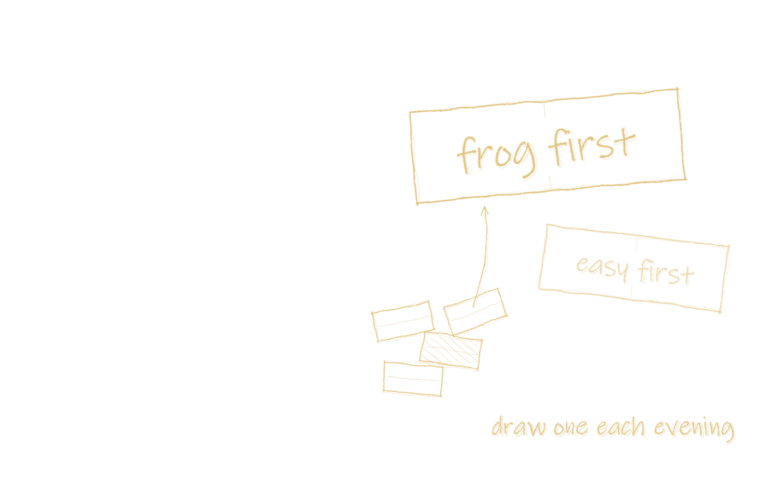
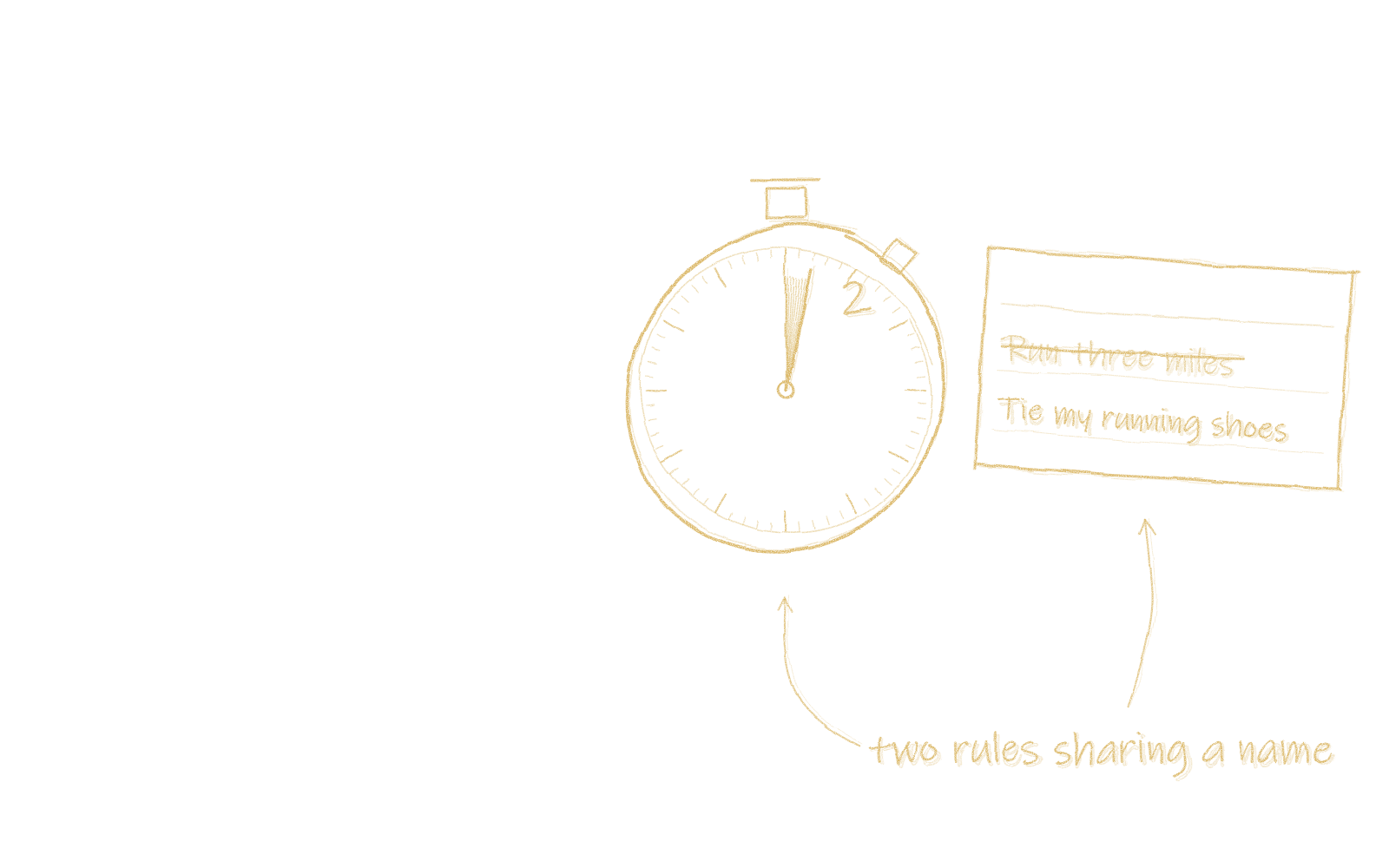
Part II? There’s a sequel? Well, yes. David Allen’s rule, from Getting Things Done, says that if the very next step of a job takes less than two minutes, you do it now[1, 2]. James Clear’s rule, from Atomic Habits, says a new habit should take less than two minutes to do[3]. So they share a name and a number of minutes, and that’s about it.
So here’s what I’m going to argue: these are two different rules for two different problems, as far as I can tell nobody has tested either of them, and I think the tip gets a lot more useful once you know which one you’re holding. Think about what’s hanging over you right now. Usually it’s one of two things. There’s the pile of tiny jobs, like that text from Tuesday and the form that still needs a signature. And there’s the one bigger thing you keep meaning to start, the one you procrastinate on (you know the one). Allen’s rule is for the pile, and Clear’s is for the big thing, which makes it the one people reach for when they’re trying to overcome procrastination. (If the big thing is a single stuck task rather than a new habit, the memo on how to stop procrastinating goes further.)
We’ll start with the older one.
Read it, put it back, read it again next week: David Allen’s two-minute rule, the productivity one
So here’s David Allen’s two-minute rule: if the next step of a job takes less than two minutes, you do it now[1, 2]. It comes from Getting Things Done, his productivity system, first published in 2001[1]. And in 2020 he explained it again on his own podcast, in a series called Two-minute Tips for Turbulent Times[2] (so yes, the two-minute rule got its own two-minute tip, and I respect the commitment).
My first guess was that the rule is about speed, about getting small things out of the way so they stop bugging you. That seemed obvious enough. But the reason Allen gives is about not having to look at the thing twice: “it would take you less than two minutes to do it, but it would take you longer than two minutes to look at it again and review it and reflect on it later on”[2].
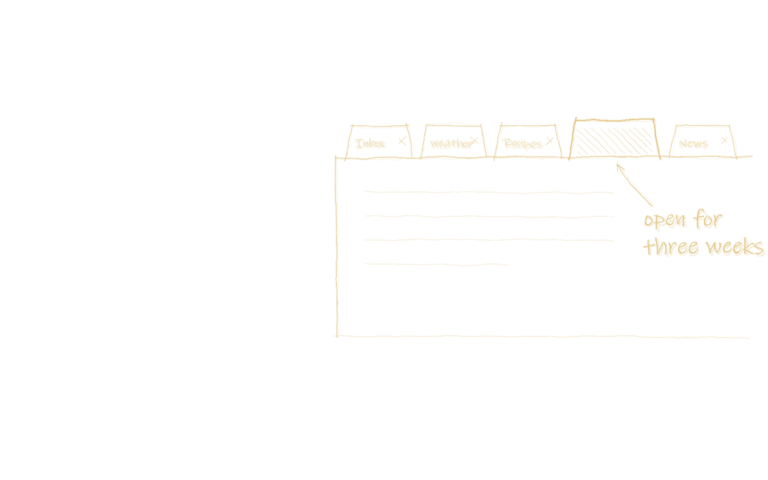
And you know this one from the mail on the counter. You open a letter, read it, slide it back into the envelope, and a week later you open it and read it again like it’s brand new information. By the second reading you’ve spent longer on that letter than answering it would have taken (and it’s still sitting there). So Allen’s rule is really a way of touching the thing once.
But there’s a condition, and it’s a helpful one. The rule applies once you have “decided very clearly and specifically” what the next step is[2]. Replying to a dinner invitation fits. “Sort out the car” doesn’t, because nobody has ever sorted out a car in two minutes, and it won’t fit until the next step turns into a call to the garage. My guess is that plenty of jobs sit on a list for weeks for exactly this reason: from the outside it looks like laziness, and on the inside nobody has decided what the next step is yet.
OK, but wouldn’t two-minute jobs swallow the whole day? Allen has heard that one. His answer is that you’d be amazed how many strategic things have just a two-minute action on them, and he says he never has a backlog of two-minute stuff himself, because it’s all done[2]. Which, good for him. But that’s one man reporting on his own to-do list, and that isn’t quite the same thing as a study.
So that’s Allen’s rule: a reply, a signature, a call to the garage. Nothing in it is about starting something big. That half came from somebody else.
New rule, who dis: James Clear’s 2-minute rule, a blog post on how to stop procrastinating before it was Atomic Habits
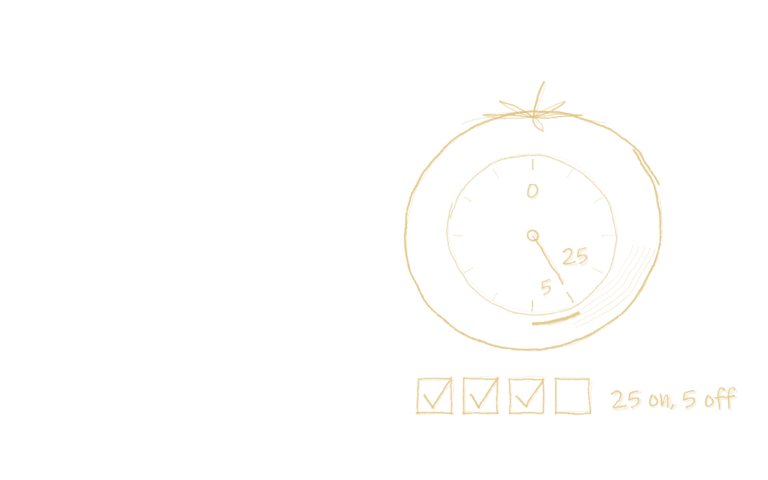
James Clear’s 2-minute rule, the way he puts it in Atomic Habits (published in 2018), says that when you start a new habit, it should take less than two minutes to do[3]. But it didn’t start life as a rule of its own.
Back to that blog post from 2013. Clear gave the rule in two parts[5]. Part 1 was “If it takes less than two minutes, then do it now.” Part 2 was “When you start a new habit, it should take less than two minutes to do”[5]. So Part 1 is the half that Clear said was exactly the same as Allen’s approach, and Part 2 is the “Part II” from his reply, the one he said Allen doesn’t mention[5]. And I didn’t find it in Allen’s 2020 talk either[2].
So where did Part 2 come from? Well, the readers in those 2013 comments had thoughts (it really was a good comment section). One of them linked it to Leo Babauta’s idea of making a habit so easy you can’t say no, and another to BJ Fogg’s Tiny Habits[5]. But Clear’s own explanation was a different guy altogether: Isaac Newton, and inertia. Objects at rest tend to stay at rest and objects in motion tend to stay in motion, he wrote, and “This is just as true for humans as it is for falling apples”[5]. So once you start doing something, the thinking goes, it’s easier to keep doing it.
Five years on, the habit half had taken over. In the 2018 Atomic Habits, as excerpted on Clear’s site, the main text keeps only the habit half. Allen gets a footnote that begins “Hat tip to David Allen”, and “Run three miles” becomes “Tie my running shoes”[3] (which is the most achievable fitness plan I’ve ever read).
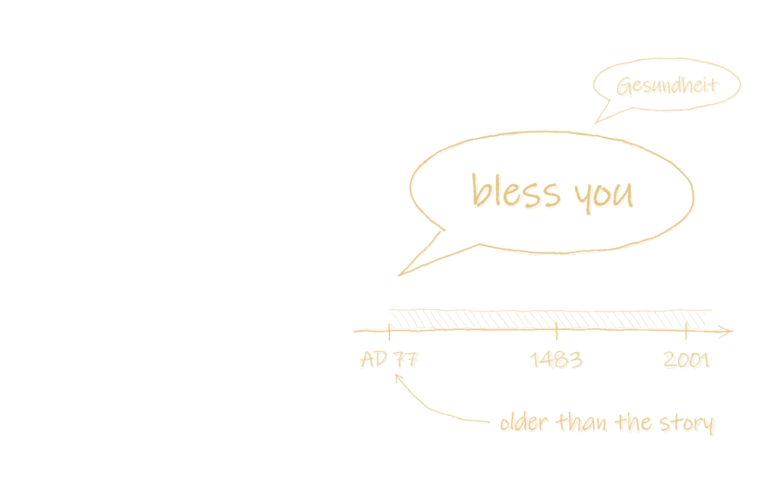
- 2001David Allen’s Getting Things Done is first published, with the “do it now” rule [1]
- May 27, 2013James Clear posts both parts of the rule. A reader points to Allen that evening; Clear replies 98 minutes later and adds a credit [5]
- 2018Atomic Habits: the excerpt on Clear’s site keeps only the habit half in its main text, with Allen in a footnote [3]
- 2020Allen’s podcast episode on the two-minute rule [2]
Objects at rest tend to stay at rest. It’s a lovely line, and I’d happily own the mug. But Newton was talking about objects, and you and I are people with inboxes, so I went looking for whether anyone had checked.
Two authors, one name, no experiment that I can find: does the 2 minute rule help you stop procrastinating?
Honestly, I can’t tell you that it does, because I couldn’t find a single study that tests either version of the rule[4]. Not Allen’s, and not Clear’s.
Oh, the phrase “two-minute rule” does show up in the research. It’s just never THIS one. I found a football rule about taking players off for a medical check, a checklist for assessing falls, a pause during resuscitation and a gratitude exercise. All good causes, I’m sure, and none of them will answer your texts[4]. The closest I got was an opinion piece for radiologists that was built on Atomic Habits, and it only mentions Clear’s rule without testing it[4].
I found a football rule about taking players off for a medical check, a checklist for assessing falls, a pause during resuscitation and a gratitude exercise.
And Clear was straight about this himself. In the last section of his 2013 post, he said he couldn’t guarantee the rule would work for you, only that it never would if you never tried it[5]. Which is honest, and also technically true of karaoke.
So what’s the nearest thing to a test? A study on procrastination by two researchers, Garg and Schooler, published in October 2026[6]. They signed up adults in the US online and had each of them spend 15 minutes on a task they’d been putting off (I like to imagine a lot of laundry got folded for science). Some of them were first told to break the task into three to five pieces of about three to five minutes each[6]. Then, halfway through, everyone rated how actively they were working, and the ones who had split the task up rated themselves higher[6].
So… tiny pieces work? Well, kind of. It’s close to Clear’s idea without being the same thing, because the pieces were three to five minutes and not two. And what went up was how actively people said they were working. Nearly everyone said they finished inside the 15 minutes whether they’d split the task or not, and the authors themselves say their evidence is about motivation during the task and not about getting it done[6]. Also, nobody was sorted into groups at random, because each person picked one of three sign-up listings themselves[6]. So I’d call that a hint, and a pretty new one that nobody has repeated yet.
So no test can tell us where these rules go wrong. The next part is my own reasoning, with one borrowed study for company.
Just one quick thing (it’s never one quick thing): when the 2-minute rule backfires
As I read them, each rule can backfire in its own way: David Allen’s can chop your day into little bits, and James Clear’s can leave a habit stuck at two minutes. Start with Allen’s. If you do each quick job the moment it comes up, his rule can turn into a stream of interruptions you hand yourself. It’s like having a coworker who keeps stopping by your desk with “just one quick thing”, except the coworker is YOU.
Nobody has studied that exactly. But some researchers in 2008 (Gloria Mark and two colleagues) had 48 people answer emails while someone pretending to be their boss interrupted them now and then, by phone or by instant message[7]. And when they were getting interrupted, people actually finished the emails faster, taking about 20 minutes instead of 23 (and that’s time spent on the emails themselves, not counting the time the interruptions took)[7]. So… interruptions helped? Well, they also reported feeling MORE stressed and frustrated, with more time pressure and more effort[7]. They saved a couple of minutes, but apparently those weren’t a very pleasant 20 minutes.
And why would being interrupted make you faster? The researchers’ own reading was that people make up for interruptions by working faster, and then pay for it in stress[7]. The emails weren’t any worse, either. So it looks like a win on the clock, and the cost only shows up when you ask people how they feel.
Now, that study didn’t test a two-minute rule. The interruptions came from a pretend boss, and nobody in it chose to go off and do a short job. So I take it only as a hint that switching has a price. I suspect a long run of quick jobs can eat the hour of focused work meant for the big thing.
The workaround I’d try is a fence, and it’s mine, not Allen’s. Gather up the two-minute jobs and clear them in one sitting, instead of the moment each one turns up. You still touch each thing once. You just stop letting the small pile decide what the rest of your day looks like.
Clear’s version has a different weak spot. For days when the rule feels forced, the excerpt offers “do it for two minutes and then stop” and calls that “the whole thing”. The point, he writes, is “to master the habit of showing up”[3]. And that’s a kind design for a bad day. The risk, as I read it, is for someone who wanted more than showing up, because their habit could just stay at two minutes by default. You could get very good at tying your running shoes. So if that’s you, the two minutes are the way in, and at some point you have to decide to stay longer on purpose.
You could get very good at tying your running shoes.
Now, all of that assumes a day with an hour in it that you could fence off. Some days don’t come with one.
Must be nice to have a calendar: if your days don’t run on a schedule
If your days don’t run on a schedule, I think you can still use both rules, because neither one cares what time it is. The one interruption study here was office email in a lab[7]. And since I found no test of either rule on anyone[4], I found nothing on them for someone on rotating shifts, or for a parent whose day is mostly other people’s two-minute jobs (find the shoe, open the yogurt, find the other shoe). So here I’m guessing, and I’d rather just say so.
Allen’s rule needs a moment where you look at the pile, and on a twelve-hour shift that moment might only come on a break, or sitting in the car before you drive home. That’s fine. The rule works whenever you do look: anything you can finish before you’d put it down, finish.
And Clear’s rule may suit an unpredictable week when you’re trying to stick to good habits, because two minutes fits almost anywhere, like the car before you walk in or the wait for the kettle.
Pick your fighter: which 2-minute rule to try, the small-pile one or the one Clear pitches to overcome procrastination
So which pile is louder right now, the small jobs or the big thing? My rule of thumb, and it’s only that: use Allen’s rule when the next step is already decided and tiny, and Clear’s for something you keep putting off. Clear’s 2013 post stretched his rule to big goals as well as small ones, on the grounds that every goal can be started in two minutes or less[5]. I’d keep it for habits and stuck starts, where getting going is the whole problem, and I wouldn’t count on two minutes to achieve your goals for you.
And remember that, as far as I can tell, nobody has tested either rule. So if one of them isn’t helping, it’s allowed to be the rule’s fault and not yours.
One small thing to try this week takes ten minutes, and you can do it today. Pick the pile you can see from where you are: your inbox, your texts, the papers by the door (cleaning up clutter counts). Set a timer and do only the items whose next step you’ve already decided and that take under two minutes. If ten minutes is too much, do one. If the big thing won’t even start, the post on task paralysis is about exactly that. And if you’d like a sheet to write the two-minute start on, there’s a free printable procrastination worksheet.
Then write down the two-minute start of the thing you keep avoiding, small enough to feel a little silly, and do it now. When the two minutes are up, whether you stop is your call. Clear’s excerpt says that on a day when the rule feels forced, stopping there is the whole thing[3], and I’m not going to argue with the guy whose rule it is. If you want the whole picture of getting started on the thing you keep avoiding, the long essay on how to stop procrastinating is where I put it.
A few more on getting started:
- How to stop procrastinating, the long essay
- Task paralysis: when you cannot start something you mean to do
- A free printable procrastination worksheet
- Body doubling: does having someone nearby help?
Under two minutes each, so technically you have to read them now: quick answers on the 2 minute rule and how to beat procrastination
Who came up with the two-minute rule, David Allen or James Clear?
Two people, and that’s the whole mix-up: there are two rules with one name, Allen’s “do it now” rule and the habit version that James Clear wrote up. David Allen describes the “do it now” version in Getting Things Done, first published in 2001[1]. James Clear posted both halves on his blog on May 27, 2013, added a credit to Allen that same evening after a reader pointed it out, and kept only the habit half in the main text of his Atomic Habits excerpt in 2018[3, 5].
How can you use the 2 minute rule to stop procrastinating?
Pick the thing you keep putting off, write down a first step that takes under two minutes, and do only that. That’s Clear’s version, and it rests on his point that every goal can be started in two minutes or less[5]. If you came here hoping for a proven way to beat procrastination, sorry, I couldn’t find a study that tests this[4]. So think of it as a cheap experiment (it costs you two minutes), not a guarantee.
What are examples of tasks or habits for the two-minute rule?
For Allen’s rule, think of jobs whose next step is already decided and short: replying to a dinner invitation, signing a form, calling the garage (those are my examples, not his). For Clear’s rule, the examples in his Atomic Habits excerpt shrink a habit down to its very start, so “Read before bed each night” becomes “Read one page” and “Run three miles” becomes “Tie my running shoes”[3]. And yes, the shoes count, even if you sit right back down afterwards.
How can you use the two-minute rule to build new habits?
Start with a version of the new habit that takes less than two minutes, which is how Clear puts the rule in Atomic Habits[3]. His idea is to make it easy to start taking action, and he writes that the point is “to master the habit of showing up”[3]. As I read it, that means consistently taking action first and worrying about how much later. So it’s less of a mindset shift and more of a teeny first step. Staying longer is something you decide later, on purpose.
Can the 2 minute rule help you achieve your goals?
I couldn’t find a study showing that the 2 minute rule helps you achieve your goals[4]. Clear’s 2013 post said the rule works for big goals as well as small ones, because of what he called the inertia of life, and that every goal can be started in two minutes or less[5]. But starting isn’t finishing (ask anyone with a half-knitted scarf), and I found no test of either version[4]. So I’d use it to get going and not count on it for the rest.
The numbers, if you want them
- David Allen’s book[1, 2]: I haven’t read Getting Things Done itself, so his reasoning here comes from his 2020 podcast episode. The 2001 date comes from a book catalogue.
- Garg and Schooler[6]: 238 US adults. Nearly everyone said they finished within the 15 minutes (91 to 95 percent in every group), which the authors say probably limited what the study could detect. People weren’t randomly assigned: each picked one of three listings themselves.
- Mark and colleagues[7]: 48 people, and each of them did the email task with and without interruptions. When interrupted, they spent about 20 minutes on the email task itself against about 23 (20.31 or 20.60 against 22.77, if you like decimals), not counting the time the interruptions took.
- How I looked for a test[4]: PubMed and Europe PMC, for “two-minute rule”, “2-minute rule” and “two minute rule”, alone and with habit, procrastination, productivity and “time management” (the football rule was not what I was after, but I hope it’s going well).
Sources
- Allen, D. (2001). Getting Things Done: The Art of Stress-Free Productivity. New York: Viking. Revised edition 2015, New York: Penguin. (Not read. Cited only for the book’s existence, the 2001 date and that the rule is in it; Open Library lists the first publication as 2001.)
- Allen, D. (2020, 29 May; updated 15 July). Episode #79: The Two-minute Rule. Two-minute Tips for Turbulent Times, GTD podcast, David Allen Company. https://gettingthingsdone.com/2020/05/the-two-minute-rule-2/
- Clear, J. (2018). Atomic Habits. New York: Avery, chapter 13. Excerpt on https://jamesclear.com/how-to-stop-procrastinating (read 30 October 2026).
- Search log, 30 October 2026: PubMed and Europe PMC, searched for “two-minute rule”, “2-minute rule” and “two minute rule”, alone and with habit, procrastination, productivity and “time management”; no study of either rule found. Full log in the research notes for this post.
- Clear, J. (2013, 27 May). How to Stop Procrastinating by Using the “2-Minute Rule.” jamesclear.com, with reader comments. Internet Archive capture of 27 November 2013: http://web.archive.org/web/20131127122810/http://jamesclear.com/how-to-stop-procrastinating
- Garg, A., & Schooler, J. W. (2026). Breaking procrastination down: Differential effects of subtasking and reinforcement on engagement and persistence. Behavioral Sciences, 16(10), 1832. https://doi.org/10.3390/bs16101832
- Mark, G., Gudith, D., & Klocke, U. (2008). The cost of interrupted work: More speed and stress. Proceedings of CHI 2008, 107–110. https://doi.org/10.1145/1357054.1357072