It’s late, the phone is in your hand, and somewhere between a video of a dog on a skateboard and a video of someone pressure-washing a driveway, a very confident person tells you that your phone has used up your dopamine and that a dopamine detox will reset your brain. And on a tired night, that sounds about right. You feel fried, the phone is the thing you’ve been staring at all evening, so sure, something in there must have run out. (There are more questions like this about focus and time on the Work page.)
So does a dopamine detox work? Well, there’s no evidence that it resets your brain. As Harvard Health’s 2026 summary puts it, your brain needs dopamine to function, so a “dopamine detox” is not possible[12]. And I found no study showing that a break from your phone changes your dopamine levels. But when researchers asked people to limit or leave social media or phone internet for anywhere from one to four weeks, they did find some gains. The gains were small, and they mostly showed up in how people said they felt on questionnaires[1, 2, 3, 4].
So here’s what I think happened, and I’ll spend the rest of this post arguing it: the dopamine was the marketing. The part that might actually do something for you is a small and frankly kind of boring habit, and it got left behind when the name took off. And I didn’t have to dig very far for that, because the psychologist whose 2019 guide helped make it famous told the New York Times that dopamine “makes for a catchy title”[9].
His name is Cameron Sepah. In November 2019, a San Francisco TV station interviewed him for a story headlined “Silicon Valley takes on ‘Dopamine Fasting 2.0’ to battle bad habits, addiction”[7] (you can tell it’s Silicon Valley because the fasting already has a version number). He had published a guide to dopamine fasting[7, 8], and here is what he asked people to do: take “about one to four hours at the end of every day” off the things that are a problem for you[7]. So, a few hours, at the end of the day, away from whatever has its hooks in you. And in the same interview he said the whole idea was “to basically help people manage problematic or addictive behaviors by taking time off the things that are problematic to them”[7]. Nobody’s brain gets reset anywhere in those sentences.
The book was better: Where the dopamine detox came from
You know how the movie version of a book keeps the title and one character and loses most of the rest? Well, that’s roughly what happened here.
Harvard Health’s Peter Grinspoon wrote about the concept of dopamine fasting in 2020, in a piece called “Dopamine fasting: Misunderstanding science spawns a maladaptive fad” (so you can guess how he feels about the internet’s version). But he describes what Sepah intended as “a method, based on cognitive behavioral therapy”[9] (CBT, to its friends). And The Scientist reports that Sepah describes it as a catchy name for a technique based on that therapy, meant to help people reduce compulsive behaviors[8]. So far, so sensible. And then Grinspoon quotes Sepah telling the New York Times this: “Dopamine is just a mechanism that explains how addictions can become reinforced, and makes for a catchy title”[9].
So the psychologist who wrote the guide didn’t treat the dopamine part as the point. The point was the method, which is a little time each day away from the thing that’s become a problem for you (the “stimulus”, if you want the therapy word). The dopamine, in his own words, made for a catchy title. And to be fair, it did. Nobody was going to share a video called “Taking A Few Hours Off The Thing That’s A Problem For You 2.0”.
Nobody was going to share a video called “Taking A Few Hours Off The Thing That’s A Problem For You 2.0”.
But a catchy title travels a lot faster than the guide it was attached to. By the time the idea reaches you between two videos, it is all about the chemical. In that telling, people are “addicted to dopamine”, their reward center is worn out from high dopamine levels, and a break will allow the brain to reset and restore them. Which is a lot of story for something that started as a few hours off at the end of the day. So to see how far the idea had drifted, I had to go and read about how dopamine works.
That’s not my department: What dopamine actually does
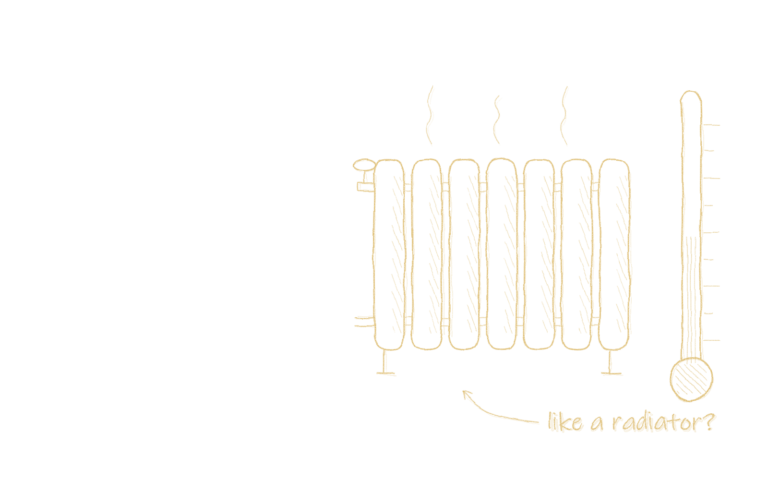
Dopamine is a neurotransmitter, which is a chemical messenger between nerve cells, and dopamine plays a part in “reward, motivation, learning, and pleasure”[9]. That’s four things. The popular story keeps only the last one. In that version dopamine is the pleasure chemical. Anything that brings you joy, like eating dessert or scrolling social media, gives you a dose of dopamine and uses a bit of it up. And the highly stimulating activities, the ones that hand you instant gratification or overstimulation (an addictive feed, say), use it up fastest. So, in the popular telling, it works like a phone battery, and all those quick hits of dopamine have been running yours down since breakfast.
That’s the version I’d always heard, and it sounds fine until you meet the rats.
The rats come from Kent Berridge’s experiments, which separated two things that feel like one: wanting something and liking it. As a Vox explainer tells it, rats that couldn’t make dopamine “couldn’t even move to feed themselves”[10]. OK, so if dopamine IS pleasure, then food should mean nothing to these rats, because they’ve got none of the pleasure chemical. So what happened when they were fed by hand?
Turns out they enjoyed it. In the explainer’s words, “when hand-fed something yummy, the rats still liked it”[10] (yes, “something yummy” is the wording, and I have a lot of questions about how you can tell with a rat). And most neuroscientists today agree that dopamine does not represent pleasure directly[10].
Berridge and Robinson put it this way in 2016. “Wanting” is “a form of motivation” generated by brain systems that include dopamine, while “liking,” the pleasure itself, “is not dependent on dopamine”[11]. Think of the pull toward the snack cupboard, and then the taste of the snack. They feel like one thing, but the two can come apart. If it’s motivation you’re really wondering about, motivation vs discipline goes into it.
Two parts of reward, as Berridge and Robinson describe them.
In their theory, drug addiction is “excessive amplification specifically of psychological ‘wanting,’ especially triggered by cues”[11]. So the cues pull harder, and the liking doesn’t have to grow with them. The theory was built mostly around drugs, though its authors say it now reaches behavioral addictions too[11]. And if you’ve ever watched yourself scroll through a feed you weren’t enjoying, that split will sound familiar.
So on this account, pleasure isn’t really dopamine’s department. Dopamine has more to do with the pull than with the pleasure, which already makes “my phone used up my pleasure chemical” an odd sentence. But OK, maybe the name is wrong and the worry is still right. Maybe heavy phone use wears the brain’s reward system down in some other way, and a break puts it back. So that’s what I went looking for next.
Have you tried turning it off and on again: The idea that your phone wears out your dopamine levels
That’s what a “reset” is, when you think about it. It’s the oldest fix in tech support: something is running slow, so you switch it off, wait a bit, and switch it back on. But as far as I could find, nobody has shown that your phone wears out your dopamine levels, or that a break resets them. And I did look, because it would be great if brains worked like that.
The study you’d want is easy to describe: measure people’s dopamine, have them cut back on their phones, and measure it again. I found no study that did that. Even a 2026 review that proposes short video may alter dopamine receptors in young brains says “direct causal neurobiological data remain absent”[13] (which is a long way of saying “we suspect so, but the direct evidence isn’t there yet”).
The closest I came was a 2021 study of 22 young adults by Andrew Westbrook, Roshan Cools and colleagues[14]. They had software log each person’s phone for about a month (so somewhere there is a record of how 22 people used their phones for a month, and I hope it’s well guarded). Each person also had one brain scan, which estimated how fast the brain can make dopamine in a reward region. Then the two were lined up. And the people who spent a bigger share of their phone interactions in social apps had a LOWER capacity in one part of that region[14].
So… phones drain your dopamine after all? Well, it’s tempting to read a lot into that, and I wouldn’t. The scan measured how fast the brain can make dopamine, not how much dopamine release happens while scrolling, so it doesn’t show a brain flooded with dopamine. It is also 22 people and one snapshot each. Nobody was assigned to use their phone more or less. And the logging app was installed 328 days after the scan on average (so the scan and the phone habits are most of a year apart), which means the study cannot say which came first[14].
The strongest version of the wearing-out idea comes from Anna Lembke, the author of Dopamine Nation. She describes pleasure and pain as a seesaw, where the brain answers pleasure “by neuroadaptation,” tipping toward pain before it levels out[16, 17]. And it’s a good picture, the kind that sticks with you. But a picture is where it stops for now. I couldn’t find a study that tested it on phones with dopamine measured, or one showing that a detox of any length (yes, the 30-day dopamine detox and the 90-day one too) resets dopamine levels or the dopamine response. So people are switching it off and switching it back on, and as far as I could find, nobody has measured whether anything restarted.
So the chemistry is thinner than the name suggests. But the name has friends, and two of them turn up wherever the detox does.
Is “dopamine burnout” real, and what about the signs of low dopamine?
The first friend is “dopamine burnout”. It sounds clinical, but I couldn’t find it used as a medical term.
The second is the list of signs of low dopamine. Those lists lean on real illness: Cleveland Clinic’s page ties low dopamine to several medical conditions, depression and ADHD among them[18]. What I didn’t find is a study-backed checklist that links everyday boredom or low drive to low dopamine.
If low mood or tiredness has lasted a while, or you have questions about ADHD or a medicine you already take, please bring that to your own doctor or pharmacist. And if things have been feeling heavy, please don’t carry that alone. A counselor can help, and in the US you can call or text 988 to reach a crisis counselor any time, day or night[21].
None of this makes the worn-out, scrolled-out feeling imaginary. It may just mean dopamine is the wrong place to look for it. So I’m going to set the chemical aside now and ask the plainer question, the one Sepah’s few hours were about in the first place.
Does a dopamine detox actually work?
As a reset for your brain, there’s no evidence that it does. As for just taking a break from social media or your phone’s internet, it may help a little, though the results are mixed. And that second question has more to go on, because people have actually run the experiment.
Researchers call it a digital detox[6], and they have randomly assigned people to limit or leave social media or phone internet. I’ll walk through three of those trials, which is a sample and not the whole field.
In the first one, students capped Facebook, Instagram and Snapchat at 10 minutes each a day for three weeks (so thirty minutes a day in total, if my math is right). And they reported less loneliness and depression than the students who didn’t[2]. The paper is called “No more FOMO”, so at least one person on that team was enjoying themselves.
In the second, volunteers were PAID to deactivate Facebook for four weeks, which is honestly a pretty good gig. They gained in well-being by an amount the authors call “small but significant”[4].
The third trial asked the most. People were to block all mobile internet on their phones for two weeks, while a second group waited its turn. And the blocked group improved on mental health, well-being and a test of sustained attention (so, their ability to focus), and the waiting group did not. So that settles it, right? Well, it’s less decisive than it sounds. The plain difference between the two groups was not statistically significant for mental health or well-being. The significant results were for how each group changed over time[3].
My favourite detail in that trial is what people did with the time they got back: “they spent more time socializing in person, exercising, and being in nature”[3]. So they saw people, moved around and ended up spending time outdoors (three things that, to be fair, nobody needed a phone-blocking app to think of). And part of the gain may have come from that, though the authors warn their analysis “cannot provide definitive causal evidence”[3]. If so, what moves into the gap may matter as well as what you stop.
Now, three trials picked by me can flatter a field. So I looked at reviews that pool studies like these, and they were mixed. But who says, and mixed how? Well, one is by Ramadhan and colleagues in 2024, who pooled 10 studies and found a small drop in depression and no clear effect on stress or overall well-being[5]. The other is by Radtke and colleagues in 2022, who went through 21 studies and found that some showed benefits while others showed “no effect or even negative consequences for well-being”[6]. As for why the studies disagree with each other, neither review’s summary really explains it.
So put together, here’s where I land. The gains were small and uneven, and narrower than they first look: mostly questionnaire answers, mostly from students and volunteers, and in the pooled results clearest for depression alone. And none of these studies measured dopamine. So “a break from your phone may help a little” is holding up okay in my opinion, and “because dopamine” is the part I couldn’t find anyone testing.
Day 2 of my detox (posted from my phone): What it feels like to try a dopamine detox, and for how long
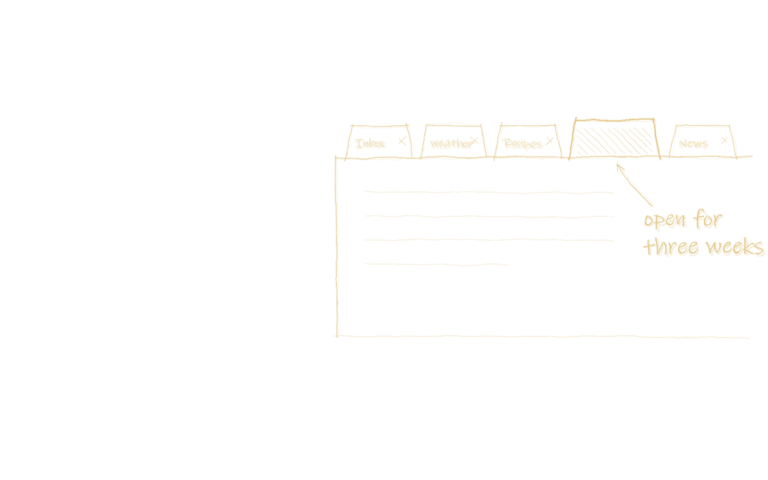
Going by the closest thing anyone has tested, a dopamine detox may feel mostly hard. Take the mobile internet trial again. Most of the people in it were already “motivated to reduce their smartphone use”[3], so these were people who wanted this. And still, only about a quarter of the people who signed up kept the block on for at least 10 of the 14 days. The authors wrote that “Complying with the intervention was evidently difficult for participants”[3], which is the most polite academic way I can imagine of saying “wow, this was hard”. So the “day 2 of my detox” update that gets posted from the phone isn’t a character flaw. Even the volunteers found it hard.
And still, only about a quarter of the people who signed up kept the block on for at least 10 of the 14 days.
Some pages have a name for the hard part: “Dopamine withdrawals”[19]. I found no human study that measured dopamine withdrawal after people cut back on screens, so I’d treat the name as a label, not a measurement. I’d call it a fidgety evening. A fidgety first evening doesn’t mean you’ve failed.
So how long should you try it? The three trials I walked through ran two to four weeks (there’s a one-week one in the numbers section too), and each found some change[1, 2, 3, 4]. Sepah’s own approach to dopamine fasting was a lot shorter, starting with one to four hours at the end of each day (with longer breaks each week, quarter and year), and I couldn’t find a trial of that[7]. And the end of your day doesn’t have to be the evening, either. After a night shift, it might be the hour after you get home.
Longer and harsher is where I’d stop following the wellness trend. Medical News Today cites a 2024 review for the benefits of dopamine fasting. And that review says in its own text that it “has not been proven yet,” though the benefits “can be tremendous if done correctly”[20]. Tremendous, but not proven yet, is quite a thing to get cited for.
The same authors warn that “prolonged isolation and severe dietary restrictions can lead to feelings of loneliness, anxiety, and malnutrition”[20]. And Nandakumar Narayanan of the University of Iowa, speaking to The Scientist about trying to lower dopamine by means other than behavior, said “There are dangers in messing with this system”[8]. I wouldn’t take supplements or skip meals to chase dopamine.
Do not disturb, 7:00 to 7:30: One small thing to try today
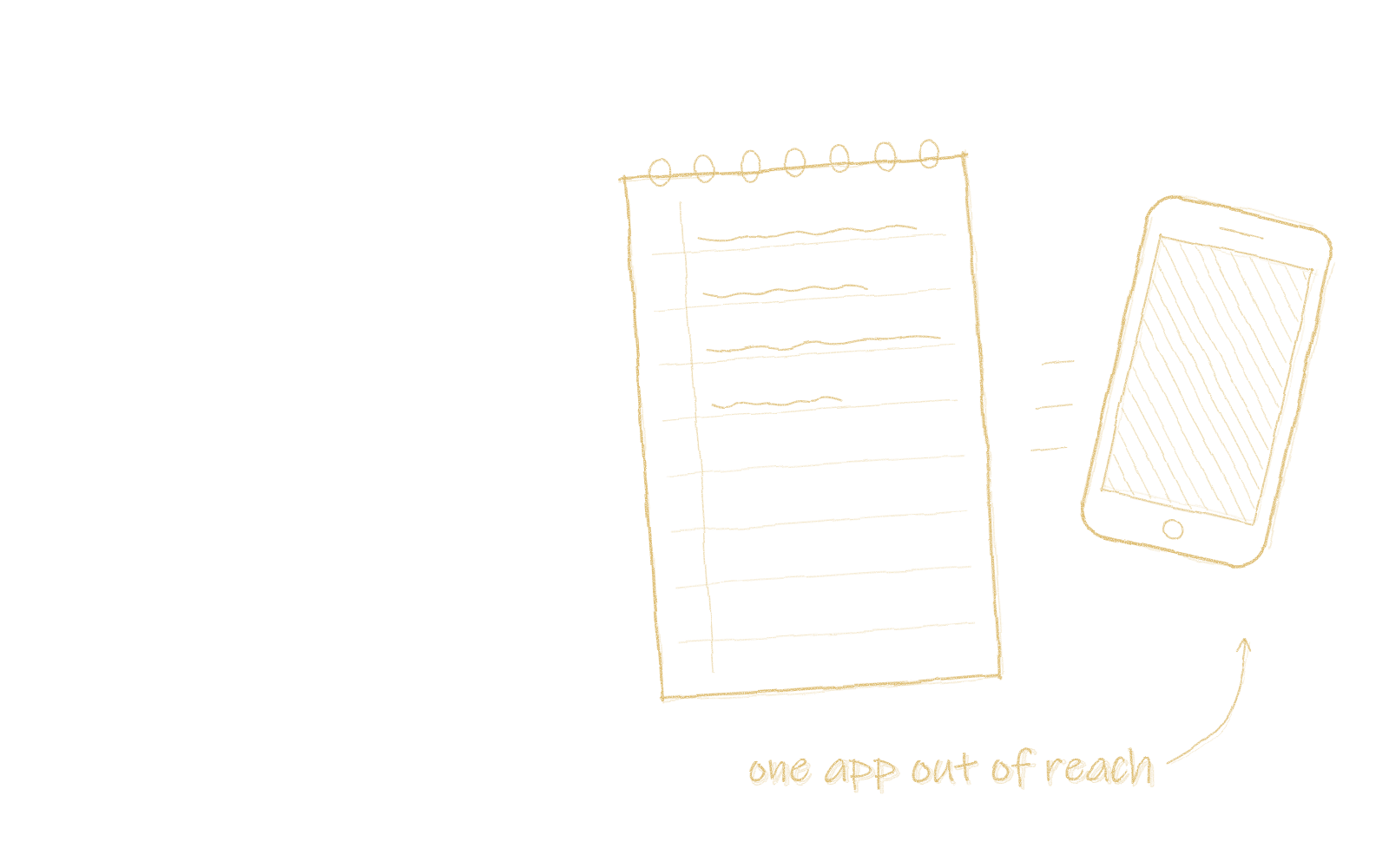
Pick the one feed or video app you open without deciding to. Then choose one stretch of today, like the half hour after dinner or the hour after a shift, and put that app out of reach for it. You can log out or leave the phone in another room, so that distance does the work instead of willpower. When the stretch ends, write one line about what you did with the time. And if half an hour sounds like too much, try fifteen minutes. This is a much smaller cousin of what the trials did, and it’s untested in this form, so think of it as your own tiny study with one participant (the sample size is terrible, but recruitment was easy).
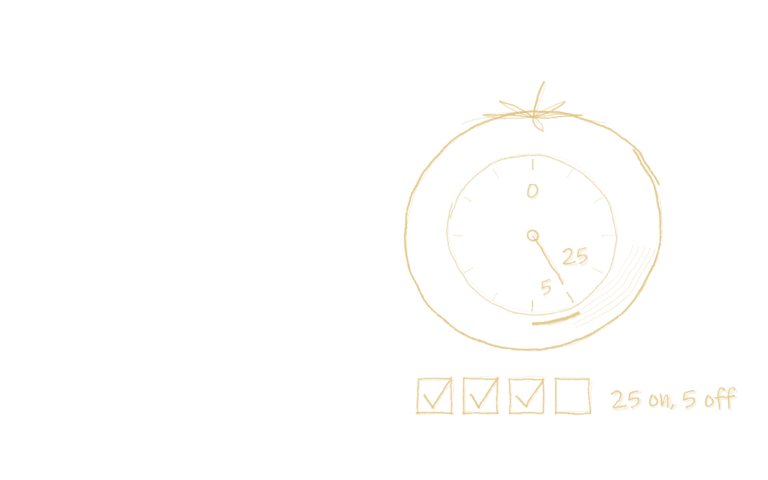
If you like what the line says, do it again tomorrow, and keep the lines for a week. A week of notes tells you where the time went. It tells you nothing about your dopamine, but then neither did any of the trials. There’s more in the memos on doomscrolling (stop-doomscrolling), a grayscale screen (grayscale-phone) and focus (focus-distracted-week). And if a timer helps you more than an app block, the Pomodoro technique has its own post.
So that’s how far it drifted. The name promised a reset for your brain, and the psychologist whose guide helped make it famous called the dopamine part a catchy title himself. What’s left once you take the dopamine out is one app, out of reach, for one stretch of the day, and one line about what you did instead. And if you’re back on the app by minute twelve, well, only about a quarter of the people in that phone trial kept their block on for 10 days out of 14, and they had signed up for it on purpose. For more everyday questions like this one, the Work page has a few.
If you want to read around this one:
- More from the Work page
- The Pomodoro technique: does it work?
- Motivation vs discipline vs willpower
- How to stop procrastinating, the long essay
Skip to the comments: Quick answers about a dopamine detox
What is a dopamine detox, and what does it involve?
In the popular version, a dopamine detox involves taking a break from activities like social media that are supposed to overstimulate you, so that your brain can reset. The guide that helped make it famous asked for less: “about one to four hours at the end of every day” away from whatever a person finds problematic (ABC7 calls them “problematic or addictive behaviors”, and The Scientist calls them “compulsive behaviors”)[7, 8]. A 2024 review describes the concept of a dopamine detox (it says dopamine fasting) as reducing dependence on instant gratification and overstimulation[20].
Can a dopamine detox reset dopamine levels?
I found no evidence that a dopamine detox resets your dopamine levels, and no study that even measured people’s dopamine before and after they cut back on their phones. Your brain needs dopamine to function, so it plays an important role whatever you’re doing, and Harvard Health says that is why a “dopamine detox” is “not possible”[12]. So the claim that phones make you release dopamine until you run low is still sitting there, waiting for someone to measure it.
What are the potential benefits and side effects of a dopamine detox?
The possible benefit is a small lift in how you feel, and the warnings I found are about the extreme versions. One pooled review of breaks from social media found a small drop in depression and no clear effect on stress or overall well-being[5]. Another found that some studies showed “no effect or even negative consequences for well-being”[6] (so, mixed, to put it kindly). And a 2024 review warns that prolonged isolation and severe dietary restrictions can harm mental and physical health, through loneliness, anxiety and malnutrition[20].
How do you do a dopamine detox safely?
Keep it small, and keep it about behavior. The psychologist’s own guide asked for one to four hours at the end of the day away from the thing that’s a problem for you[7], and the version in this post is one app, out of reach, for one stretch of the day. The warnings are about the people who try dopamine detoxes in harsher forms, and a 2024 review names prolonged isolation and severe dietary restrictions[20]. So I wouldn’t skip meals to chase dopamine, since that warning covers severe dietary restriction too.
What does dopamine burnout feel like?
“Dopamine burnout” isn’t a medical term that I could find, so there is no agreed description of what it feels like. But the worn-out, scrolled-out feeling people mean by it isn’t imaginary. It may just mean dopamine is the wrong place to look for it. If low mood or tiredness has lasted a while, please bring that to your own doctor or pharmacist.
What can you do instead of a dopamine detox?
You can change the habit and leave the dopamine out of it. Harvard Health’s summary says people who feel hooked on their devices should change their habits and the environments that draw them to their devices[12]. And if you want to change your habits, Stephanie Borgland of the University of Calgary told The Scientist, “To change a habit, you need to have new learning, which takes time”[8]. And if you came here hoping to increase dopamine levels or boost dopamine naturally, sorry, this post can’t help with that.
The numbers, if you want them
- The phone and dopamine study: 22 healthy adults aged 18 to 33, a median of 32 days of logging, one PET scan each of dopamine synthesis capacity in the striatum; the link was in the putamen. The authors write that “replication studies with larger sample sizes are critical”[14].
- Recovery after hard drugs: in Nora Volkow’s 2001 study of five methamphetamine users scanned within six months of stopping and again 12 to 17 months later, dopamine transporters rose by 19% and 16% in two brain regions[15]. That says little about phones.
- The three trials in the story: Hunt 2018, 143 undergraduates; both groups improved on anxiety and fear of missing out[2]. Allcott 2020, 580 deactivated: well-being +0.09 standard deviations[4]. Castelo 2025, 467 people: p = 0.067 for mental health and 0.062 for well-being between groups (the usual bar is 0.05, so sooo close); 119 (25.5%) met the study’s definition of compliant; most were already “motivated to reduce their smartphone use,” and expectancy effects “could have contributed”[3].
- A one-week trial too: in Lambert 2022, 154 adults either quit four big apps for one week or carried on. Those who quit scored better on well-being, depression and anxiety than people who carried on, by questionnaire and knowing which group they were in: well-being +4.9 (14-to-70 scale), depression -2.2 (0-to-24), anxiety -1.7 (0-to-21)[1].
- The low dopamine lists: the conditions Cleveland Clinic’s page names are Parkinson’s disease, depression, restless leg syndrome and ADHD[18].
- The reviews: 10 studies, depression -0.29 standardized difference (95% range -0.51 to -0.07)[5]; 21 studies, 3,625 people[6]. I read their summaries, not the full papers. Neither summary says why the studies disagree, and one of them only promises that the reasons are discussed in the full paper.
- “I found no study” means I searched PubMed, Europe PMC and the open web and came up empty, not that none exists. None of the papers below has a retraction notice that I could find.
Sources
- Lambert, J., Barnstable, G., Minter, E., Cooper, J., & McEwan, D. (2022). Taking a one-week break from social media improves well-being, depression, and anxiety: A randomized controlled trial. Cyberpsychology, Behavior, and Social Networking, 25(5), 287-293. https://doi.org/10.1089/cyber.2021.0324
- Hunt, M. G., Marx, R., Lipson, C., & Young, J. (2018). No more FOMO: Limiting social media decreases loneliness and depression. Journal of Social and Clinical Psychology, 37(10), 751-768. https://doi.org/10.1521/jscp.2018.37.10.751
- Castelo, N., Kushlev, K., Ward, A. F., Esterman, M., & Reiner, P. B. (2025). Blocking mobile internet on smartphones improves sustained attention, mental health, and subjective well-being. PNAS Nexus, 4(2), pgaf017. https://doi.org/10.1093/pnasnexus/pgaf017
- Allcott, H., Braghieri, L., Eichmeyer, S., & Gentzkow, M. (2020). The welfare effects of social media. American Economic Review, 110(3), 629-676. https://doi.org/10.1257/aer.20190658
- Ramadhan, R. N., Rampengan, D. D., Yumnanisha, D. A., et al. (2024). Impacts of digital social media detox for mental health: A systematic review and meta-analysis. Narra J, 4(2), e786. https://doi.org/10.52225/narra.v4i2.786
- Radtke, T., Apel, T., Schenkel, K., Keller, J., & von Lindern, E. (2022). Digital detox: An effective solution in the smartphone era? A systematic literature review. Mobile Media & Communication, 10(2), 190-215. https://doi.org/10.1177/20501579211028647
- del Castillo, A. (2019, 9 November). Silicon Valley takes on “Dopamine Fasting 2.0” to battle bad habits, addiction. ABC7 San Francisco. https://abc7news.com/health/silicon-valley-takes-on-dopamine-fasting-20-to-battle-bad-habits-addiction/5685298/
- Thomasy, H. (2024, 31 July; updated 2025, 31 January). Debunking the dopamine detox trend. The Scientist. https://www.the-scientist.com/debunking-the-dopamine-detox-trend-72036
- Grinspoon, P. (2020, 26 February). Dopamine fasting: Misunderstanding science spawns a maladaptive fad. Harvard Health Blog. https://www.health.harvard.edu/blog/dopamine-fasting-misunderstanding-science-spawns-a-maladaptive-fad-2020022618917
- University of Michigan Department of Psychology (2024, 23 May). Dopamine, explained. A Vox explainer posted on the department’s news page. https://prod.lsa.umich.edu/psych/news-events/all-news/faculty-news/dopamine–explained.html
- Berridge, K. C., & Robinson, T. E. (2016). Liking, wanting, and the incentive-sensitization theory of addiction. American Psychologist, 71(8), 670-679. https://doi.org/10.1037/amp0000059
- Salamon, M. (2026, 14 October). Do you need a dopamine detox? Harvard Health Publishing (only the free summary was readable). https://www.health.harvard.edu/brain-health/do-you-need-a-dopamine-detox
- Fang, S., & Chen, S. (2026). Algorithmic loops and the developing brain: a narrative review of dopaminergic mechanisms, sleep disruption, and neuroplasticity. Translational Psychiatry, 16(1), 593. https://doi.org/10.1038/s41398-026-04340-8
- Westbrook, A., Ghosh, A., van den Bosch, R., Määttä, J. I., Hofmans, L., & Cools, R. (2021). Striatal dopamine synthesis capacity reflects smartphone social activity. iScience, 24(5), 102497. https://doi.org/10.1016/j.isci.2021.102497
- Volkow, N. D., Chang, L., Wang, G.-J., et al. (2001). Loss of dopamine transporters in methamphetamine abusers recovers with protracted abstinence. Journal of Neuroscience, 21(23), 9414-9418. https://doi.org/10.1523/JNEUROSCI.21-23-09414.2001
- Lembke, A. (2021). Dopamine Nation: Finding Balance in the Age of Indulgence. Dutton.
- Lembke, A. (2026, 5 January). Interview on The Diary of a CEO, transcript by The Singju Post. https://singjupost.com/diary-of-a-ceo-w-dr-anna-lembke-on-dopamine-addiction-transcript/
- Cleveland Clinic (2024, 9 September). What is a dopamine detox and does it work? https://health.clevelandclinic.org/dopamine-detox
- Thriveworks (2026, 10 October). Dopamine detox: What it is and how to try it. https://thriveworks.com/help-with/self-care/dopamine-detox/
- Desai, D., Patel, J., Saiyed, F., et al. (2024). A literature review on holistic well-being and dopamine fasting: An integrated approach. Cureus, 16(6), e61643. https://doi.org/10.7759/cureus.61643
- 988 Suicide & Crisis Lifeline (US). https://988lifeline.org/