A half-finished job application has been sitting in a folder on someone’s laptop for nine days. They see it every time they go looking for something else, they think “tonight”, and then it’s tomorrow and the form is exactly as they left it (forms are very patient like that).
(I made this person up. You can swap in your own version: the call you keep moving to tomorrow, the drawer of receipts.)
This post is a procrastination worksheet for that form, and for whatever yours is. (If you want the bigger picture of why we put things off, I wrote the long essay on how to stop procrastinating.) Now, the usual productivity advice for a thing like this is to write it down and get it out of your head. Put it in an app, on a sticky note, on the back of your hand, on the whiteboard you bought specifically for this, in a whole new colour-coded system. And honestly, that sounds right to me. But in 2011 two psychologists actually tested it, and the people who only wrote their unfinished tasks down reported the most unwanted thoughts about them of anyone in the experiment[4]. What helped was a much more boring line: exactly when and where you’ll take the next step.
So here’s what I’m arguing in this post: the writing-down part gets too much of the credit, and the part that did the work, at least in the one lab that checked, was the time and the place. So I designed this sheet to end on that line.
Here’s the sheet first, the way a decent recipe site would do it. It’s a free resource in the honest sense, with nothing to download and no email to hand over (so no bundle, nothing to purchase, and no “instant digital download” from a marketplace). After it comes the hands-on part, where we’ll fill one in for the nine-day application, and I’ll tell you where each row comes from, because a couple of them have odd histories (one involves a waiter, a bill and two people who can’t agree on what happened). If a whole sheet is one more bit of overwhelm today, do rows 4 and 5.
Jump to recipe: The procrastination worksheet, a free and printable tool
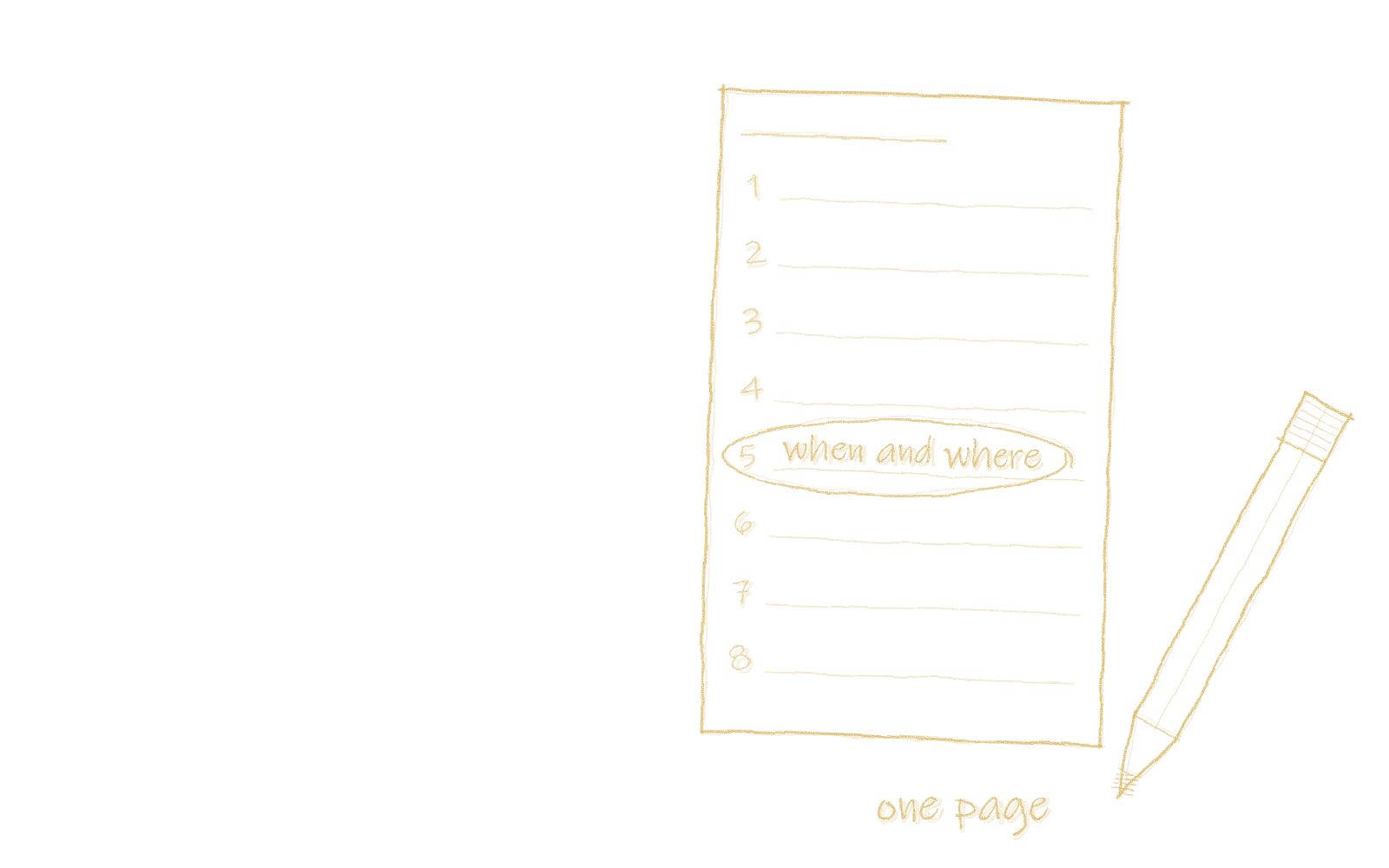
Here’s what’s included: one page with eight rows, for one thing you keep putting off, and it’s free to print. One task per sheet. Fill in rows 1 to 6 now; rows 7 and 8 come later. Print this page and only the sheet prints, with none of the content around it (your browser can also save it as a PDF). No printer? Copy the text of the prompts into your phone’s notes app.
| # | Prompt | Your answer |
|---|---|---|
| 1 | The one that keeps coming back. Write the single unfinished thing that’s been interrupting you. Just one. | |
| 2 | Why I’m avoiding it. Circle any: it’s boring or unpleasant / I’m not sure I’ll do it well / the payoff is far away / I keep getting pulled away | |
| 3 | The feeling, in one word (optional) | |
| 4 | The next physical step. Start with a verb. Make it small enough to do in about ten minutes. If you circled “not sure I’ll do it well,” make it smaller still. | |
| 5 | When and where, exactly. Jot down any options, then cross out all but one. Put it in your calendar if you use one. | On ______ at ______ (time), at ______ (place), I will ______. |
| 6 | If something gets in the way | If ______ happens, then I will ______. |
| 7 | Stopping note (when you stop partway) | I stopped at ______. Next I’ll ______. |
| 8 | Check-back, the next day. Did it still interrupt me? Did I start at the time I wrote? |
Sir, this is a restaurant in Berlin (allegedly): Row 1, the Zeigarnik effect and the study behind it
Row 1 is quick for our made-up applicant: “Finish the job application.” One task, the one that keeps barging in. (The short version of this section: the row comes out of the Zeigarnik effect, the idea from a 1927 study that unfinished tasks stick in your memory, and a 2025 meta-analysis found no such memory advantage[2, 3]. The long version has a waiter in it.)
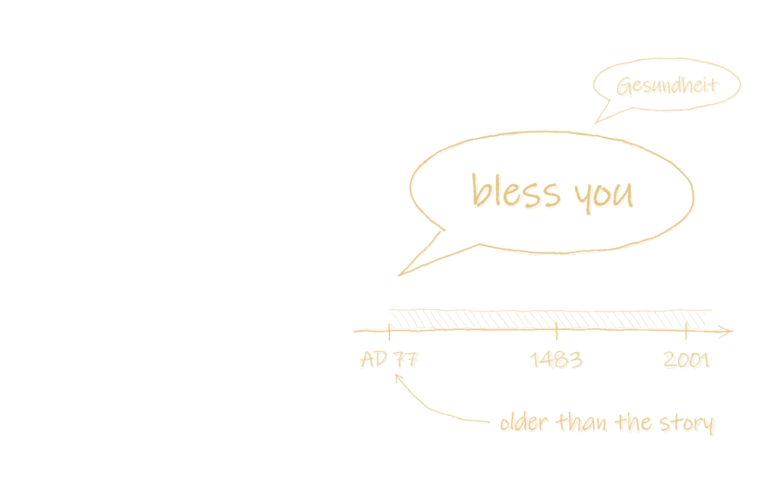
But why would an unfinished thing barge in at all? Well, the answer you’ll find in textbooks is the Zeigarnik effect, which is the idea that you remember unfinished tasks better than finished ones[1]. And it comes with a great origin story that people love to tell. As the story goes, there was a waiter in Berlin who could hold a whole table’s unpaid bill in his head and then forgot it the moment it was paid[1]. It’s a lovely story. So I went looking for the waiter, and almost everything about him wobbles.
For a start, the effect is named after Bluma Zeigarnik, but the man who, in the story, noticed the waiter was Kurt Lewin, who supervised her[1]. And the two versions of the story we have were printed decades after her 1927 paper, by other people, and they don’t match[1].
In one telling, Lewin asks the waiter how much he’d paid. “The waiter no longer knew.”[1]
The other telling comes from Donald MacKinnon, who is said to have been at the table. In his telling the waiter knew exactly what everyone had ordered. Then half an hour after the bill, Lewin asked him to write it again, and the waiter was indignant: “You paid your bill.”[1] (Which, fair. Imagine being quizzed on an old order by a customer who paid half an hour ago and is still sitting there.)
So in one version the waiter had remembered the total, and in the other he had remembered each order. One waiter, two tellers, and they can’t agree on what he forgot. MacLeod, who wrote a history of the effect in 2020, notes that the mismatch fits an idea from the same era, which is that memory gets rebuilt each time rather than replayed[1]. So the famous story about memory got remembered two different ways, and that’s my favorite thing about it.
One waiter, two tellers, and they can’t agree on what he forgot.
OK, but a wobbly story can still sit on top of a solid experiment. So I read Zeigarnik’s.
She gave volunteers a set of small tasks and interrupted half of them (so, an experiment where part of the researcher’s job was to be annoying on purpose). And her first 32 volunteers remembered the interrupted tasks nearly twice as well, on her measure[2]. So far, so good for the textbook.
But she also describes a group it didn’t work for: ten high school pupils, sent to the lab by their teacher, who did the tasks like a school chore. She wrote that they “behaved like soldiers under command, not like individual persons,” and for them the advantage vanished[2]. “I did not care,” one told her[2]. That might be the most teenager sentence ever printed in a psychology paper, and it comes from a study done in the 1920s.
So the effect seemed to need people to care. And then it got worse. In 2025, two researchers, Ghibellini and Meier, gathered up 59 publications that had used this interrupt-people-partway kind of test, 39 of them on the memory effect, and found “no memory advantage for unfinished tasks”[3].
Hold on. None? For an effect with its own name, its own textbook entry and its own waiter?
Well, here’s what they did. They didn’t run a new experiment. They added up everybody else’s, which is what a meta-analysis is. And once Zeigarnik’s own study is left out, people remembered the interrupted tasks and the finished ones about equally (the exact figure is in the numbers section, and you can’t get much closer to “no difference”)[3]. What they did find was something else: people tended to go back to the tasks they’d been pulled away from[3] (What is task paralysis? Why starting feels impossible, with or without ADHD).
Which fits the saved form, if you think about it. Remembering the application was never the challenge. Nobody with a nine-day-old form in a folder struggles to remember it. The nag you probably feel is something else: the unfinished thing barging into your brain while you’re busy with another. That’s why row 1 asks for the task that’s been interrupting you. Quieting an interruption is row 5’s business, and the sheet makes the task smaller before it gets there.
Circle all that apply: Rows 2 to 4, why you’re avoiding it and one small step
Row 2 asks you to identify why you’re avoiding the thing, and it gives you four choices to circle. I didn’t pull those out of the air. The four choices on the list are strong predictors of delay in a 2007 review of the possible causes of procrastination, which isn’t the same as proven causes[12]. The reviewer, Steel, gathered hundreds of correlations from other people’s studies to see what tends to show up when people procrastinate, and the review’s own names for the closest matches are less friendly than mine (task aversiveness, self-efficacy, task delay and, for getting pulled away, impulsiveness, which is a loose fit)[12]. But showing up together is all a correlation can tell you. So treat your circle as a hint. Its useful job is to tell you what to do in row 4.
Our applicant circles “I’m not sure I’ll do it well.” (It’s a job application. Who is?)
Row 3, the feeling in one word, is optional. And I’ll be honest that the support for naming the feeling is indirect: it comes from training people to handle difficult emotions, not from writing down one word[13]. So it’s on the sheet as a maybe. The applicant writes “dread” and moves on.
Row 4 is where the task shrinks. “Finish the job application” is a goal, and nobody can do a goal at 7:30 on a Tuesday evening. A step, you can do. So the row asks for a physical one that starts with a verb, and it leans on a study where students nudged to think concretely returned a questionnaire sooner[11]. (I do enjoy that the way to measure procrastination was to hand people a form and see how long they sat on it.) It’s indirect support too, because the nudge came from the researchers, and nobody in that study was shrinking their own task.
Because the applicant circled “not sure I’ll do it well,” the step gets smaller still: “Paste my résumé into the form.” There’s no writing in that and no deciding, so there’s very little to do badly. (I mean, you could paste a résumé badly, but you’d have to really try.)
Now the sheet has a step. Row 5 gives it a time and a place.
Does writing a task down stop it nagging you?
Not on its own, in the experiment this sheet leans on. What quieted the nag there was adding when and where, which is why row 5 has the most behind it.
In 2011, two psychologists, E. J. Masicampo and Roy Baumeister, decided to measure that barging in[4]. They split undergraduates into three groups at random. The first group wrote about two important tasks they still had to do, and that was it. The second did the same, and then wrote “in detail how, when, and where they would complete the tasks.” And the third wrote about two tasks they’d just finished, so they had nothing hanging over them (lucky them).
Then everyone read from a detective novel, The Case of the Velvet Claws, one word at a time, which sounds like the slowest possible way to find out who did it. Afterwards they rated how much thoughts of their tasks had been getting in the way while they read[4].
Now, if the “write it down and get it out of your head” method works, the first group should have been fine. They wrote it down! It’s out! Well, they reported the MOST unwanted thoughts of the three groups[4]. So the tip everybody repeats got its test, and Team Just Write It Down came last.
And the group that added a plan? They reported about as few of those thoughts as the group whose tasks were already done, though nobody had done any work[4]. They hadn’t started anything. They’d written down a how, a when and a where, and then gone off to read about velvet claws. That surprised me: writing the when and where was enough, at least for one reading session.
Joseph Everett drew the same lesson from this paper in 2023: a to-do item needs a “when”[5]. I’m building on his read.
So the applicant fills in row 5: “On Tuesday at 7:30 pm, at the kitchen table, I will paste my résumé into the form.” It’s not a thrilling sentence. But it has a day, a time, a table and a verb, which is a lot more than “tonight” ever had.
Sometime this week, maybe at the library, maybe never: Why row 5 asks you to cross out all but one
Row 5 asks you to cross out all but one because, in the 2011 paper, people who listed options without choosing had more intruding thoughts than people who picked one specific plan[4] (so yes, there’s a reason, and no, it isn’t that I enjoy bossing you around). The row could have stopped at “when and where.” But its fill-in-the-blank format also tells you to jot down your options and then cross out all but one, which looks fussy. I thought so too, until I read a later experiment in the same paper.
In that one, some people listed several ways to do a task without picking one, and others chose one specific plan. And a list of options sounds like it should count, right? You’ve thought about it! You’ve got choices! Well, the people with the list had clearly more intruding thoughts than the people who chose one specific plan[4]. The authors put it pretty flatly: “Plans must be highly specific to eliminate thoughts of unfulfilled goals.”[4]
So a list of good options, it seems, is one more thing left unfinished (now you have the task AND a decision to make about the task). On the applicant’s sheet, “sometime this week” and “maybe the library” both get a line through them, and Tuesday at the kitchen table is what’s left.
What if your days don’t run on a fixed clock (nights, rotating shifts, a schedule that changes every week)? Then row 5’s “when” can be a moment instead of a time: “After I get home from my next night shift, at the kitchen table, I will…” The studies behind this sheet used adults, many of them students[4, 10, 11]. So that version is my adaptation, and I’d rather tell you that than pretend a lab tested it.
In case of Tuesday, break glass: Rows 6 and 7, the if-then plan and the stopping note
Tuesdays do go sideways. The train is late, somebody calls, dinner takes an hour longer than dinner should. Row 6 is the same when-and-where strategy pointed at whatever might get in the way. So the applicant writes: “If I get home late, then I will do it straight after breakfast on Wednesday.”
Row 7 is for later, when you’ve started and have to stop partway. It comes from another lab. In 2018, two researchers, Leroy and Glomb, reported that people who briefly reflected on and planned their return to an interrupted task focused better on the next one, when they expected time pressure on coming back[6]. They called it a “ready-to-resume” plan, which sounds like something a printer would say, and row 7 is my two-blank version of it. Whether those people got back to the first task wasn’t measured, so I can’t promise you that part.
On the applicant’s sheet, at 8:10 on Tuesday: “I stopped at question 4. Next I’ll write the ‘why this job’ paragraph.” (That’s forty minutes after sitting down for a ten-minute step, so I’m calling Tuesday a win.)
The dread didn’t get the memo: Row 8 and the worry that stays
Here’s the part of the 2011 paper I didn’t expect. You’d think that if a plan stops a task from barging in, you’d also feel better about the task. That’s how I assumed it would go. But the plans eased the thoughts, and not the worry. In two experiments, planners felt just as anxious as non-planners[4].
So you may get a quieter head and the exact same knot in your stomach.
So you may get a quieter head and the exact same knot in your stomach.
That’s normal, and it’s why row 8’s check-back, the next day, asks two plain questions. Did the task still interrupt me? Did I start at the time I wrote? It leaves out “do I feel better about it?”, because that isn’t what the plans changed. (And a sheet that graded people on feeling calm about a job application would fail pretty much everybody.)
Do procrastination worksheets work?
Honestly, nobody knows about this one. Nobody has tested this exact sheet (I put it together), and a 2018 review found “few controlled studies” of single techniques for procrastination[8]. So the fair answer is that some of its rows have support, and the whole page is a practical tool that hasn’t had a trial of its own (which is why you won’t find the words “evidence-based” anywhere on the sheet).
The when-and-where line has the most behind it, so how much is that? Well, if-then plans do help, but a 2025 review of 642 tests found the effect is small on average once you correct for the studies that never got published (How to stop procrastinating on the one thing you keep putting off).
And then there’s my favorite one. In a study of 152 university students, the half who made a when-and-where plan had nearly 8 times the odds of turning up to an appointment[10]. (That’s odds, which isn’t the same as eight times as many people; the numbers section has the note.) The appointment, by the way, was to report to an experiment. So the test of whether students would show up was whether they showed up to the test.
The 2011 experiments themselves are small and come from one lab, with no independent, direct repeat that I could find[4] (if you’ve run one, write to me, I’d love to read it).
Two rows you may have seen on other worksheets are missing on purpose. The first is the deadline row. The best-known study behind self-set deadlines, by Ariely and Wertenbroch in 2002, was retracted in September 2026[14] (the retraction is also covered in the long essay on how to stop procrastinating). That removes the deadline row’s main evidence, though it doesn’t show deadlines fail. The second is “reward yourself”, and I found no trial of that either. So there are no gold stars on this sheet (you’re welcome to add your own).
Row 5 would like a word: If the procrastination worksheet didn’t help you start
Check row 5 first, because that’s the row that usually gives the game away. If it says “this week” or names two places, it’s still a list of options, the version that didn’t work in 2011[4]. Cross out until ONE time and one place are left. Missed the time? Write a new time on the same sheet (my untested suggestion). And if the task keeps coming back, my guess is that row 4 is too big. If the whole job still feels too big, how to stop procrastinating goes through ways of shrinking it.
One way people try to shrink a job is the 2 minute rule. And the other printable on this site, for building a habit, is the habit tracker.
The sheet looks a bit like the CBT worksheets clinics hand out, but it isn’t therapy. If avoidance is constant and wearing you down, or you suspect something like ADHD is part of it, a counselor or other professional is a better next step than any worksheet. In reviews of the trials, cognitive behavioral therapy had the strongest results, though in one review that rested on only three studies[8, 15].
If you want to keep going from the sheet:
- How to stop procrastinating, the long essay
- The 2 minute rule, which is really two rules
- A printable habit tracker with no streak to lose
- Task paralysis: when you cannot start something you mean to do
Yes, this will be on the test: Quick answers about procrastination worksheets and why we procrastinate
What is procrastination, and why do people procrastinate?
Procrastination is putting off something you meant to do even though you expect to be worse off for the delay, which is how a 2007 review by Steel defines it[12, 8]. As for why, nobody has one proven cause. That review’s analysis found that delay goes strongly and consistently with a task being unpleasant, a payoff that’s far away, doubting you’ll do it well, and impulsiveness, among other things[12]. Those are, loosely, the four choices in row 2 (the sheet’s version of the last one is getting pulled away by a distraction, which sounds nicer).
How can a worksheet help me understand my procrastination habits and triggers?
A worksheet can make you a little more aware of why you procrastinate on one particular thing, and that’s all row 2 is for. You circle a reason, and the reason tells you how small to make the next step. Treat it as a hint, because those reasons are predictors of delay and not proven causes[12]. It won’t map out all your habits and triggers, because it’s one page for one task and not a personality test.
What strategies can help me overcome procrastination and get started on tasks?
The strategy with the most behind it on this sheet is deciding exactly when and where you’ll take one small step. In a small 2011 experiment, that kind of plan quieted unwanted thoughts about unfinished tasks[4]. If you have trouble getting started (you’ll also see that called task initiation), my own suggestion is to make the step smaller. And nobody can honestly promise you’ll beat or overcome procrastination for good, so this sheet doesn’t (anyone who does is probably selling a course).
How can I use a procrastination worksheet to make an action plan and track my progress?
Rows 4 to 6 are the action plan: one small, realistic step, one time and place, and one barrier with a backup for it. To use the sheet effectively, row 5 has to end up with a single time and a single place[4]. Row 8 is the only way it lets you track anything, with a check-back the next day. It asks whether you started, and it leaves completion to you, because starting is the bit this sheet is for.
How can I stay motivated and manage my time to avoid procrastinating?
This sheet doesn’t try to keep you motivated, and it isn’t a time management system. It won’t prioritize your list, organize your week, help you stay focused or make you a more productive person in general (it’s one piece of paper, it has limits). It does one narrower thing, which is to turn one task into one small step with a time and a place, because that’s the part the 2011 experiment supports[4]. If motivation turns up as well, lovely.
Are there procrastination worksheets for teens and students?
This one wasn’t written for teens in particular, and I can’t tell you how it does with them. The studies behind it used adults, many of them university students[4, 10, 11]. Nothing on the page depends on your age, though, and an essay is a very traditional thing to put off. A student could fill it in for an essay the same way our made-up applicant did for a job form: one task, one small step, one time and one place.
How are perfectionism, negative thoughts and emotional avoidance connected to procrastination?
Honestly, the sources behind this sheet only touch on these, so I can’t give you a full answer. The closest row is “I’m not sure I’ll do it well”, which rests on the 2007 review’s finding that people’s confidence in doing a task is a strong predictor of delay[12]. On emotions, one 2016 trial found that training people to handle difficult emotions reduced procrastination[13]. Negative thoughts and anxiety are a different matter from the sheet: in the 2011 experiments a plan didn’t make people less anxious[4].
How can therapists use procrastination worksheets with clients?
This sheet wasn’t written for therapists, and it isn’t therapy. It looks a bit like the one-page worksheets clinics hand out, and that’s as far as the link goes. Plenty of procrastination resources already exist for that: most of what I found on the first page of Google was templates made for clinicians and university handouts, so a therapist has lots built for the job. In reviews of the trials, cognitive behavioral therapy had the strongest results, though in one review that rested on only three studies[8, 15].
The numbers, if you want them
- The 2025 meta-analysis: 39 publications tested memory and 21 tested going back; one tested both, so the total is 59. Leaving out Zeigarnik’s study, the memory ratio was 0.99, where 1 means no difference (so, about as close to “nothing happened” as a number gets). People went back to interrupted tasks about 67% of the time, against the 50% the authors used as chance, counting a “tendency” to return[3].
- If-then plans: a 2006 review of 94 tests called the effect “medium-to-large” (d = .65), mostly on goals other than procrastination[9, 8]. The 2025 review found d = .36, and .15 after a stricter correction (How to stop procrastinating on the one thing you keep putting off). The 152-student figure is an odds ratio, so it doesn’t mean eight times as many people showed up[10].
- The other rows: row 2’s reasons are strong predictors of delay in a 2007 review of 691 correlations, not proven causes[12]. Row 4 leans on a study where students nudged to think concretely returned a questionnaire sooner[11]. The “ten minutes” and “smaller still” are mine, after the 2011 authors’ guess that a plan may need to be “well within a person’s ability”[4].
- Zeigarnik’s pupils: the “I did not care” line is from her 1927 paper. I read it in the 1938 English translation[2].
Nobody asked for your motivation: What to watch for after you fill it in
After you fill the sheet in, the thing to watch for is whether the task still barges in, and not whether you feel better about it. Look back at what the sheet asked our applicant for: a task, a guess at why, a small step, a Tuesday and a table. It never asked for motivation or a new mindset, which is lucky, because nine days in there wasn’t much of that around.
So fill in rows 4 and 5 for the task that keeps coming back, or take the lazy approach and just write the time and place on a sticky note. Then the next time you sit down to read or watch something, notice whether it barges in. In the lab, a plan changed how often the task interrupted, while people felt about as uneasy as before[4]. So if it’s quieter and you still feel a bit of dread, that’s the 2011 pattern, and you didn’t fill the sheet in wrong.
And our applicant? They pasted the résumé on Tuesday and got as far as question 4, which is further than the nine days before it managed. (I made that up too, but I’m rooting for them.)
Sources
- MacLeod, C. M. (2020). Zeigarnik and von Restorff: The memory effects and the stories behind them. Memory & Cognition, 48, 1073–1088. https://doi.org/10.3758/s13421-020-01033-5
- Zeigarnik, B. (1927). Das Behalten erledigter und unerledigter Handlungen. Psychologische Forschung, 9, 1–85. https://doi.org/10.1007/BF02409755. Abridged English translation, “On finished and unfinished tasks,” in W. D. Ellis (Ed.), A Source Book of Gestalt Psychology (1938), pp. 300–314. https://gwern.net/doc/psychology/willpower/1927-zeigarnik.pdf
- Ghibellini, R., & Meier, B. (2025). Interruption, recall and resumption: a meta-analysis of the Zeigarnik and Ovsiankina effects. Humanities and Social Sciences Communications, 12, 962. https://doi.org/10.1057/s41599-025-05000-w
- Masicampo, E. J., & Baumeister, R. F. (2011). Consider it done! Plan making can eliminate the cognitive effects of unfulfilled goals. Journal of Personality and Social Psychology, 101(4), 667–683. https://doi.org/10.1037/a0024192
- Everett, J. (2023, July 20). Willpower is for unproductive Losers. WIL Newsletter. https://josepheverettwil.substack.com/p/willpower-is-for-unproductive-losers
- Leroy, S., & Glomb, T. M. (2018). Tasks interrupted: How anticipating time pressure on resumption of an interrupted task causes attention residue and low performance on interrupting tasks and how a “ready-to-resume” plan mitigates the effects. Organization Science, 29(3), 380–397. https://doi.org/10.1287/orsc.2017.1184
- Scullin, M. K., Krueger, M. L., Ballard, H. K., Pruett, N., & Bliwise, D. L. (2018). The effects of bedtime writing on difficulty falling asleep: A polysomnographic study comparing to-do lists and completed activity lists. Journal of Experimental Psychology: General, 147(1), 139–146. https://doi.org/10.1037/xge0000374
- Rozental, A., Bennett, S., Forsström, D., Ebert, D. D., Shafran, R., Andersson, G., & Carlbring, P. (2018). Targeting procrastination using psychological treatments: A systematic review and meta-analysis. Frontiers in Psychology, 9, 1588. https://doi.org/10.3389/fpsyg.2018.01588
- Gollwitzer, P. M., & Sheeran, P. (2006). Implementation intentions and goal achievement: A meta-analysis of effects and processes. Advances in Experimental Social Psychology, 38, 69–119. https://doi.org/10.1016/S0065-2601(06)38002-1
- Owens, S. G., Bowman, C. G., & Dill, C. A. (2008). Overcoming procrastination: The effect of implementation intentions. Journal of Applied Social Psychology, 38(2), 366–384. https://doi.org/10.1111/j.1559-1816.2007.00309.x
- McCrea, S. M., Liberman, N., Trope, Y., & Sherman, S. J. (2008). Construal level and procrastination. Psychological Science, 19(12), 1308–1314. https://doi.org/10.1111/j.1467-9280.2008.02240.x
- Steel, P. (2007). The nature of procrastination: A meta-analytic and theoretical review of quintessential self-regulatory failure. Psychological Bulletin, 133(1), 65–94. https://doi.org/10.1037/0033-2909.133.1.65
- Eckert, M., Ebert, D. D., Lehr, D., Sieland, B., & Berking, M. (2016). Overcome procrastination: Enhancing emotion regulation skills reduce procrastination. Learning and Individual Differences, 52, 10–18. https://doi.org/10.1016/j.lindif.2016.10.001
- Retraction Watch (3 September 2026). Report on the retraction of Ariely & Wertenbroch (2002), quoting the retraction notice and the journal’s editor. https://retractionwatch.com/2026/09/03/procrastination-study-duke-dan-ariely-psychological-science-data-colada-tampering-retraction/ Retracted paper: Ariely, D., & Wertenbroch, K. (2002). Procrastination, deadlines, and performance: Self-control by precommitment. Psychological Science, 13(3), 219–224. https://doi.org/10.1111/1467-9280.00441. Retraction notice: https://doi.org/10.1177/09567976261488042
- van Eerde, W., & Klingsieck, K. B. (2018). Overcoming procrastination? A meta-analysis of intervention studies. Educational Research Review, 25, 73–85. https://doi.org/10.1016/j.edurev.2018.09.002